

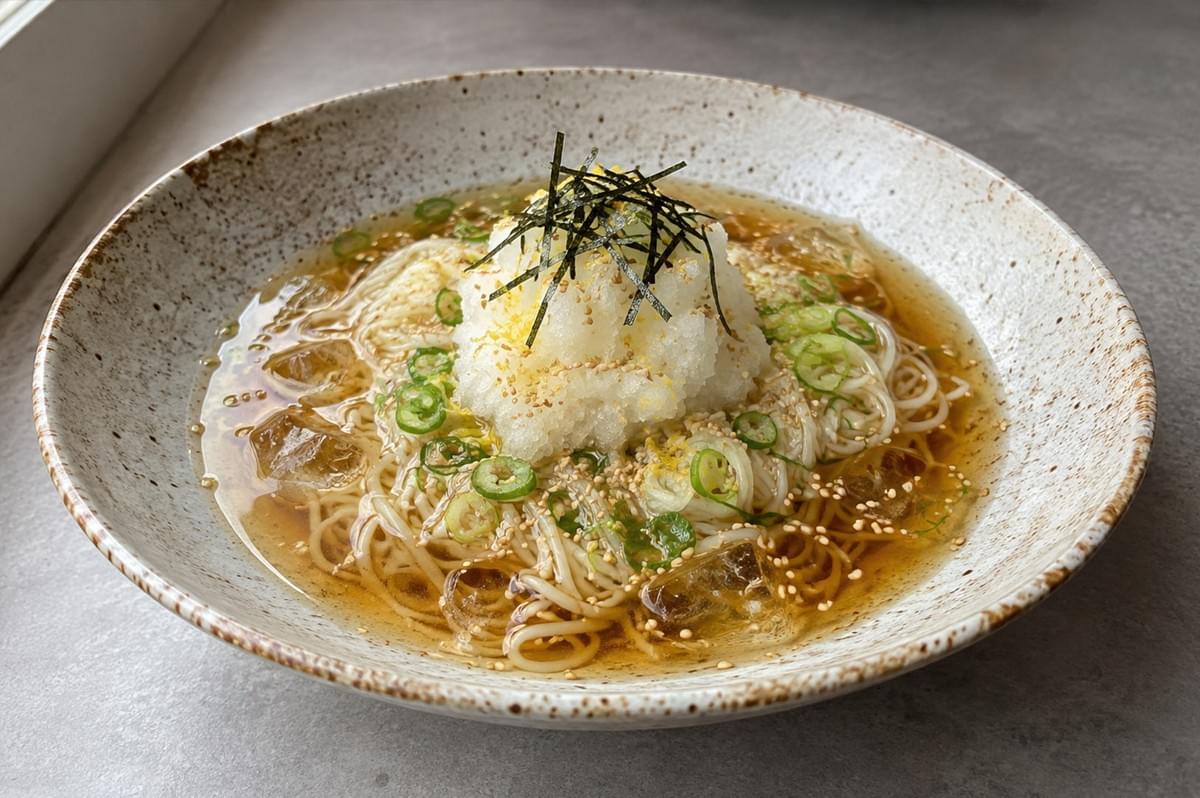
There are dishes that announce themselves with fragrance before the first bite. Yuzu Snow Noodles belongs to that quiet family of recipes. It arrives cold, pale, and luminous, with strands of noodles resting beneath a soft drift of grated daikon, like winter placed gently over summer.
In Singapore, where the air can feel warm even after sunset, Chef Masa often speaks of cold dishes not as refreshments alone, but as moments of reset. A chilled bowl of noodles can clear the palate, soften the mood, and make the body feel lighter. The scent of yuzu rises first, sharp and floral. Then comes the clean sweetness of dashi, the gentle salinity of soy, and the cool bite of daikon melting into the broth.
This is minimalist food, but not careless food. Every element is quiet because every element has been considered.
Origin Story
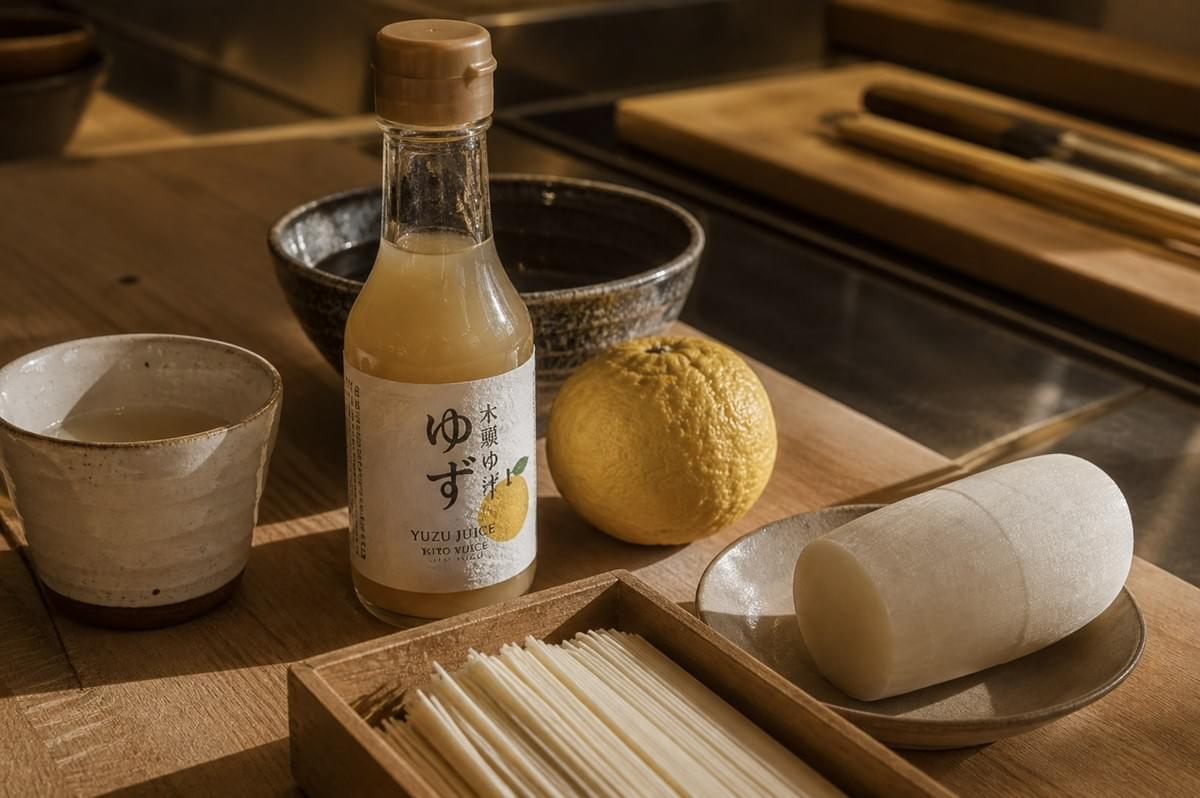
I first saw Chef Masa prepare a version of this dish after a long afternoon of service planning. The kitchen was calm, the knives were already cleaned, and only a few ingredients remained on the counter: a small bottle of yuzu juice, a piece of daikon, chilled dashi, and a bundle of fine Japanese noodles.
He did not call it a staff meal. He did not call it a recipe. He simply said, “Something cold, something clear.”
That sentence stayed with me.
The inspiration came from Japanese summer noodle traditions, especially chilled somen and soba served with dipping broth. Yet Chef Masa wanted something softer, more atmospheric. Instead of serving the noodles with a strong dipping sauce, he created a delicate chilled broth infused with yuzu. Over the top, he spooned finely grated daikon until it resembled snow.
The result was a dish that felt seasonal without being heavy. It carried the elegance of omakase, but the ease of a home kitchen.
Flavor Philosophy and Techniques
The philosophy behind Yuzu Snow Noodles is restraint. The dish is built on contrast, but none of the contrasts are loud.
The noodles should be cold and slippery. The broth should be bright, savoury, and lightly citrusy. The daikon should be soft and snowy, not watery or harsh. The garnish should add fragrance, not decoration for its own sake.
The key technique is temperature. Everything must be properly chilled before serving. Warm noodles will dull the yuzu. Warm broth will make the daikon feel heavy. A chilled bowl helps preserve the clean, refreshing sensation that defines the dish.
The second technique is balance. Yuzu is beautiful, but it can easily dominate. Chef Masa uses it as a fragrance and lift, not as the entire flavour. A good dashi base gives the dish depth, while soy and mirin add structure.
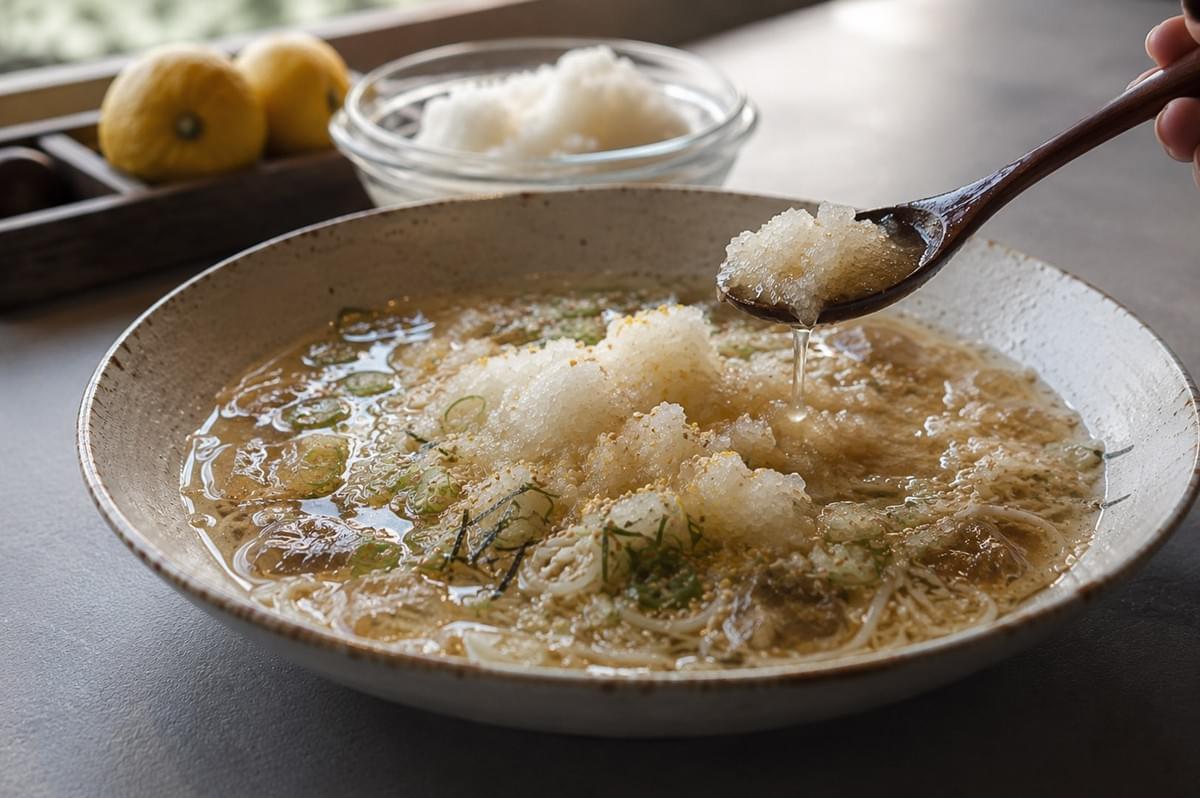
The third technique is texture. Grated daikon is not just a topping. It dissolves slightly into the broth, creating a delicate cloudy effect. This is the “snow” of the dish, and it gives each mouthful a cooling softness.
Ingredients
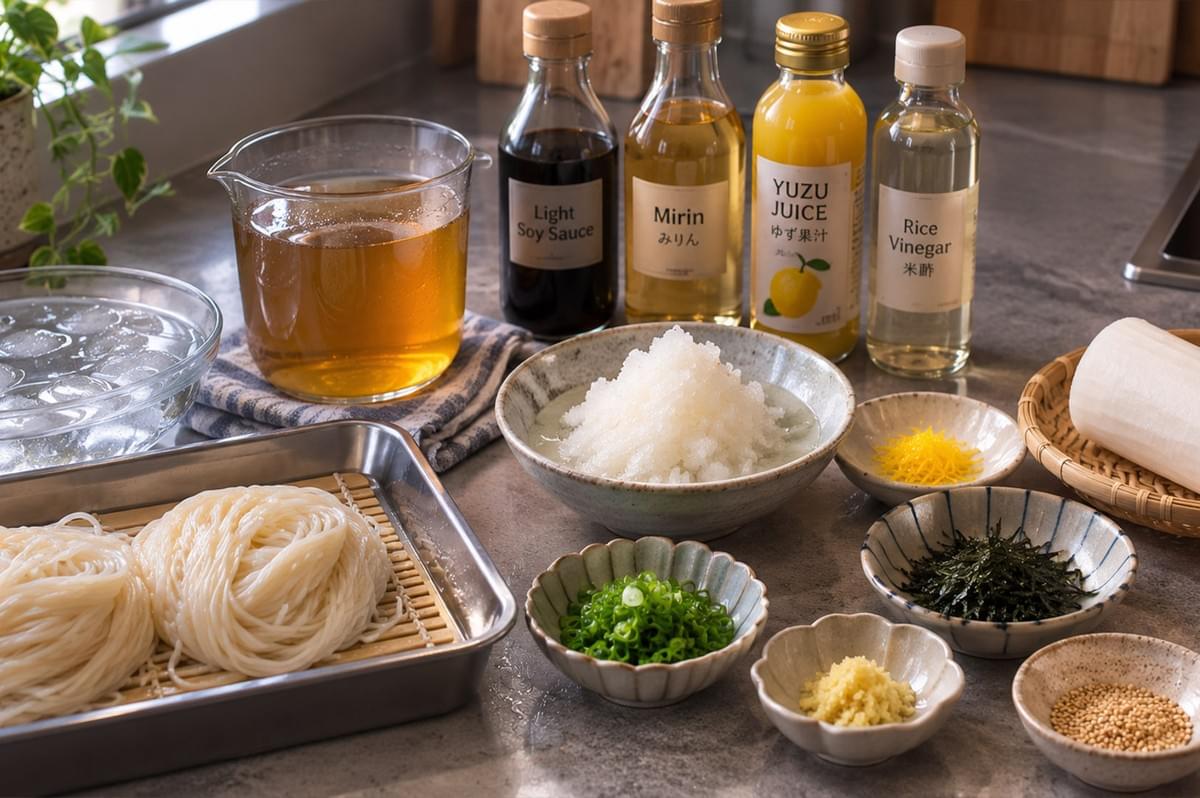
Serves 2
- 160g somen, thin udon, or soba noodles
- 1 cup chilled dashi
- 1 tablespoon light soy sauce
- 1 teaspoon mirin
- 1 to 1½ tablespoons yuzu juice, adjusted to taste
- ½ teaspoon rice vinegar, optional
- 1 small piece daikon, about 8cm long, peeled
- 1 teaspoon finely grated ginger, optional
- 1 small spring onion, finely sliced
- ½ sheet nori, finely shredded
- Toasted sesame seeds, for garnish
- Yuzu zest, lemon zest, or sudachi zest, if available
- Ice water, for chilling the noodles
Step-by-Step Instructions
1. Prepare the chilled yuzu broth.
In a bowl, combine the chilled dashi, light soy sauce, mirin, yuzu juice, and rice vinegar if using. Stir gently. Taste the broth. It should be savoury first, then citrusy, with a clean finish. Chill it in the refrigerator while you prepare the rest of the dish.
2. Grate the daikon snow.
Using a fine grater, grate the peeled daikon into a soft mound. Lightly press out some excess liquid with your hand or a small sieve. Do not squeeze it completely dry. The daikon should remain moist and delicate.
3. Cook the noodles.
Bring a pot of water to a boil. Add the noodles and cook according to the package instructions. Somen may take only 2 minutes, while soba or thin udon may take longer. Stir gently to prevent sticking.
4. Rinse and chill the noodles.
Drain the noodles immediately, then rinse under cold running water. Use your hands to lightly rub away surface starch. Transfer the noodles to a bowl of ice water for 1 minute, then drain well. This step gives the noodles their clean, slippery texture.
5. Season the daikon, if desired.
For a slightly warmer note, mix the grated daikon with a small amount of grated ginger. This is optional, but it adds a quiet heat beneath the citrus.
6. Assemble the bowl.
Place the chilled noodles neatly into two shallow bowls. Pour the yuzu broth around the noodles, not directly over them, so the strands remain visible and elegant.
7. Add the snow.
Spoon the grated daikon over the centre of the noodles. Let it fall naturally. It should look soft and uneven, like fresh snow rather than a shaped garnish.
8. Finish with aromatics.
Add sliced spring onion, shredded nori, toasted sesame seeds, and a small amount of citrus zest if available. Serve immediately while everything is cold and fragrant.
Chef’s Tips or Kenji’s Notes
Use good dashi. This recipe is simple, so the broth matters. Homemade dashi gives the cleanest result, but a high-quality instant dashi can work for a quick home version.
Do not overdo the yuzu. The goal is fragrance, not sourness. Start with 1 tablespoon, then add more only if needed.
Rinse the noodles thoroughly. This is one of the most important steps. Proper rinsing removes starch and gives chilled noodles their elegant texture.
Serve in a chilled bowl. Place your serving bowls in the refrigerator for 10 minutes before plating. It makes the dish feel more refined.
Choose your noodle with intention. Somen gives lightness, soba adds earthiness, and thin udon brings more chew. Each creates a different mood.
Tasting Notes
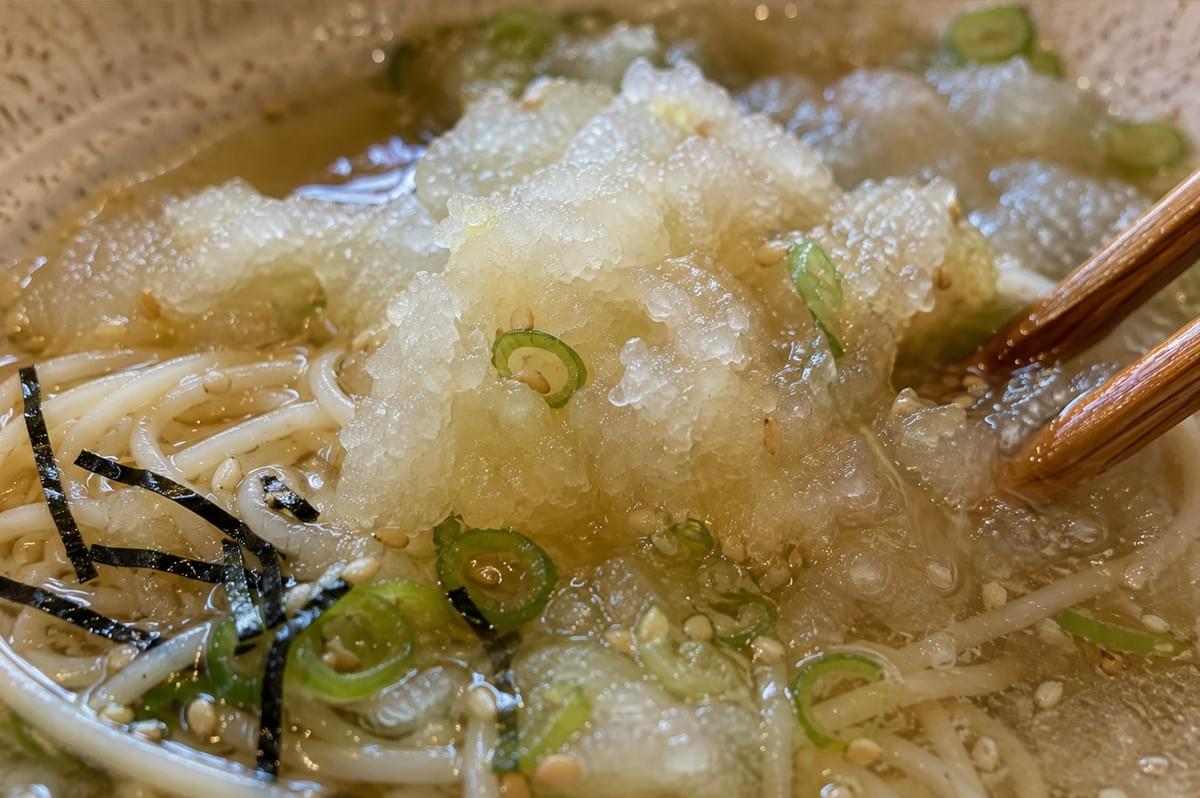
The first impression is coolness. The noodles slip easily through the broth, carrying the floral sharpness of yuzu and the savoury clarity of dashi. The grated daikon melts softly, creating a gentle cloudiness that rounds the citrus.
There is no heaviness here. The soy gives salt, the mirin gives quiet sweetness, and the nori adds a trace of the sea. The sesame seeds bring a faint nuttiness, just enough to keep the dish from feeling too fragile.
Yuzu Snow Noodles tastes like a pause. It is refreshing, but not empty. Light, but not plain. Elegant, but not distant.
Bringing This Dish Home
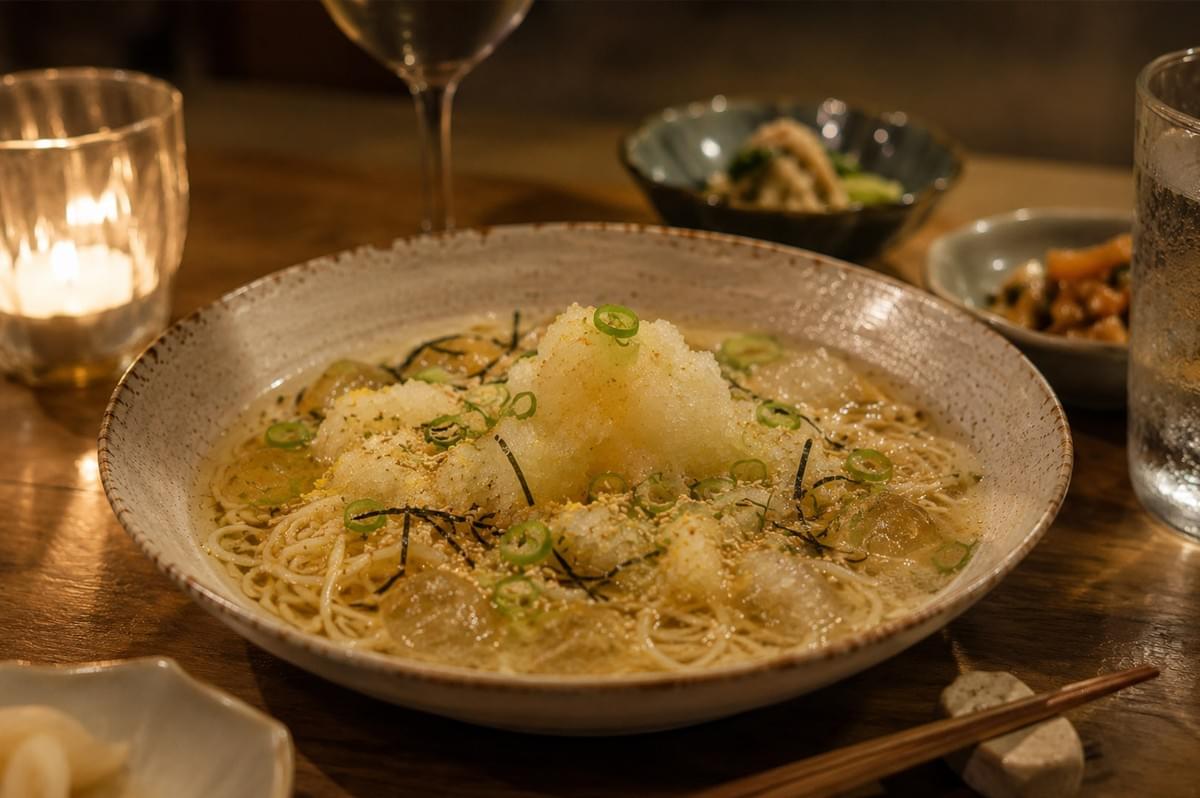
For Singapore home cooks, this recipe fits naturally into warm evenings, weekend lunches, or small dinner gatherings. It can be served as a starter before grilled fish, as a light lunch on its own, or as part of a Japanese-inspired spread with tamagoyaki, chilled tofu, or simple greens.
The ingredients are approachable. Yuzu juice can be found in Japanese supermarkets, while daikon, spring onion, nori, and noodles are easy to source. If yuzu is unavailable, use a careful blend of lemon and lime, though the aroma will be different.
What matters most is the feeling of the dish. Keep it cold. Keep it clean. Keep it uncluttered.
This is not a recipe that asks for performance. It asks for attention.
Behind the Scenes Chef Masa Insight
Chef Masa once told me that cold food reveals the cook’s discipline. Heat can blur flavours and create comfort through richness. Cold food is less forgiving. Salt becomes clearer. Citrus becomes sharper. Texture becomes more noticeable.
That is why Yuzu Snow Noodles feels so simple, yet requires care. The noodles must be rinsed well. The broth must be balanced before serving. The daikon must be grated at the right moment so it remains fresh and sweet.
In the kitchen, Chef Masa treats this dish almost like a palate cleanser. It is a reminder that elegance does not always come from rarity or complexity. Sometimes it comes from restraint, timing, and the courage to leave space in the bowl.
For readers who enjoy this quiet style of Japanese cooking, you may also like the refined cold noodle expression in Shirasu Uni Cold Somen, another dish that explores freshness, delicacy, and the beauty of chilled Japanese flavours
