

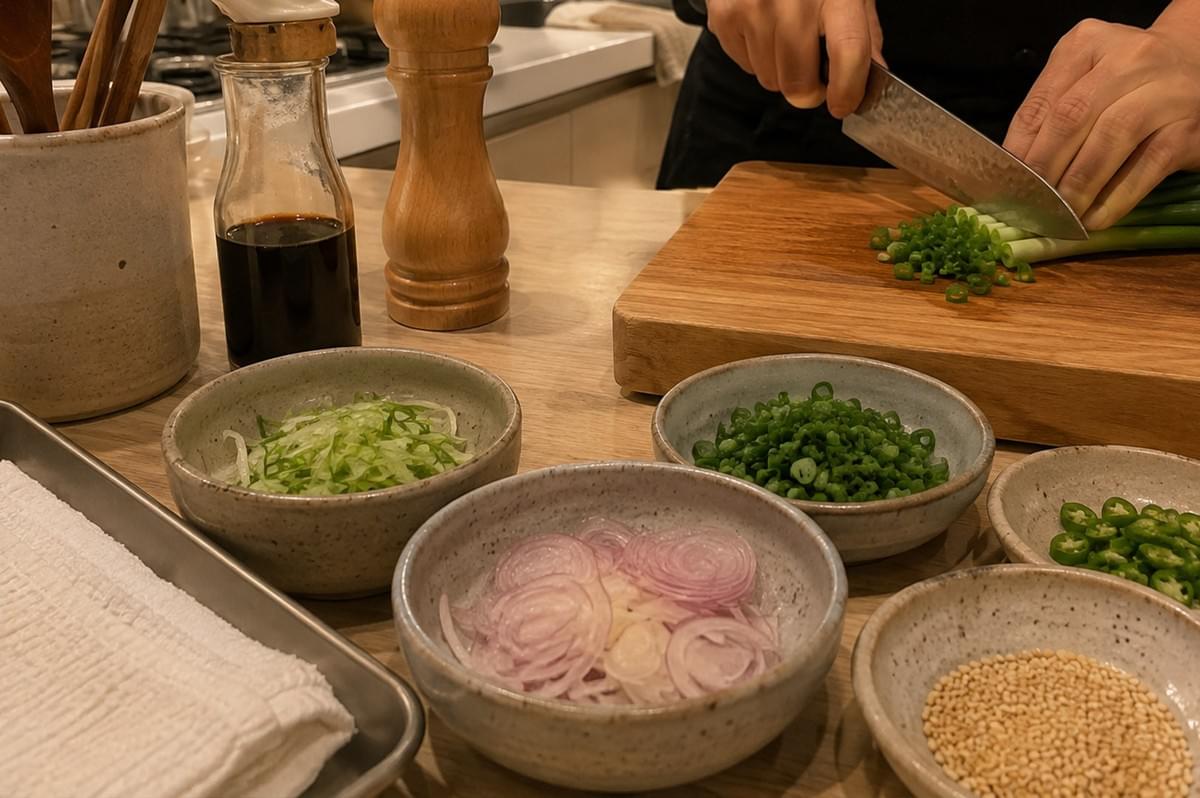
In every kitchen, results are rarely shaped by one dramatic gesture. More often, they are shaped by quiet details. A knife wiped between cuts. Rice rested before serving. Fish brought out of the fridge a few minutes earlier. A bowl warmed before soup is poured in. These actions look small, but they change everything.
At Team Masa, we believe better cooking begins before the flame is turned on. This is true in an omakase kitchen, and it is also true in a Singapore home kitchen where space is tight, humidity is high, and dinner often needs to happen after a long day. The difference between ordinary and memorable food is not always expensive ingredients. Sometimes, it is attention.
One of the first details we teach is preparation. Before cooking, look at your board, your bowls, your towel, your seasonings. Are they ready? In Japanese cooking, this sense of order is not about being strict. It is about creating calm. When soy sauce, mirin, salt, oil, and garnish are already within reach, the cook can listen to the food instead of rushing after it.
Heat is another small detail with big consequences. Many home cooks in Singapore know the frustration of soggy skin, limp vegetables, or uneven browning. Often, the pan was not ready. A properly heated pan gives ingredients confidence. Fish sears instead of steams. Mushrooms brown instead of leak water. Garlic perfumes the oil without burning instantly. Good cooking is not only about what you add, but when you add it.
Seasoning also lives in the details. Salt added early behaves differently from salt added at the end. A pinch before cooking draws out moisture and deepens flavour. A pinch after cooking brightens the surface. This is why tasting matters. Taste when something is raw, when it is half cooked, and when it is finished. Over time, your palate becomes a quiet teacher.
In Japanese cuisine, small details often protect the ingredient’s dignity. A slice of sashimi is not only cut, it is considered. The angle, thickness, temperature, and timing all affect how it lands on the tongue. For readers who love omakase, this is familiar. The chef may appear still, but every movement carries purpose. As the Japan National Tourism Organization explains in its guide to Japanese food culture, seasonality and respect for ingredients are central to the dining experience, and that principle can guide home cooking too.
Texture is where details become visible. Rice that is washed patiently tastes cleaner. Noodles rinsed properly feel brighter. Tempura batter kept cold becomes lighter. Chicken rested after cooking stays juicier. These steps are easy to skip because they do not look exciting. Yet they are often the reason a dish feels composed rather than careless.
For home cooks, the goal is not to imitate a restaurant perfectly. The goal is to build habits that make cooking more reliable. Use a sharper knife. Dry ingredients before searing. Let soup simmer gently instead of boiling aggressively. Finish with a small lift, perhaps yuzu zest, spring onion, sesame, shiso, or a clean squeeze of citrus. Small finishing touches help food feel alive.
The most important detail may be attention itself. Cooking improves when we stop treating recipes as instructions to survive and begin treating them as conversations. What does the rice need today? Is the fish cold? Is the broth too loud? Is the garnish helping, or distracting?
At Team Masa, we have learned that excellence is rarely loud. It is built quietly, through repeated care. For a beautiful example of how a modest bowl can become memorable through timing, balance, and restraint, read Soy-Braised Chicken with Burnt Garlic Rice, a dish that reminds us how humble details can create deep comfort.
