

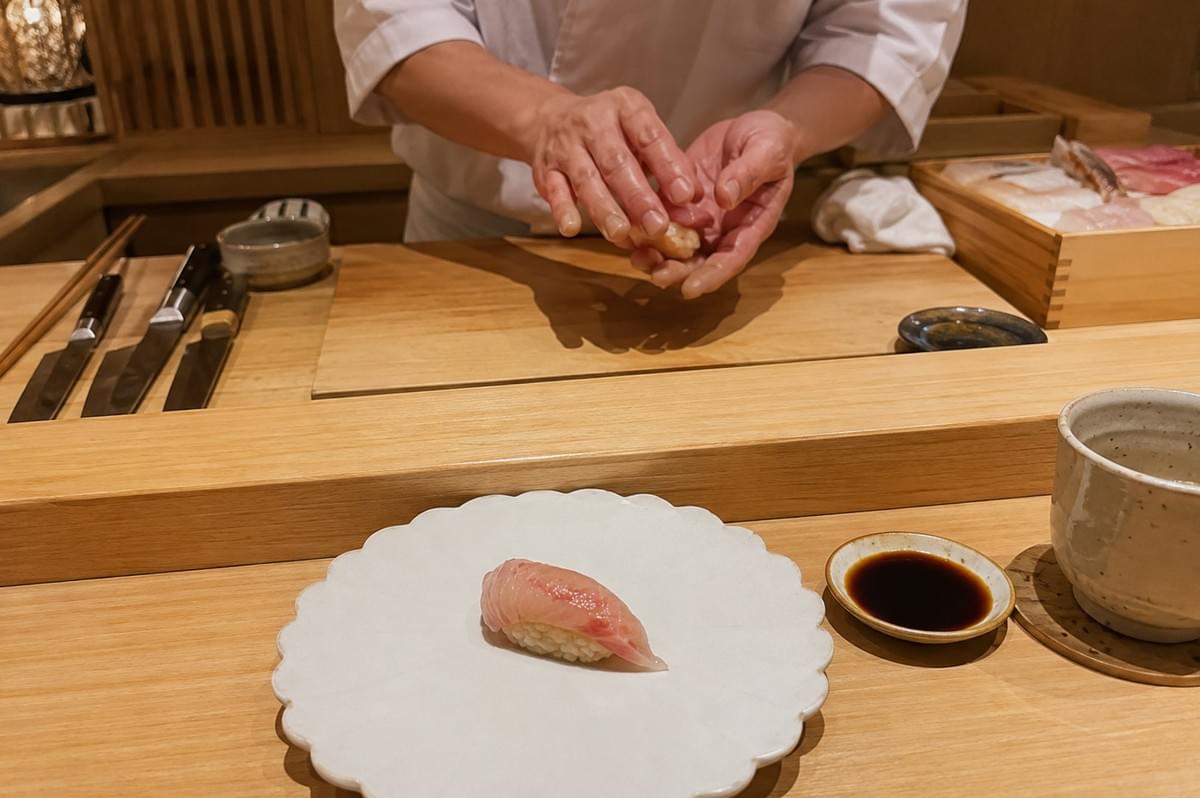
In Japanese cuisine, simplicity is never about doing less. It is about understanding more. A dish that appears quiet on the plate often carries years of knowledge, technique, and patience behind it. For me, this is one of the greatest lessons I have learned as a chef.
Many people believe that creating a complex dish with many components is the ultimate expression of skill. However, in an omakase kitchen, the true challenge is often found in preparing something that looks effortless. When there are only a few ingredients, every detail becomes visible. The quality of the fish, the temperature of the rice, the balance of seasoning, and the timing of each movement all become part of the experience.
This is why simplicity is the hardest thing to master.
In Japan, there is a deep appreciation for allowing ingredients to express themselves naturally. A beautiful piece of seafood does not need to be hidden behind heavy sauces or excessive decoration. The chef’s role is not to overpower the ingredient, but to reveal its character.
I often tell my team that a great dish begins before cooking starts. It begins with choosing the right ingredients, understanding their season, and respecting where they come from. The work happens long before the guest takes the first bite.
For home cooks in Singapore, this philosophy can be especially meaningful. Our kitchens are often filled with access to ingredients from different cultures, from Japanese produce to local favourites. The temptation is always to add more flavours, more sauces, and more techniques. But sometimes, the most memorable meals come from learning when to stop.
A simple bowl of rice, a perfectly grilled fish, or a carefully prepared soup can create a powerful memory because it feels honest. Food does not always need to surprise us. Sometimes it needs to comfort us.
The Japanese concept of shun, or enjoying ingredients at their peak season, is an important part of this approach. Understanding seasonality allows chefs and home cooks to work with ingredients when they naturally have the most flavour. The Japan National Tourism Organization also highlights how seasonal ingredients are central to Japanese culinary culture and dining experiences.
In my kitchen, simplicity also means discipline. A chef must repeat the same fundamentals until they become instinctive. Making sushi rice may seem simple, but achieving the right texture, temperature, and seasoning requires constant attention. Preparing a piece of fish may require only a few movements, but those movements must come from experience.
This applies beyond restaurants. For home cooks in Singapore who enjoy Japanese cooking, mastering simplicity can begin with small steps. Choose one excellent ingredient. Learn how to handle it properly. Understand how heat changes texture. Taste carefully. These small practices build confidence and appreciation.
The beauty of simple cooking is that it creates space for connection. It allows diners to notice flavours, textures, and memories. It encourages us to slow down and appreciate the moment rather than rush toward the next sensation.
An omakase experience is built on this belief. Each course does not need to compete for attention. Instead, every dish has its own purpose, creating a journey through balance and harmony.
I continue to learn from simplicity every day. The more I cook, the more I understand that mastery is not about adding more. It is about knowing what truly matters and having the courage to let it shine.
This philosophy can be experienced through dishes where every element has a reason to exist, such as my Shirasu Uni Cold Somen, where delicate flavours and precise preparation come together in a refined expression of Japanese cuisine.
