

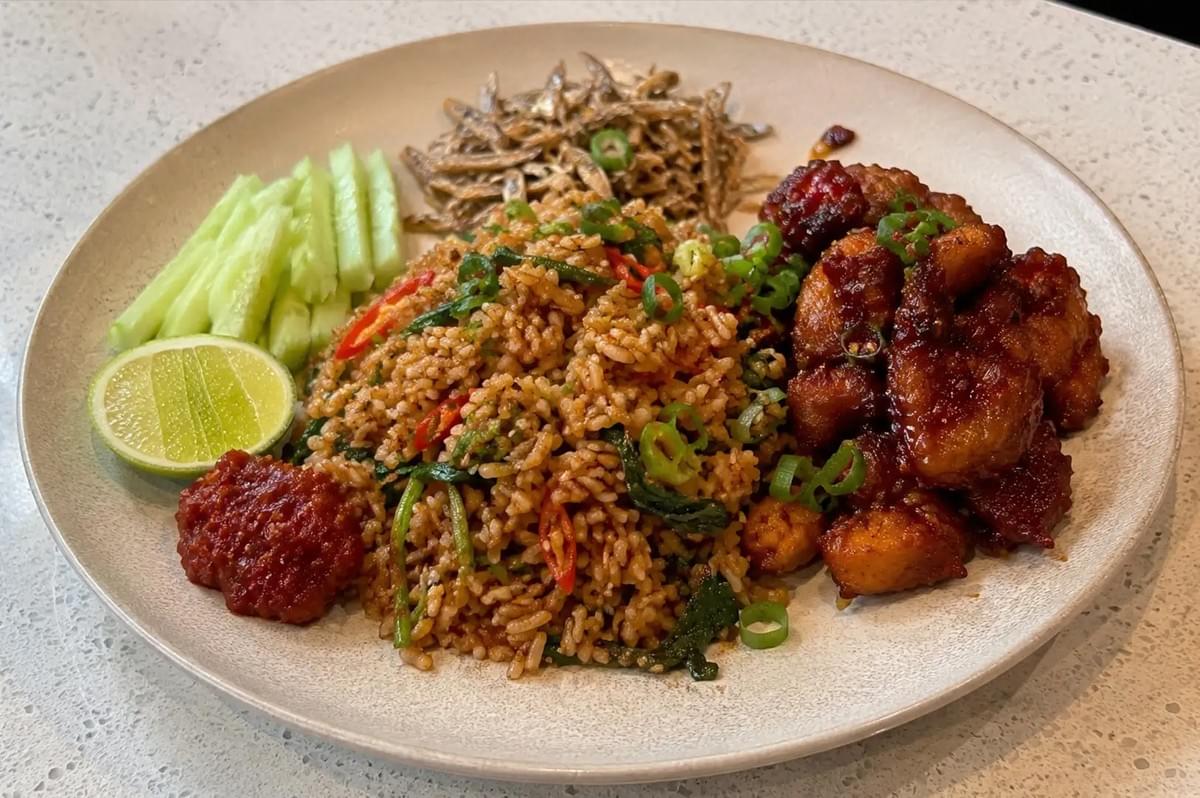
The first sound is not the crackle of rice in the wok. It is the quick, sharp rattle of ikan bilis hitting hot oil.
Within seconds, the kitchen fills with the aroma of toasted anchovies, garlic, chilli, and belacan. Cold rice follows, scattering across the wok as the grains absorb the sambal-stained oil. At the side of the stove, pieces of chicken turn glossy and crimson, their edges caramelizing against the metal.
This is the kind of dish that gathers everyone around the staff table before the plates have even been set down.
Kampung fried rice with sambal chicken and crispy ikan bilis is bold, smoky, savoury, and deeply comforting. It carries the familiar flavours of a Singaporean neighbourhood kitchen, but every component is handled with enough care to make the finished plate feel special.
The Story Behind This Staff Meal
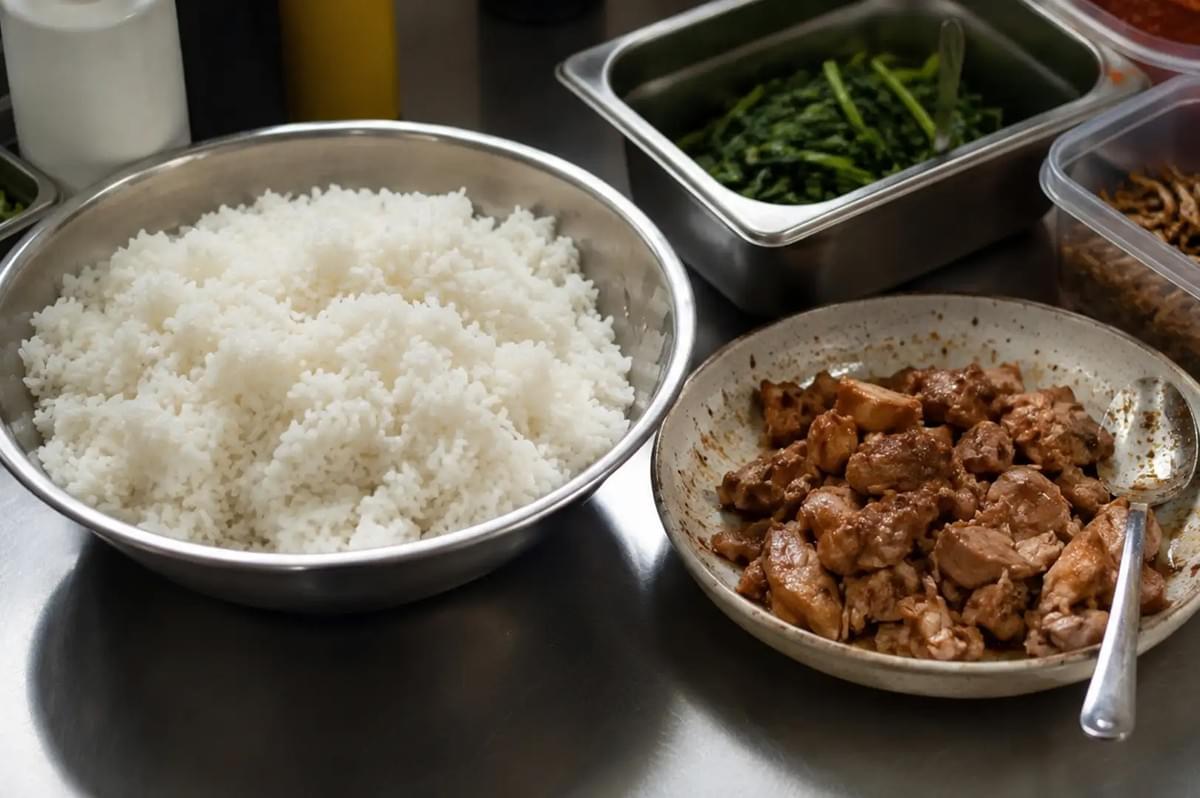
A stainless steel kitchen counter prep station holds a large metal bowl overflowing with fluffy, cooked white rice next to a shallow ceramic dish filled with marinated chicken pieces and a metal spoon. In the background sit stainless steel containers filled with leafy green vegetables and small dried anchovies.
In restaurant kitchens, staff meals often begin with practical questions. What ingredients are available? What can feed everyone quickly? What will taste satisfying after hours spent preparing food for other people?
Fried rice answers all three.
This version was inspired by the flavours of nasi goreng kampung, a rustic fried rice found throughout Malaysia and Singapore. “Kampung” means village, and the dish reflects a straightforward style of cooking built around rice, chilli, aromatics, vegetables, anchovies, and whatever protein is on hand.
At Chef Masa, we like staff meals to feel generous rather than accidental. Leftover rice becomes an advantage. Chicken trimmings are marinated in sambal. Ikan bilis provide crunch and concentrated savouriness. Kangkung or leafy greens bring freshness to the wok.
The result is familiar enough to comfort the team, yet layered enough to remind us that simple food still deserves attention.
Flavour Philosophy and Technique
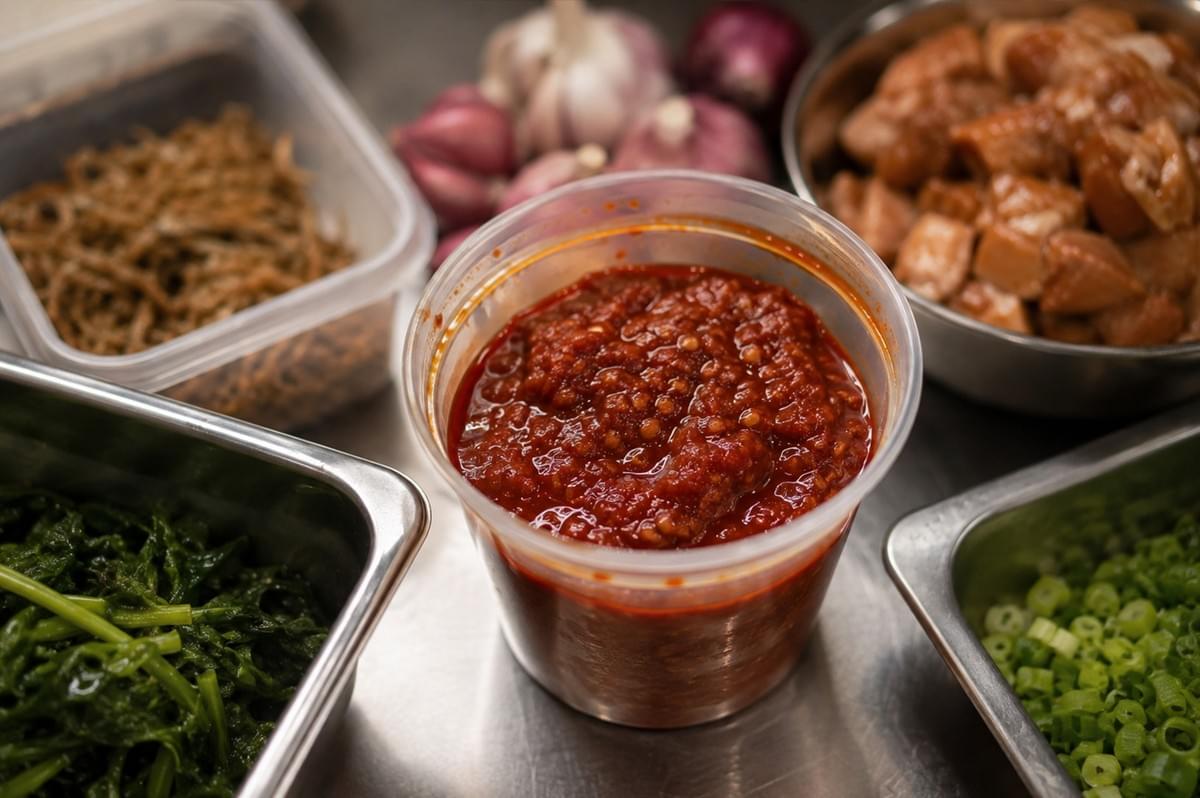
A close-up shot focuses on a clear plastic container filled with thick, seed-filled red sambal paste on a metal preparation surface. Around the container lie various ingredients in separate dishes, including whole red shallots, garlic bulbs, dark leafy greens, chopped scallions, marinated meat, and small dried fish.
The strength of this dish comes from contrast.
The rice should be dry and separate, while the chicken should remain juicy. The sambal brings heat and sweetness, but the ikan bilis add a salty, crisp counterpoint. Belacan gives the dish depth, while lime cuts through the richness at the end.
There are three important techniques.
First, use cold, day-old rice. Freshly cooked rice contains too much moisture and can become soft or clumpy in the wok.
Second, cook the ingredients in stages. Crowding everything into the pan at once lowers the temperature and prevents proper browning.
Third, reserve some crispy ikan bilis for the final garnish. If all of it is stirred into the rice, the anchovies will gradually lose their crunch.
A very hot wok also helps create the lightly charred aroma known as wok hei. At home, this can be achieved by cooking in smaller batches and allowing the rice to remain undisturbed for a few seconds between tosses.
Ingredients
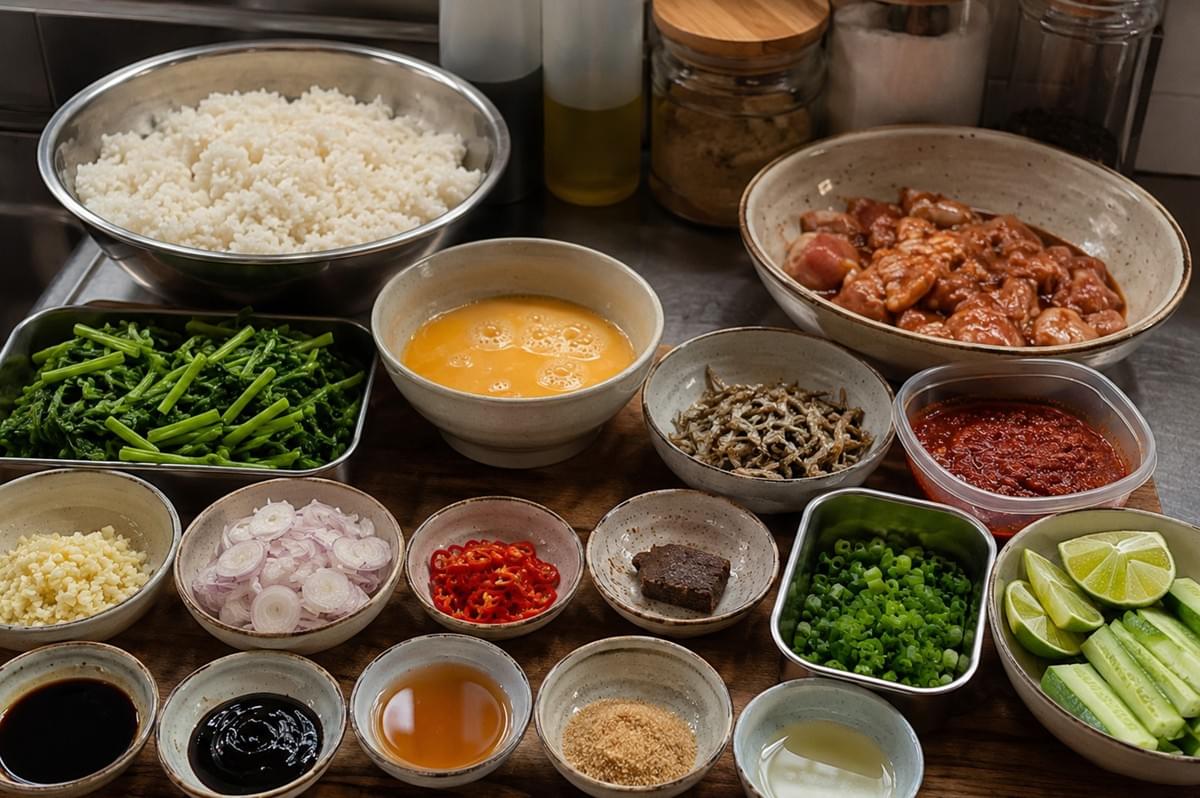
An overhead array of mis en place ingredients arranged across a wooden kitchen counter includes a bowl of cooked white rice, whisked eggs, leafy greens, marinated chicken pieces, dried anchovies, sambal, red chili slices, chopped shallots, minced garlic, shrimp paste, chopped scallions, cucumber slices, lime wedges, and various liquid seasonings in small ceramic bowls.
Serves 4
For the sambal chicken
- 500 g boneless chicken thigh, cut into bite-sized pieces
- 2 tablespoons sambal chilli paste
- 1 tablespoon light soy sauce
- 1 teaspoon kecap manis
- 1 teaspoon lime juice
- 1 teaspoon brown sugar
- 1 tablespoon neutral cooking oil
For the crispy ikan bilis
- 60 g ikan bilis, cleaned
- 3 tablespoons neutral cooking oil
- 1 small pinch of sugar, optional
For the kampung fried rice
- 4 cups cold cooked jasmine rice
- 3 cloves garlic, finely chopped
- 3 shallots, thinly sliced
- 1 red chilli, sliced
- 1 teaspoon toasted belacan
- 2 tablespoons sambal chilli paste
- 2 eggs, lightly beaten
- 1 cup chopped kangkung, chye sim, or baby spinach
- 1 tablespoon light soy sauce
- 1 tablespoon kecap manis
- 1 teaspoon fish sauce
- 2 spring onions, sliced
- 2 tablespoons neutral cooking oil
- White pepper, to taste
To serve
- Lime wedges
- Sliced cucumber
- Extra sambal
- Fried egg, optional
- Sliced spring onion
Step-by-Step Instructions
- Marinate the chicken. Combine the chicken thigh with sambal, light soy sauce, kecap manis, lime juice, brown sugar, and oil. Mix thoroughly and leave to marinate for at least 20 minutes. For deeper flavour, refrigerate it for up to 4 hours.
- Prepare the rice. Use your fingers or a rice paddle to separate any clumps in the cold rice. This small step helps the grains cook evenly and prevents large pieces from remaining pale or underseasoned.
- Fry the ikan bilis. Heat 3 tablespoons of oil in a wok over medium heat. Add the ikan bilis and fry, stirring often, until golden and crisp. This usually takes 3 to 5 minutes. Transfer them to a plate lined with paper towel. Sprinkle with a tiny pinch of sugar, if desired.
- Cook the sambal chicken. Remove most of the anchovy oil from the wok, leaving about 1 tablespoon behind. Increase the heat to medium-high. Add the marinated chicken in a single layer and cook without moving it for 2 minutes. Stir-fry until browned, caramelised, and fully cooked. Transfer the chicken to a clean plate.
- Fry the aromatics. Wipe the wok if there are heavily burnt spots. Add 2 tablespoons of oil and heat until shimmering. Add the shallots, garlic, and sliced red chilli. Stir-fry for 30 seconds, then add the toasted belacan and sambal paste. Cook until fragrant and the oil begins to separate from the sambal.
- Scramble the eggs. Push the sambal mixture to one side of the wok. Pour the beaten eggs into the empty space. Allow them to set slightly, then scramble them into soft pieces.
- Add the rice. Increase the heat to high. Add the cold rice and toss it through the eggs and sambal. Press out any remaining clumps with the back of the spatula.
- Season the fried rice. Add the light soy sauce, kecap manis, fish sauce, and a pinch of white pepper. Toss continuously until every grain is evenly coloured and steaming hot.
- Add the greens. Stir in the chopped kangkung or leafy vegetables. Cook just until the stems are tender and the leaves have wilted. Avoid overcooking them, as their freshness balances the rich sambal.
- Finish the dish. Return half of the crispy ikan bilis to the wok, along with the sliced spring onions. Toss briefly. Taste and adjust with additional soy sauce, sambal, or lime juice.
- Serve immediately. Spoon the fried rice onto warm plates. Top with the sambal chicken and the remaining crispy ikan bilis. Serve with cucumber, lime wedges, and extra sambal.
Kenji’s Notes
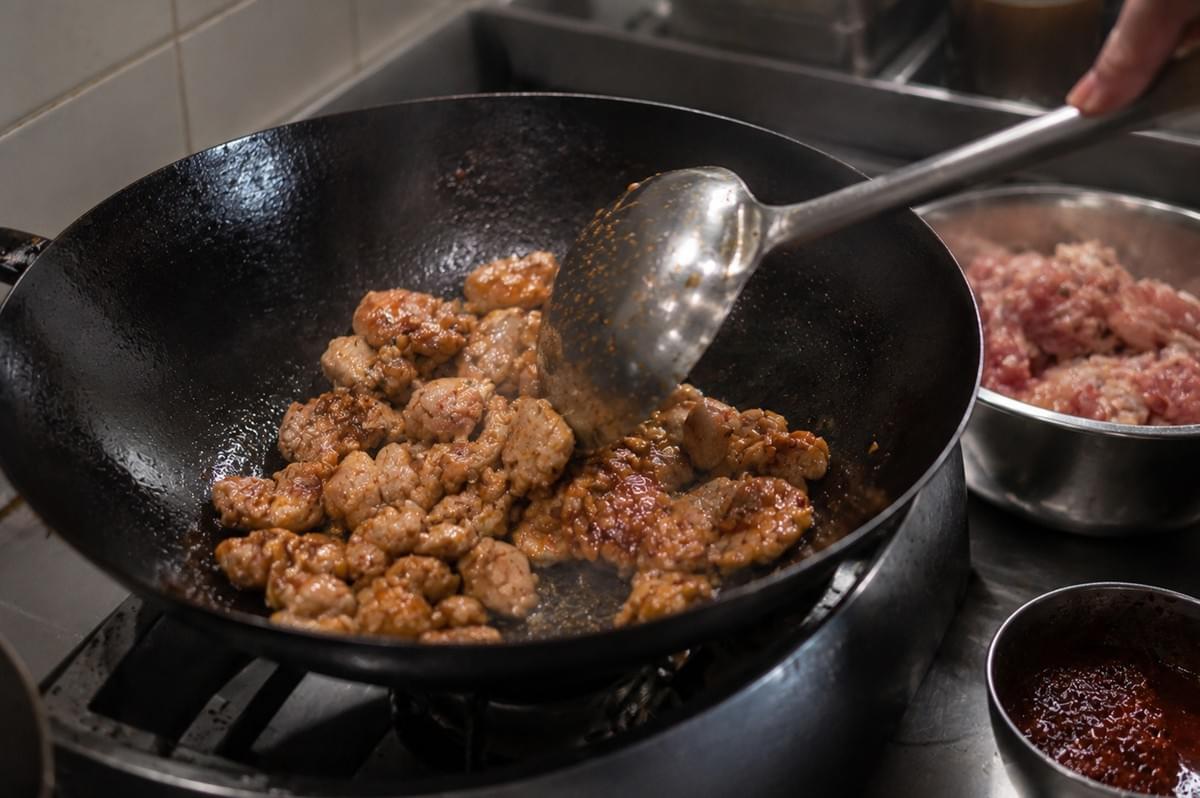
A black wok sits over a stove flame as a metal ladle tosses bite-sized pieces of seasoned chicken, creating a light sear as they cook in oil. Next to the wok, a metal prep bowl contains additional raw seasoned meat, and a small container of red sambal rests nearby on the stainless steel surface.
Dry rice is essential. If you do not have day-old rice, spread freshly cooked rice across a large tray and allow it to cool completely. Refrigerate it uncovered for one to two hours before frying.
Chicken thigh is preferable to breast because it stays tender under high heat. Cut the pieces evenly so they cook at the same speed.
Belacan should be toasted before use. Wrap it loosely in foil and toast it in a dry pan until aromatic, or heat it carefully over a low flame. A little goes a long way.
For stronger wok hei, cook the rice in two batches. A smaller amount of food allows the wok to stay hotter.
Keep the ikan bilis dry before frying. Moisture causes splattering and prevents them from becoming properly crisp.
Tasting Notes
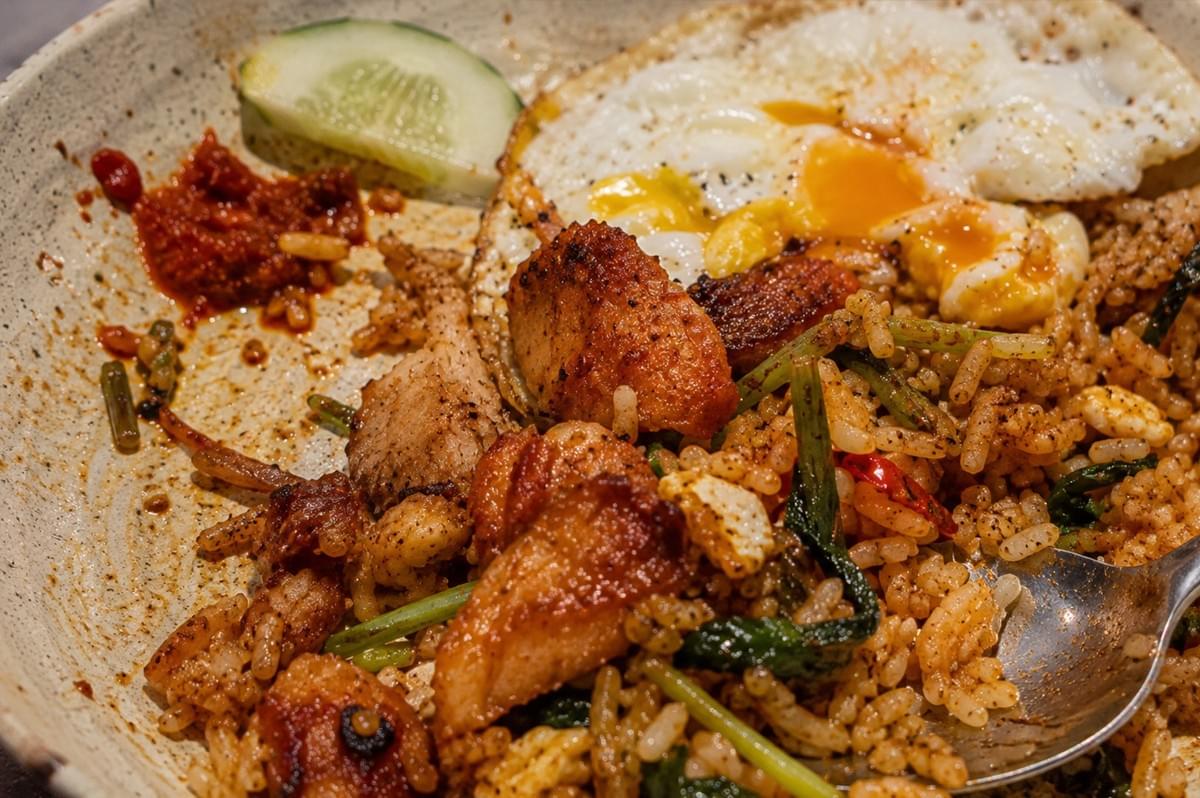
A top-down, close-up view shows a partially eaten plate of kampung fried rice mixed with seared chicken pieces, green leafy vegetables, and a fried egg with a runny yellow yolk. A metal spoon rests in the dish alongside a slice of cucumber and a smear of red chili sambal on the plate's rim.
The first bite begins with the crunch of ikan bilis, followed by smoky rice coated in savoury sambal. The chicken is sweet, spicy, and lightly caramelised, with enough richness to make the dish feel substantial.
Belacan and fish sauce create a deep, fermented savouriness without overpowering the other ingredients. The leafy greens bring a clean, slightly bitter note, while lime adds a bright finish.
A fried egg makes the plate even more comforting. Once the yolk is broken, it forms a creamy sauce that softens the chilli and coats the rice.
Bringing This Dish Home
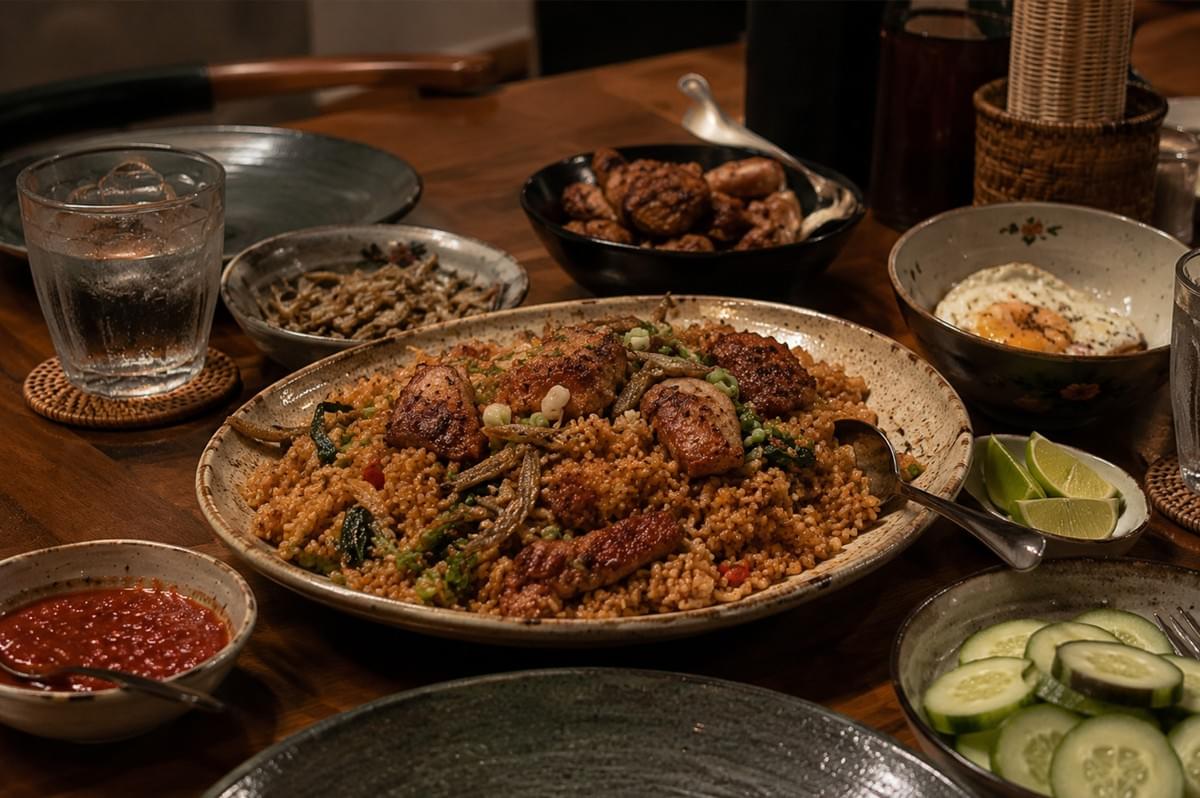
A warm, atmospheric dining table setup features a large central serving platter of kampung fried rice garnished with seared chicken pieces and herbs. Surrounding the main platter are family-style side dishes including a bowl of fried anchovies, a dish of sliced cucumbers, lime wedges, extra chili sambal, a fried egg in a small bowl, and a glass of iced water.
This recipe is flexible by nature. That is part of what makes kampung fried rice such a useful home-cooked meal.
Replace the chicken with prawns, sliced beef, tofu, or leftover roast meat. Add long beans, cabbage, bean sprouts, or frozen peas depending on what is available. For a milder version, reduce the sambal and serve extra chilli at the table.
The individual components can also be prepared ahead. Marinate the chicken in the morning, cook the rice the day before, and fry the ikan bilis several hours in advance. Store the anchovies in an airtight container once completely cool.
When it is time to eat, the final stir-fry comes together quickly.
Serve the dish in the centre of the table with cucumber, lime, extra sambal, and cold drinks. It is especially good for casual family dinners, late-night suppers, or weekends when you want something deeply satisfying without preparing several separate dishes.
Behind the Scenes at Chef Masa
Staff meal is one of the few moments when the entire kitchen pauses together.
This fried rice often appears after a busy service because it uses familiar ingredients and delivers immediate comfort. Someone fries the ikan bilis. Another cook prepares the sambal. The rice hits the wok only when everyone is nearly ready to sit down.
What makes the dish memorable is not an expensive ingredient or elaborate presentation. It is the careful treatment of ordinary things.
We fry the anchovies until genuinely crisp. We let the chicken caramelise instead of rushing it. We season the rice in layers and finish it with fresh lime.
That is the quiet principle behind many Chef Masa staff meals: cook simply, but never carelessly.
For another comforting flavours, explore our recipe for Midnight Miso Risotto with Crispy Mochi Rice
