

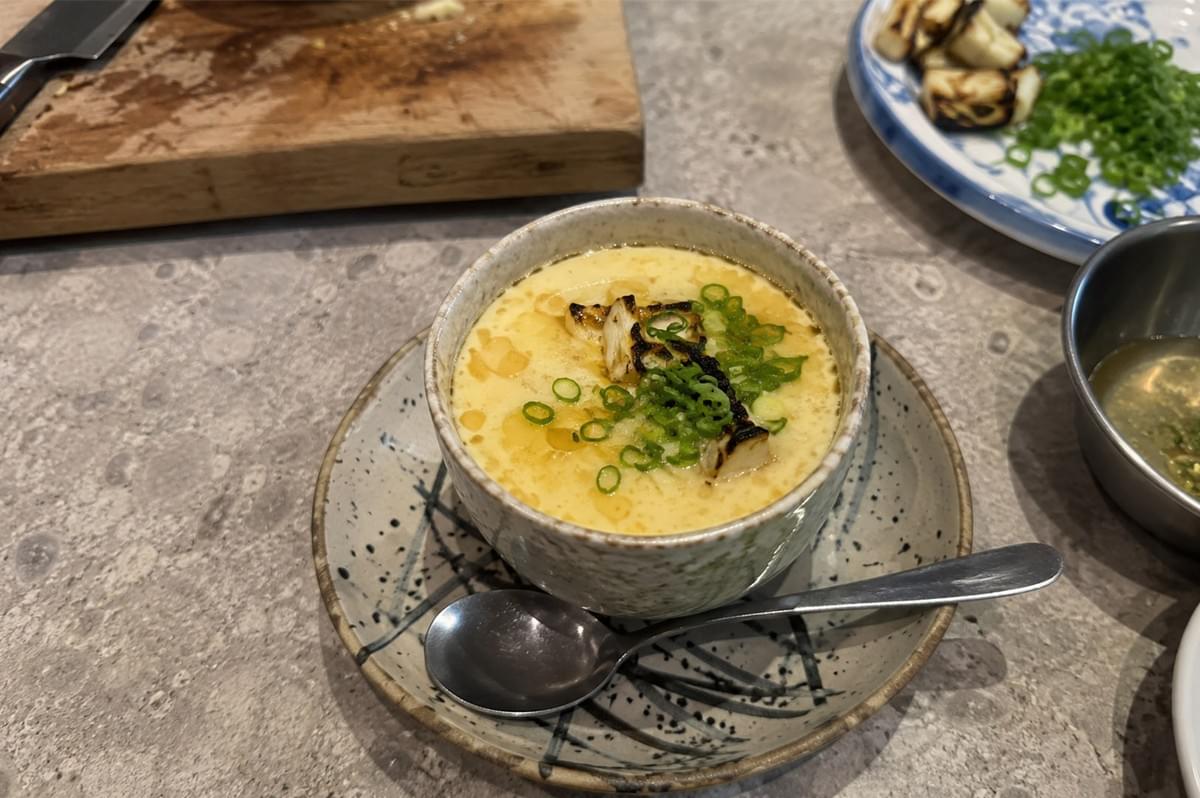
There is a moment in the kitchen when a leek stops being ordinary.
At first, it is sharp and grassy, almost too direct. Then it meets heat. The outer layers blister, the pale center softens, and the air fills with a sweetness that feels both familiar and new. In Chef Masa’s kitchen, this is never treated as a small transformation. It is watched closely. The leek must burn just enough to become fragrant, but not so much that bitterness takes over.
This Burnt Leek Chawanmushi with Ginger Oil begins there, with smoke, sweetness, and restraint.
Chawanmushi is often described as a Japanese steamed egg custard, but that feels too simple for what it can become. At its best, it is a quiet dish. It does not shout. It asks you to slow down, lift the spoon gently, and notice the way warmth, aroma, and texture arrive together.
Here, Chef Masa gives the classic custard a modern, ingredient-led interpretation. The burnt leek brings depth. The ginger oil adds brightness and fragrance. The custard itself remains soft, delicate, and almost cloud-like. It is comfort food, but refined. It is experimental, but still rooted in Japanese cooking.
Origin Story
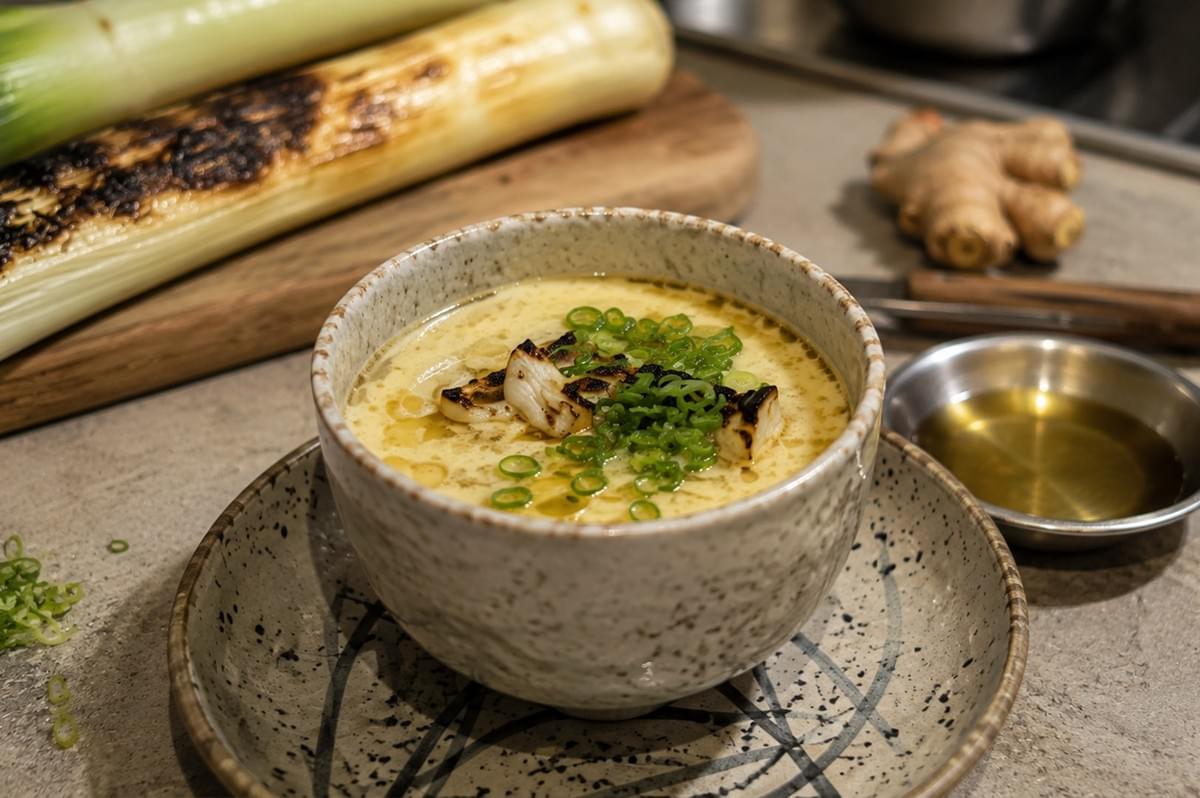
I first saw Chef Masa make this version after service, when the kitchen had already quieted. The counters were clean, the knives wiped, and only a few ingredients remained near the stove: leeks, eggs, dashi, and a small knob of ginger.
He held up one leek and said, “This one has more to say after fire.”
That sentence stayed with me.
Traditional chawanmushi often carries small treasures inside: chicken, prawn, ginkgo nut, shiitake, or kamaboko. Chef Masa’s version removes much of that familiar architecture and places attention on one main ingredient. The leek becomes both seasoning and centerpiece. Its sweetness infuses the custard, while a few charred pieces rest on top as a reminder of where the flavour began.
The ginger oil came later. Chef Masa wanted something that would not disturb the custard’s softness. Fresh grated ginger was too sharp. Pickled ginger was too loud. Ginger oil, warmed gently and spooned over at the end, gave the dish what it needed: a clean aromatic lift without breaking the silence of the custard.
Flavor Philosophy and Techniques
This recipe is built around three ideas: controlled bitterness, gentle steaming, and layered aroma.
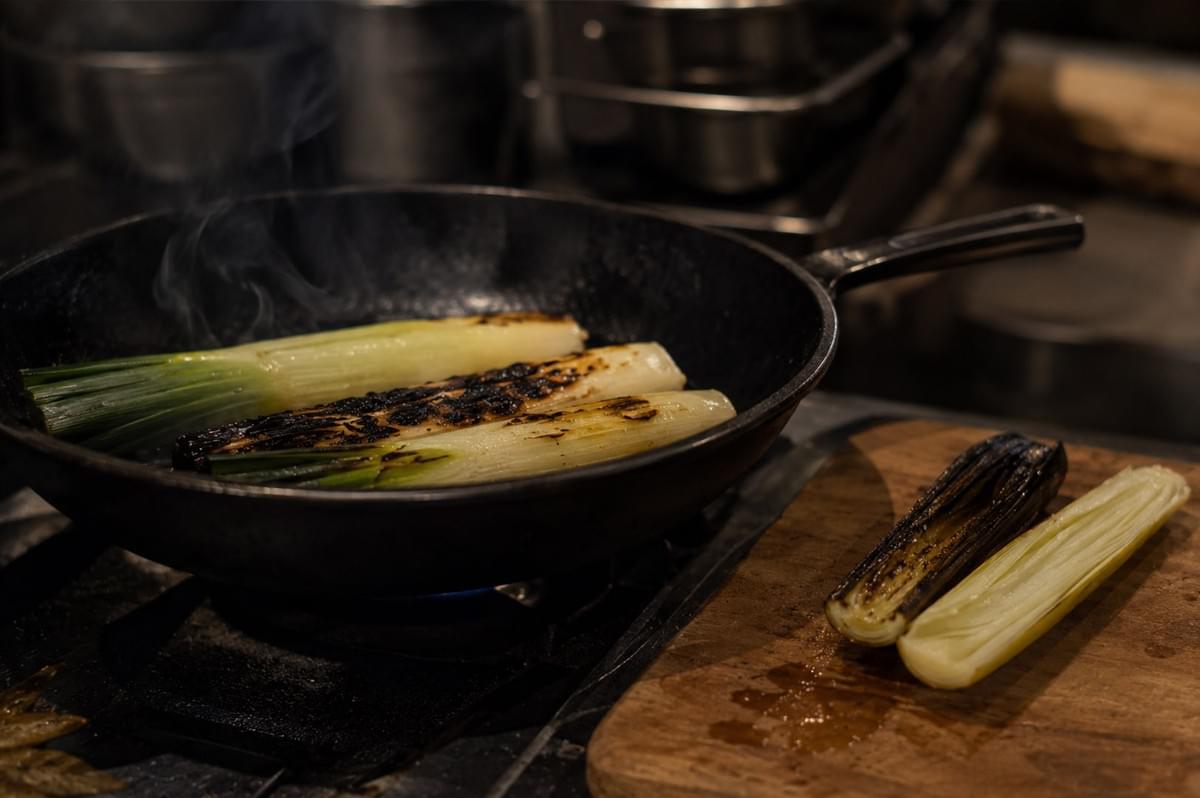
Burning the leek is not about carelessness. It is about creating contrast. When the outer layer chars, it gives a faint bitterness and smoke. Beneath that, the leek turns sweet and tender. Together, they create a deeper flavour than sautéing alone could offer.
The custard depends on ratio and patience. Too much egg, and it becomes firm. Too much heat, and it bubbles or splits. The goal is a texture that trembles when touched, smooth enough to glide across the spoon. Straining the egg mixture is essential because it removes bubbles and uneven strands of egg.
The ginger oil is simple, but it must be handled with restraint. The oil should be warm enough to draw out the ginger’s perfume, but not so hot that it fries or darkens. This creates a finishing oil that feels elegant rather than aggressive.
Ingredients
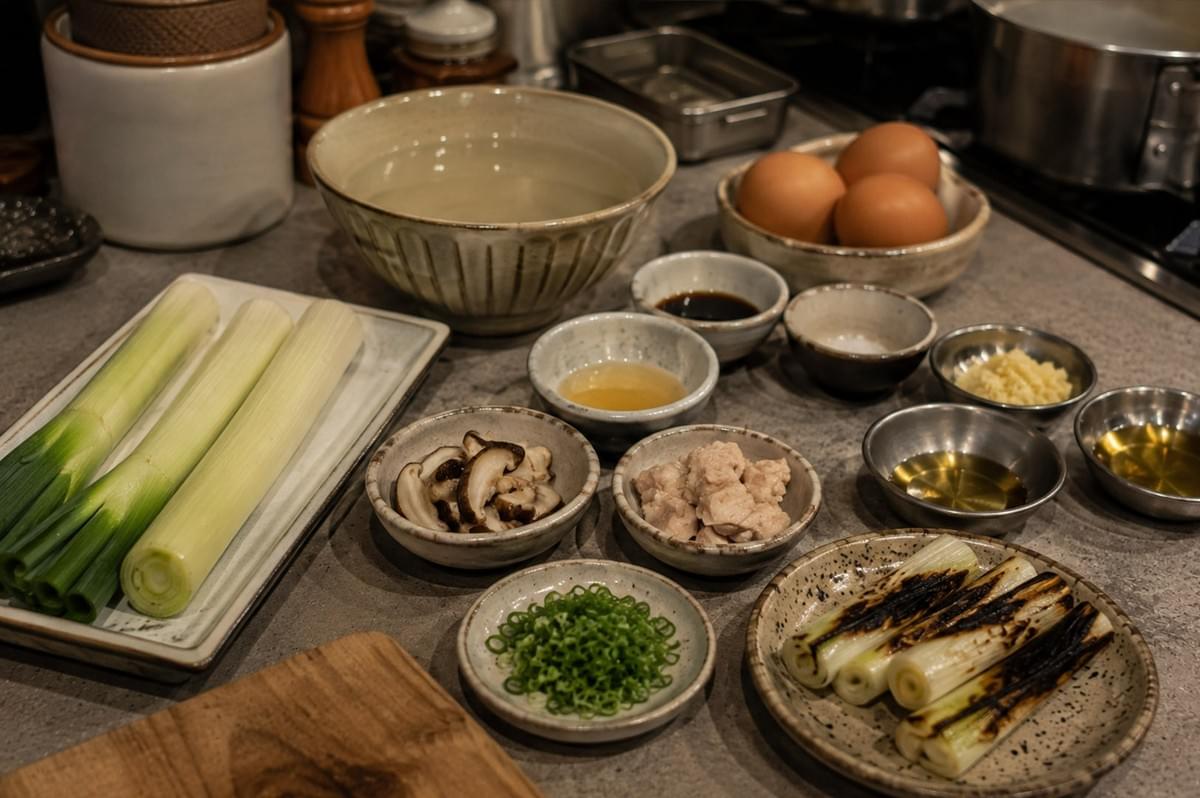
Serves 4 small portions
For the chawanmushi:
- 3 large eggs
- 450 ml dashi, cooled to room temperature
- 1 tablespoon light soy sauce
- 1 teaspoon mirin
- 1 small pinch sea salt
- 1 large leek, white and pale green parts only
- 1 teaspoon neutral oil
- 4 small pieces cooked shiitake or mushroom, optional
- 4 small pieces cooked chicken thigh or prawn, optional
For the ginger oil:
- 3 tablespoons neutral oil
- 1 tablespoon finely grated fresh ginger
- 1 small pinch salt
For garnish:
- Thinly sliced spring onion
- A few drops of light soy sauce, optional
- Extra charred leek pieces
Numbered Step-by-Step Instructions
- Prepare the leek. Trim the root end and remove any tough outer layers. Slice the leek lengthwise, rinse between the layers, and pat completely dry. Moisture will prevent proper charring.
- Char the leek. Heat a dry pan over medium high heat. Brush the leek lightly with neutral oil, then place it cut side down in the pan. Let it cook without moving until the surface is deeply browned and slightly blackened in spots. Turn and cook the other side until softened.
- Rest and chop. Transfer the leek to a board and let it cool slightly. Remove any overly burnt dry edges, then finely chop most of the leek. Reserve a few attractive charred pieces for garnish.
- Make the custard base. In a bowl, gently beat the eggs without creating too much foam. Add the cooled dashi, light soy sauce, mirin, and salt. Stir slowly until combined.
- Strain the mixture. Pour the custard through a fine sieve into another bowl or jug. This step creates the silken texture that defines proper chawanmushi.
- Add the leek. Stir the finely chopped burnt leek into the strained custard. If using mushroom, chicken, or prawn, place a small piece at the bottom of each cup.
- Fill the cups. Divide the custard mixture among four heatproof cups or ramekins. Tap each cup gently on the counter to release air bubbles.
- Prepare the steamer. Bring water to a gentle simmer in a steamer or a wide pot fitted with a rack. The water should not boil aggressively. Wrap the lid with a clean kitchen towel to prevent condensation from dripping onto the custards.
- Steam gently. Cover each cup loosely with foil. Steam over low heat for 12 to 15 minutes, depending on the size of your cups. The custard should be just set, with a slight wobble in the center.
- Make the ginger oil. While the custards steam, warm the neutral oil in a small pan over low heat. Add the grated ginger and salt. Stir for 30 to 45 seconds, just until fragrant. Remove from heat before the ginger browns.
- Finish the dish. Spoon a little ginger oil over each warm chawanmushi. Garnish with reserved charred leek and sliced spring onion. Add a few drops of light soy sauce if desired.
- Serve immediately. Chawanmushi is best eaten warm, when the custard is soft and the ginger aroma is still rising from the surface.
Chef’s Tips or Kenji’s Notes
Do not rush the steaming. Chawanmushi rewards patience. If the heat is too high, the custard can become porous and rough instead of smooth.
Cool the dashi before mixing. Hot dashi can begin cooking the eggs too early, which affects the final texture.
Strain twice for extra refinement. In the restaurant kitchen, Chef Masa often strains delicate custards more than once. For home cooks, one careful strain is enough, but two will give a more polished result.
Use good dashi. This dish has very few ingredients, so the dashi matters. Homemade kombu and bonito dashi will give the cleanest flavour, but a good quality dashi packet can work for home cooking.
Char with confidence. Pale leeks will taste sweet, but they will not give the same smoky depth. Look for dark edges and a soft center.
Tasting Notes
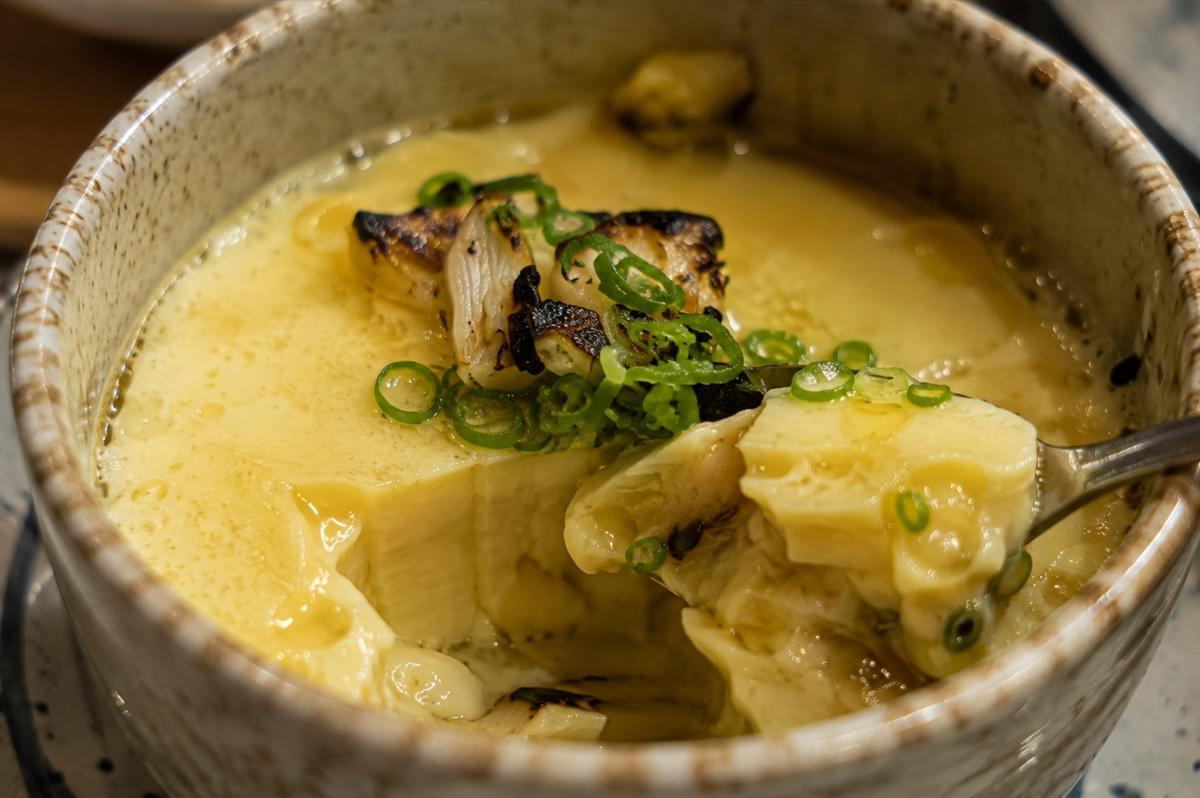
The first spoonful should feel almost weightless. The custard is warm and tender, carrying the savoury clarity of dashi. Then the burnt leek appears, sweet at first, followed by a faint roasted bitterness. The ginger oil arrives last. It does not dominate. It perfumes the dish from above, giving a clean heat that lingers gently.
This is not a rich dish in the heavy sense. Its luxury comes from texture, aroma, and timing. It is the kind of recipe that feels quiet on the table, yet remains in memory longer than expected.
Bringing This Dish Home
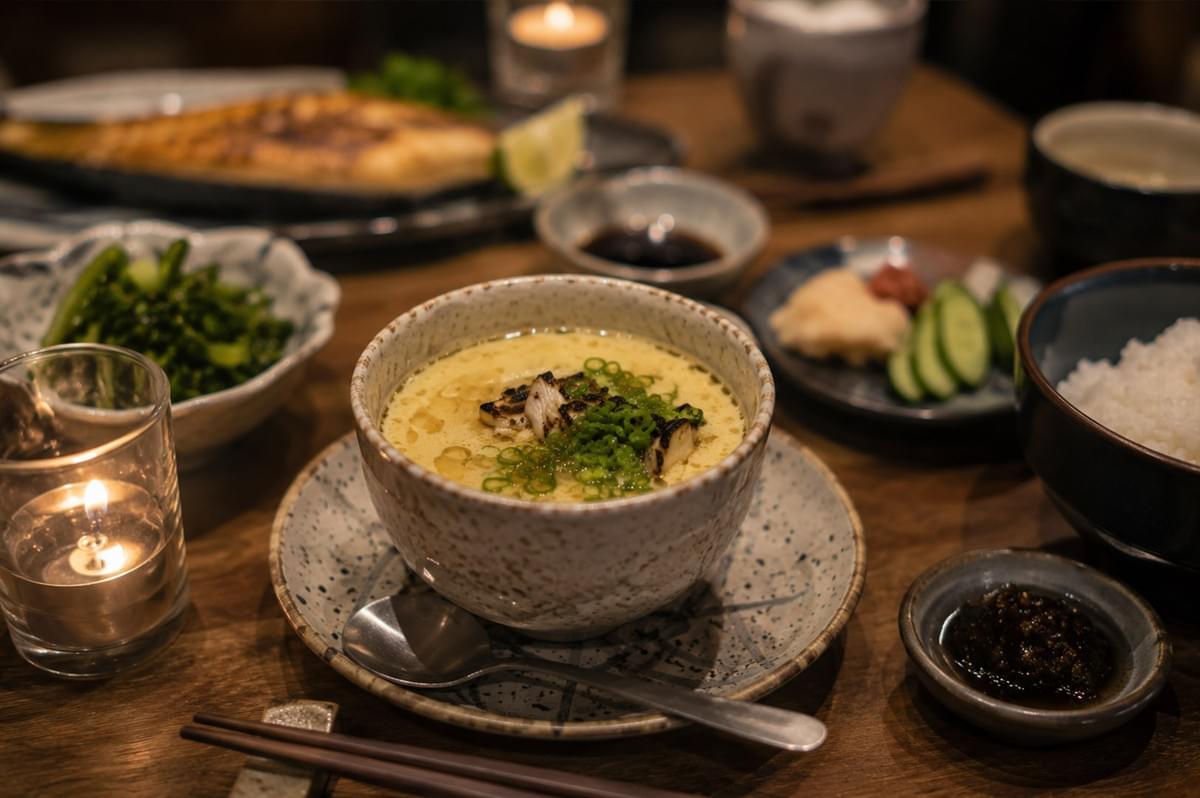
For Singapore home cooks, this recipe fits beautifully into a small kitchen. It does not require restaurant equipment, only attention. A basic steamer, heatproof cups, and a fine sieve are enough.
It also works well as part of a larger meal. Serve it before grilled fish, rice, and pickles, or as a gentle starter before a Japanese inspired dinner. For a more Western crossover approach, pair it with roasted mushrooms, sourdough toast, or a simple salad with sesame dressing.
If you are cooking for guests, you can prepare the custard mixture earlier in the day and keep it chilled. Steam just before serving. The ginger oil can also be made in advance, then gently warmed again before spooning over the top.
This is the kind of dish that teaches through practice. The first time, you learn the steam. The second time, you understand the leek. By the third, you begin to sense why Chef Masa treats small changes as serious discoveries.
Behind the Scenes Chef Masa Insight
Chef Masa often says that innovation does not always mean adding more. Sometimes, it means removing until one ingredient becomes clear.
In this dish, the leek is not decoration. It is the reason for the recipe. The egg custard gives it a quiet stage. The dashi supports it. The ginger oil lifts it. Nothing competes.
Watching him test this dish, I noticed how often he returned to the same question: “Can we taste the fire, but still taste the leek?”
That balance is the heart of the recipe. Too little char, and the dish becomes polite. Too much, and it loses elegance. Just enough, and the chawanmushi gains a deeper voice.
For readers who enjoy refined comfort, Japanese technique, and subtle transformation, Burnt Leek Chawanmushi with Ginger Oil is a beautiful place to begin. It is experimental without being difficult, elegant without being distant, and rooted in the kind of quiet luxury Chef Masa values most.
For another gentle expression of Japanese comfort shaped through Chef Masa’s lens, explore our recipe for Hojicha Panna Cotta with Kuromitsu Syrup, where roasted tea and soft texture meet in a dessert made for slow appreciation.
