

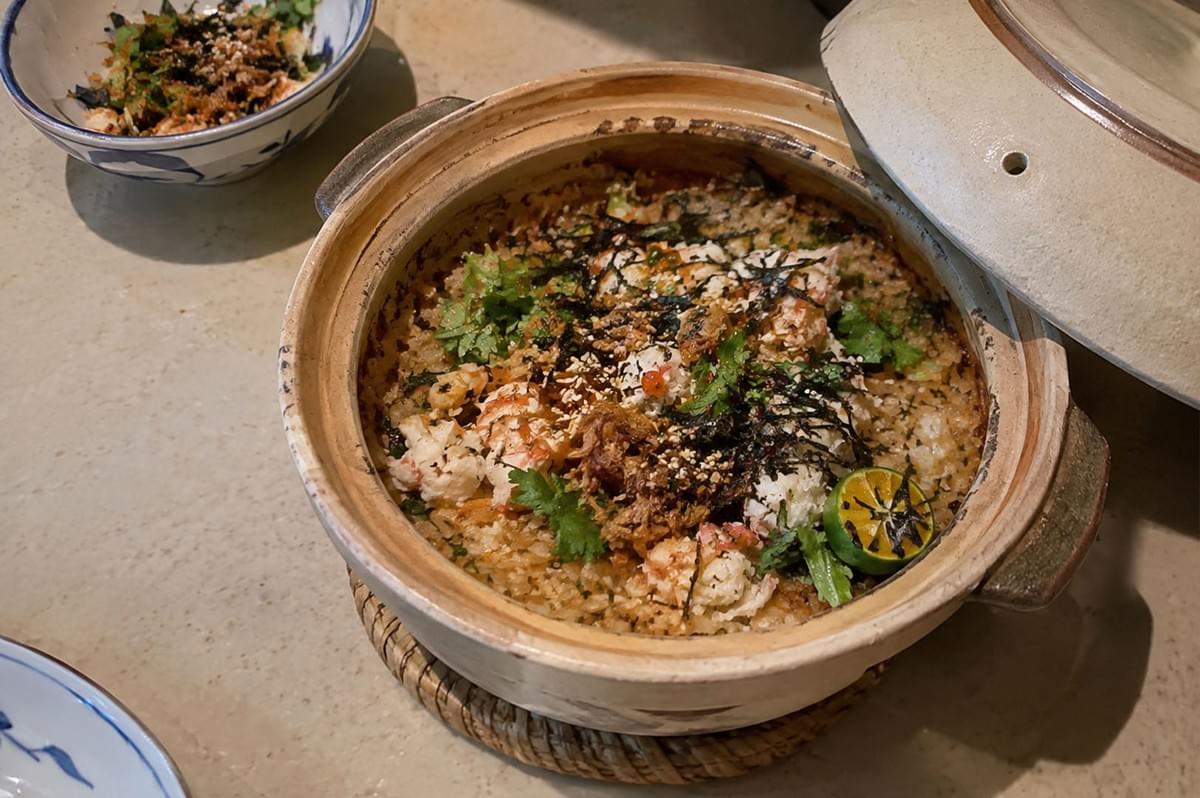
The lid comes first. Before the crab, before the rice, before any of the eating, there is only the clay dome sitting quietly on the table, holding its heat like a secret. Steam pushes at the edges in thin threads. Underneath, something crackles softly, the sound of rice still cooking after the flame has gone quiet.
We waited. That is what claypot rice asks of you. It rewards patience, not appetite alone. The most important part stays hidden until someone lifts the lid, and even then, the pot keeps working, the grains at the bottom deepening into a gentle crust while the steam finishes its last labor.
The idea came from Crab Claypot Broken Rice at LE'V, now a relocating gem in Orchard Plaza, where Vietnamese and Japanese cooking seem to share a table without either one raising its voice. There, the dish felt less like novelty and more like conversation. Two traditions, listening to each other.
Chef Masa did not want to copy it. He wanted to understand it. What was it about this pot of rice that made the room lean in? The dish did not announce itself immediately. It waited beneath the lid, gathering heat, sweetness, and the faint mineral scent of crab into the rice.
For more innovative recipes with the comfort of honest rice, try something more meaty with Chef Masa’s Soy Braised Chicken with Burnt Garlic Rice.
The Origin
The question started at LE'V, from the mere mention of it on Social Eats ‘N’ Drinks, but it followed Chef Masa back to his kitchen. What happens when Vietnamese claypot comfort is approached with Japanese restraint?
Vietnamese broken rice carries a particular kind of generosity. It is warm, fragrant, and forgiving, rice cooked with aromatics, seasoned with fish sauce, meant to fill and comfort. Japanese cooking pulls in another direction. It brings clarity, timing, and a respect for umami that whispers rather than shouts.
Crab sits at the center of that tension, and crab is delicate. Too much seasoning and it disappears. Too much heat and it turns dry. The challenge was never to make the dish louder. It was to keep each part in its own shape.
Chef Masa did not begin by asking how much crab to add. He began by asking how the rice should behave. Soft above, gently crisp below, carrying the crab without becoming heavy. The rice, he decided, was the real subject. Everything else would gather around it.
He cooked it once, tasted, adjusted, then cooked it again. Each round stripped something away rather than piling something on. The first test was not about making the dish richer. It was about making it clearer.
Flavor Philosophy and Techniques
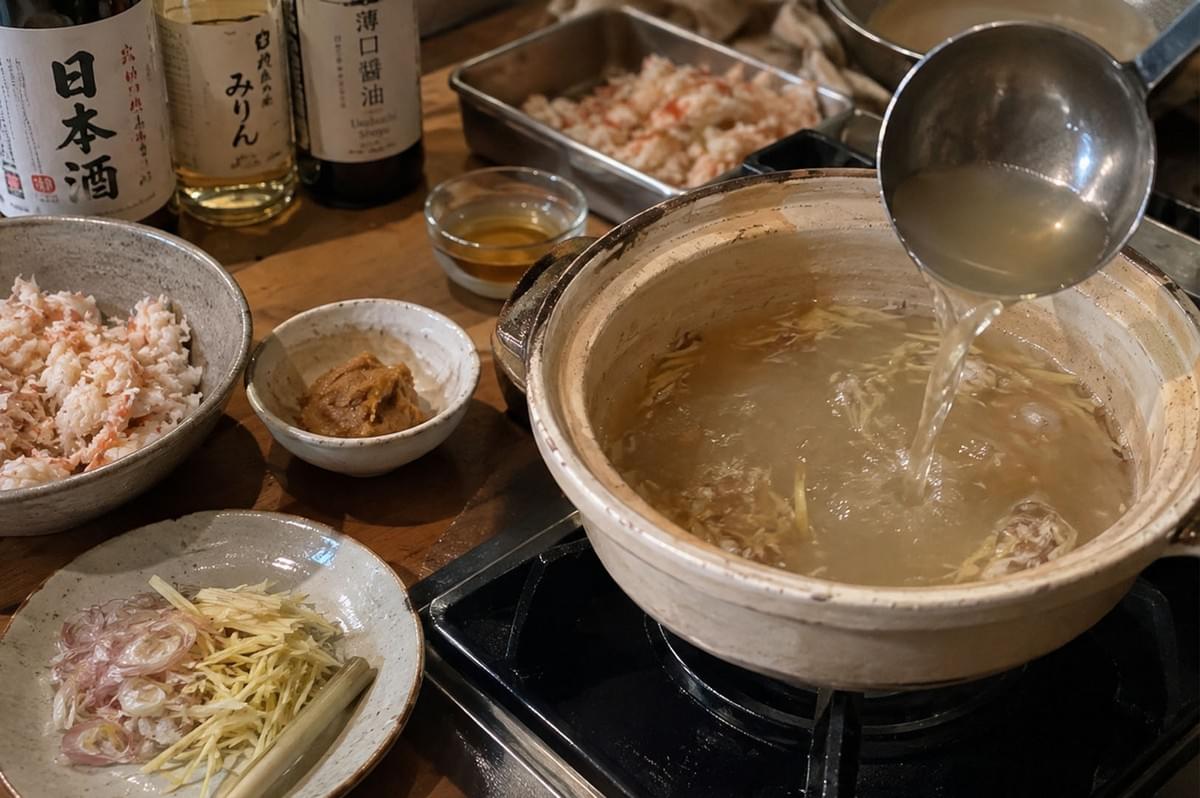
The dish works because two philosophies hold each other in balance.
On one side sits Vietnamese warmth. Broken rice, with its cracked grains that drink up flavor. The dry heat of the claypot that toasts the base. Garlic, shallot, and ginger softened in oil, with lemongrass adding its bright lift. Fish sauce brings that deep savory pull, the kind of seasoning that makes a bowl of rice feel like an embrace.
On the other side sits Japanese restraint. Dashi or light seafood stock replaces a heavy broth. Sake and mirin round the edges quietly. A touch of shiro miso or crab roe adds depth without weight. Then come the finishing notes: shiso, nori, toasted sesame, and a squeeze of sudachi or calamansi. Above all, there is respect for the crab, letting its sweetness stay intact.
The technique is simple, though it asks for attention. The rice must stay tender through the middle while forming a light, toasted crust at the bottom. The crab goes in late and steams gently, so it remains moist and sweet.
The balance is disturbed when the crab becomes a topping instead of part of the rice. It should feel folded into the whole, not perched above it.
Kenji's note: Chef Masa listened to the claypot before opening it. A soft crackle meant the rice was forming a crust. A sharper, dry sound meant the heat had gone too far.
The Recipe
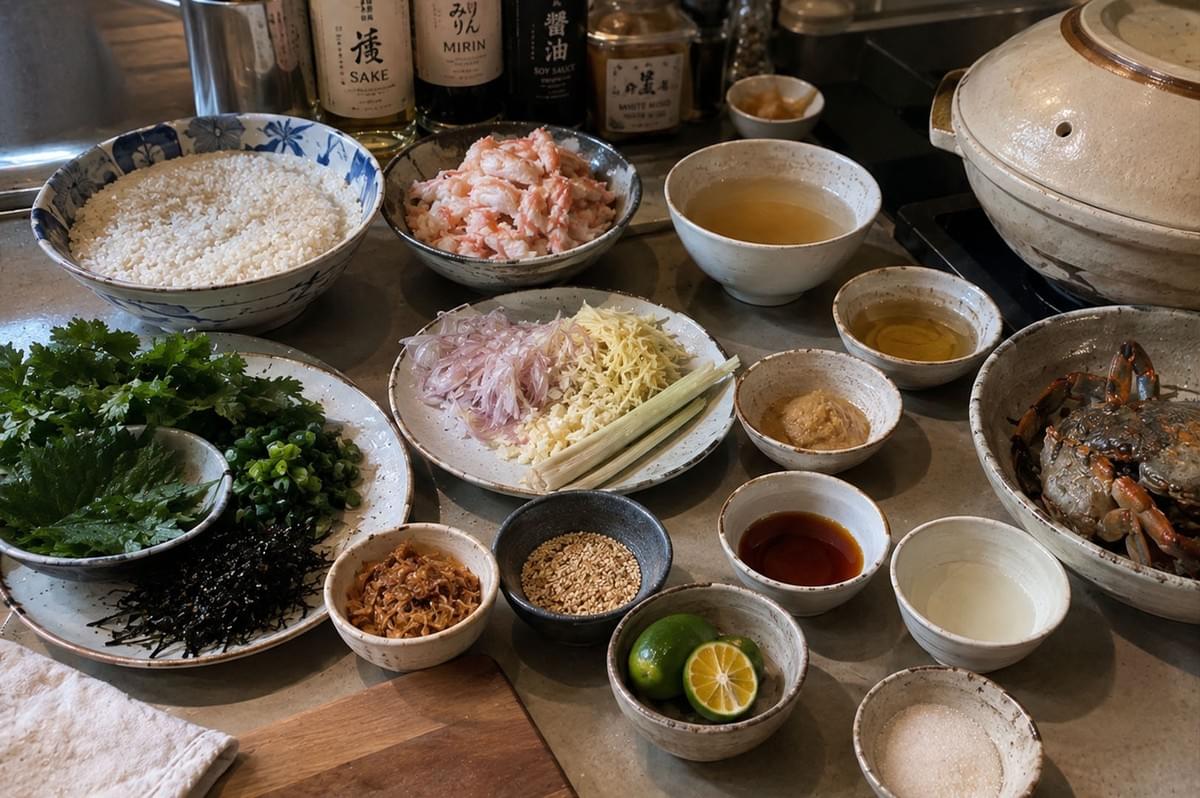
This version does not attempt to reproduce LE'V's claypot exactly. It is a Chef Masa-inspired interpretation, one that follows the question the dish leaves behind: how much quietness can a claypot hold before it becomes something new?
Cook it slowly. Listen as you go.
Ingredients
For the Rice
- 1 1/2 cups Vietnamese broken rice, rinsed well
- 1 1/2 cups light dashi, crab stock, or seafood stock
- 1 tbsp neutral oil
- 1 tsp sesame oil
- 1 small shallot, finely sliced
- 2 garlic cloves, minced
- 1 thumb ginger, finely julienned
- 1 stalk lemongrass, bruised, optional
- 1 tbsp sake
- 1 tsp mirin
For the Crab
- 250 to 300g fresh crab meat
- 1 tsp sake
- 1 tsp mirin
- Pinch of sea salt
- White pepper
For the Seasoning
- 1 tbsp fish sauce
- 1 tbsp light soy sauce or usukuchi shoyu
- 1 tsp mirin
- 1/2 tsp sugar
- 1 tsp white miso or crab roe, optional
- 2 tbsp warm dashi or stock
To Finish
- Spring onion, finely sliced
- Coriander or shiso
- Crispy shallots
- Toasted sesame seeds
- Shredded nori
- Lime, calamansi, or sudachi
Optional: ikura or tobiko for a more Japanese finish
Step-by-Step Instructions
- Prepare the rice. Rinse the broken rice until the water runs mostly clear. Soak for 15 to 20 minutes, then drain well.
- Season the crab. Toss the crab meat gently with sake, mirin, salt, and white pepper. Let it sit while the claypot warms.
- Build the aromatic base. Warm the neutral oil and sesame oil in a claypot over medium heat. Add shallot, garlic, ginger, and lemongrass if using. Cook until fragrant but not browned.
- Toast the rice. Add the drained rice and stir until each grain is lightly coated in the aromatic oil. This helps the rice carry flavor before the liquid goes in.
- Add stock and cook slowly. Pour in the dashi, crab stock, or seafood stock. Bring to a gentle simmer, then cover and reduce the heat. Cook for 12 to 15 minutes.
- Mix the seasoning. Combine the fish sauce, soy sauce, mirin, sugar, miso or crab roe, and warm dashi. Stir until smooth.
- Add the crab. When the rice is nearly cooked, scatter the crab over the surface. Drizzle the seasoning around the rice. Cover again and cook for 5 to 7 minutes.
- Form the crust. Raise the heat slightly for the final 1 to 2 minutes. Listen for a gentle crackle at the base of the pot.
- Rest before opening. Turn off the heat and let the claypot sit, covered, for 5 minutes.
- Finish and serve. Lift the lid at the table if you can. Finish with herbs, crispy shallots, sesame, nori, and citrus.
Kenji's Note
The most important sound in this dish comes near the end. The claypot should crackle softly, almost politely, the sound of a crust forming, not burning. If it turns dry and sharp, the rice has slipped past toasty into bitter. Chef Masa waited five full minutes before lifting the lid during testing. Not because the dish was unfinished, but because the steam still had work to do. That waiting is part of the cooking. The pot keeps thinking after the flame goes quiet.
Tasting Notes
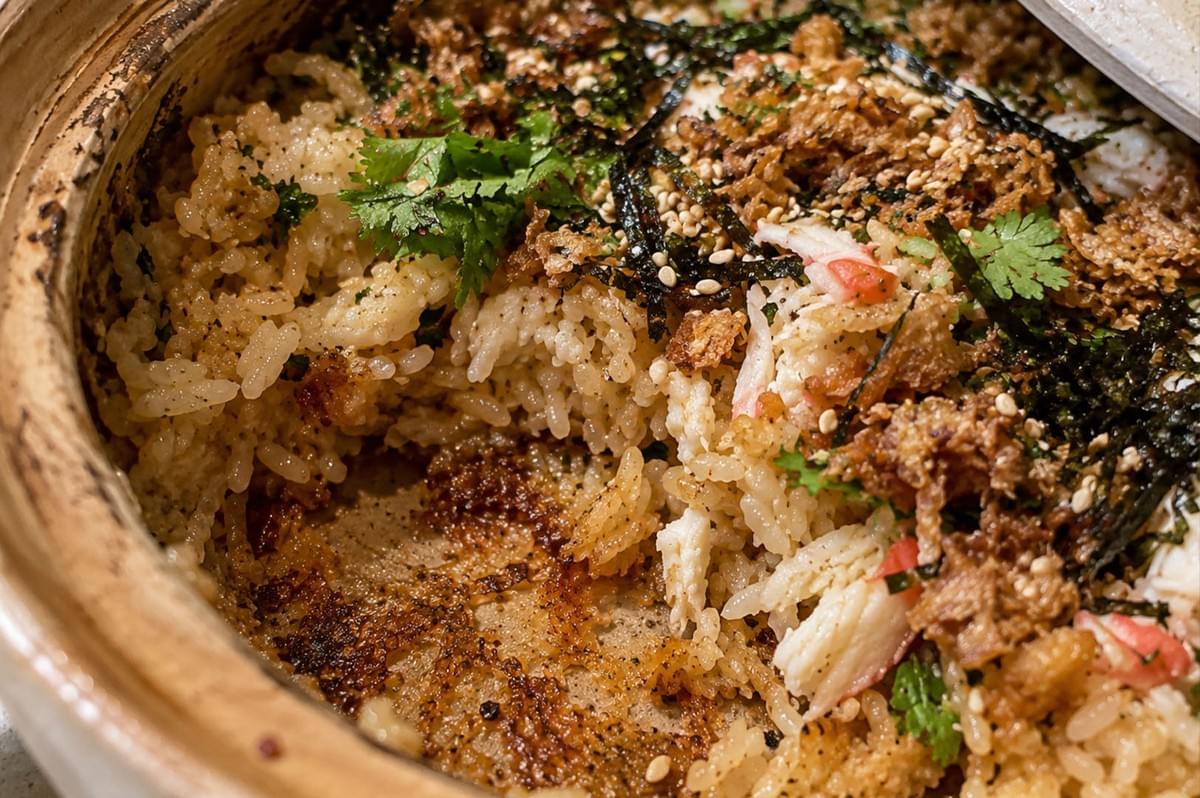
The aroma reaches you first. Steam, then crab, then the toasted edge of the rice, threaded through with shallot and ginger. It rises slowly, the way a kettle warms before it sings.
Then comes texture. The grains at the top stay soft and loose. Beneath them, the crust gives a faint resistance, a crackle you feel more than hear. The crab breaks apart in tender, moist flakes.
The flavor arrives in order. The crab's sweetness comes first, clean and mineral, before the seasoning steps in. Fish sauce brings depth underneath, dashi keeps everything clear, and citrus lifts the bowl without taking it over.
The crispy rice at the bottom is where the dish leaves its mark. It gives the meal weight and memory, the part you scrape for at the end.
Here is where the fusion reveals itself. Vietnamese warmth lives in the aromatics and fish sauce. Japanese restraint lives in the dashi and light hand. The dish works best when the crab is still allowed to taste like crab. Everything else should gather around it quietly.
Bringing This Dish Home
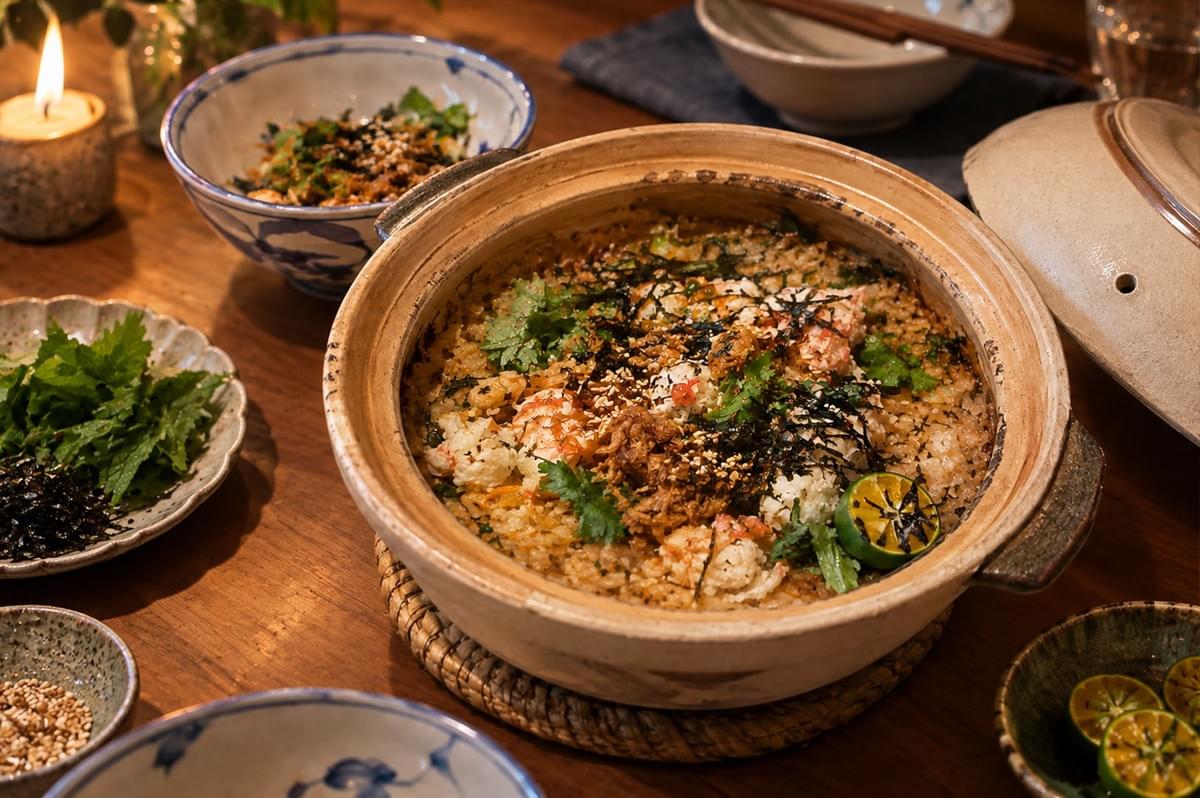
You do not need a perfect kitchen for this. A few gentle swaps will carry you through.
If broken rice is unavailable, use jasmine rice, but reduce the liquid slightly. If fresh crab is out of reach, good-quality pasteurized crab meat works well. No claypot? A small, heavy-bottomed pot will do, though the crust may come out gentler.
For the liquid, a light seafood stock stands in for dashi without trouble. If you cannot find shiso, coriander or Vietnamese mint bring their own fresh note. Sudachi is rare outside Japan, so reach for calamansi or lime instead.
One quiet warning: avoid over-seasoning early. The crab and rice need room to speak first. You can always add at the end. You cannot take away.
At home, it helps to think of the seasoning as a shadow rather than a sauce. It should follow the rice, not cover it. Season lightly, taste often, and let the pot guide you.
Behind the Scenes: Chef Masa's Insights
Fusion, for Chef Masa, is not about combining. It is about listening.
The danger with fusion, he said, is impatience. Too many dishes try to prove the meeting right away, piling on ingredients until the point becomes too obvious. This one, he felt, had to wait beneath the lid. The two cuisines needed time to settle into each other before anyone stirred.
Vietnamese claypot rice gives the dish its warmth, aroma, and emotional generosity. Japanese cooking gives it restraint, clarity, and an attention to timing that keeps the crab honest. Neither one erases the other. That, in the end, is the measure of whether a fusion dish deserves to exist.
The innovation here is quiet. It does not stack, garnish, or perform. It steams, settles, and reveals itself slowly, one spoonful at a time.
Some dishes reveal their ambition through height, garnish, or spectacle. This one keeps its secret under clay, asking only that we wait long enough for the rice to speak.
