

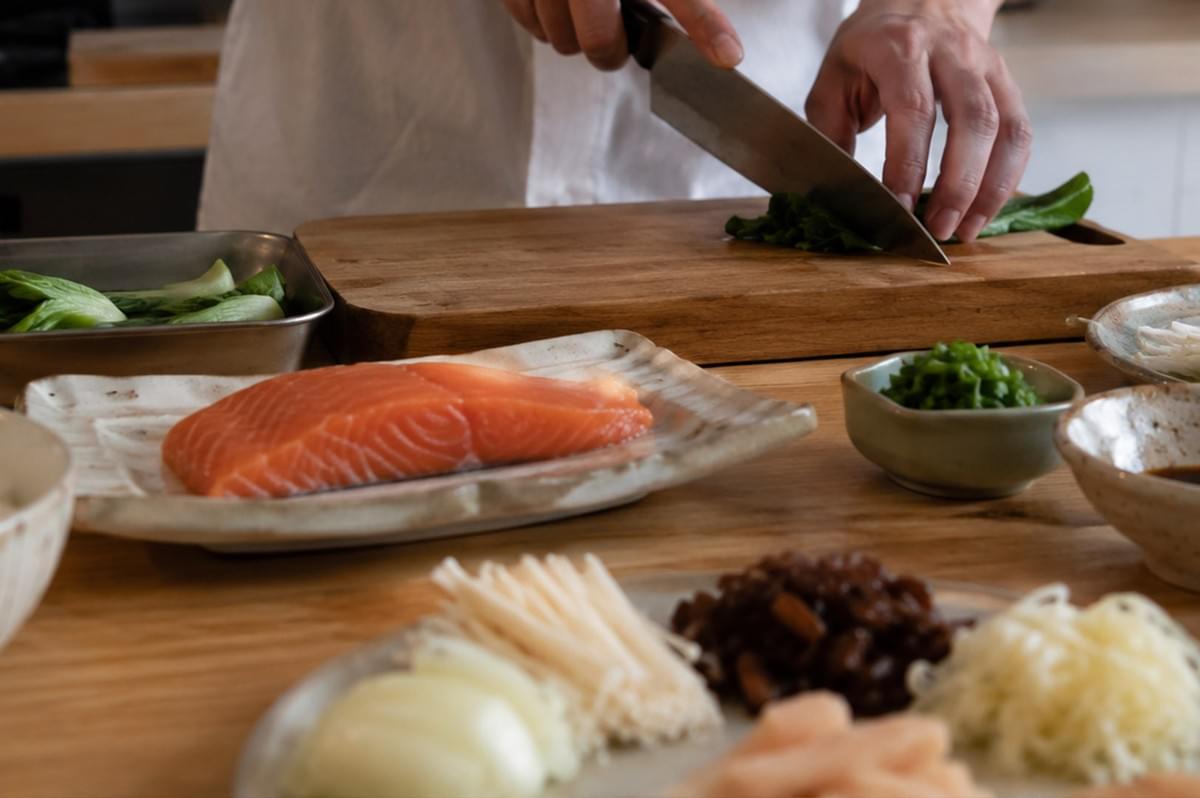
Every meal begins before the knife touches the board. It begins in the moment you decide to cook with care. In my kitchen, whether I am preparing an omakase course or a simple bowl of rice after service, I ask the same quiet question: what does this ingredient need from me today?
For many Singapore home cooks like Chef Masa, cooking often happens between work, family, errands, and the heat of the evening. I understand this rhythm. Not every meal can be elaborate. But every meal can still have intention. Intention does not mean perfection. It means paying attention.
When I choose fish, I look first at freshness, then texture, then what kind of mood the dish should carry. When you cook at home, the same thinking applies. A piece of salmon from the supermarket, tofu from the wet market, or greens from your fridge all have something to offer. The role of the cook is not always to impress. Often, it is simply to listen carefully to the ingredient.
In Japanese cooking, restraint is not emptiness. It is discipline. A clear broth, a bowl of rice, or a lightly grilled fillet can feel complete when each detail is respected. This is why I often remind young cooks not to season out of panic. Salt should reveal flavour, not cover confusion. Soy sauce should deepen a dish, not dominate it. Mirin should bring roundness, not sweetness alone.
At home in Singapore, where our tables are full of strong flavours, this lesson becomes even more valuable. We love sambal, curry, wok hei, rich broths, and bold sauces. These are beautiful expressions of appetite. But even bold cooking benefits from intention. Before adding more, pause. Taste. Ask whether the dish needs salt, acid, fat, heat, or simply time.
One habit I encourage is to prepare your cooking space before starting. This is close to the Japanese idea of order and respect, similar to the professional practice of mise en place, which The Culinary Institute of America explains as preparing and organizing ingredients before cooking. At home, this can be very simple. Wash the greens. Slice the ginger. Measure the soy. Clear the sink. When the space is calm, the cook becomes calm too.
Intention also changes how we treat mistakes. If rice is slightly too soft, perhaps it becomes ochazuke. If fish is too delicate to sear, perhaps it is steamed. If a sauce is too intense, perhaps it needs grated daikon or rice to soften it. A good cook does not fight every mistake. A good cook learns how to redirect it.
In omakase, guests often see the final gesture: the brush of nikiri, the placement of garnish, the silence before serving. What they do not always see are the small decisions behind it. The angle of the cut. The temperature of the rice. The waiting time before seasoning. These are not dramatic choices, but they shape the experience.
You can bring this same spirit into a weekday dinner. Cook rice with care. Taste soup before serving. Cut spring onions neatly. Warm the bowl. Serve the dish while it is still alive with heat and aroma. These small acts tell the people at your table, I thought about you while cooking this.
For me, cooking with intention is not about luxury. It is about presence. It is the difference between feeding hunger and offering comfort. It is the reason a simple meal can stay in memory.
If you wish to see how this philosophy becomes a personal story, continue reading with Some Lessons Cannot Be Written in Recipes that speaks closely to the lessons behind the kitchen.
