

Opening Scene
Walking into Chef Masa’s kitchen is like stepping into a morning held in careful silence. The sharp sounds of service have not yet arrived. Instead, there is only the soft whisking of eggs, the gentle steam rising from warm dashi, and the faint sweetness of brown sugar dissolving slowly into the mixture.
A rectangular tamagoyaki pan rests over low heat. Chef Masa watches it closely, not impatiently, but with the kind of attention reserved for ingredients that reveal mistakes immediately. Egg is unforgiving. Too much heat, and it tightens. Too much movement, and it loses its tenderness. Too little care, and it becomes ordinary.
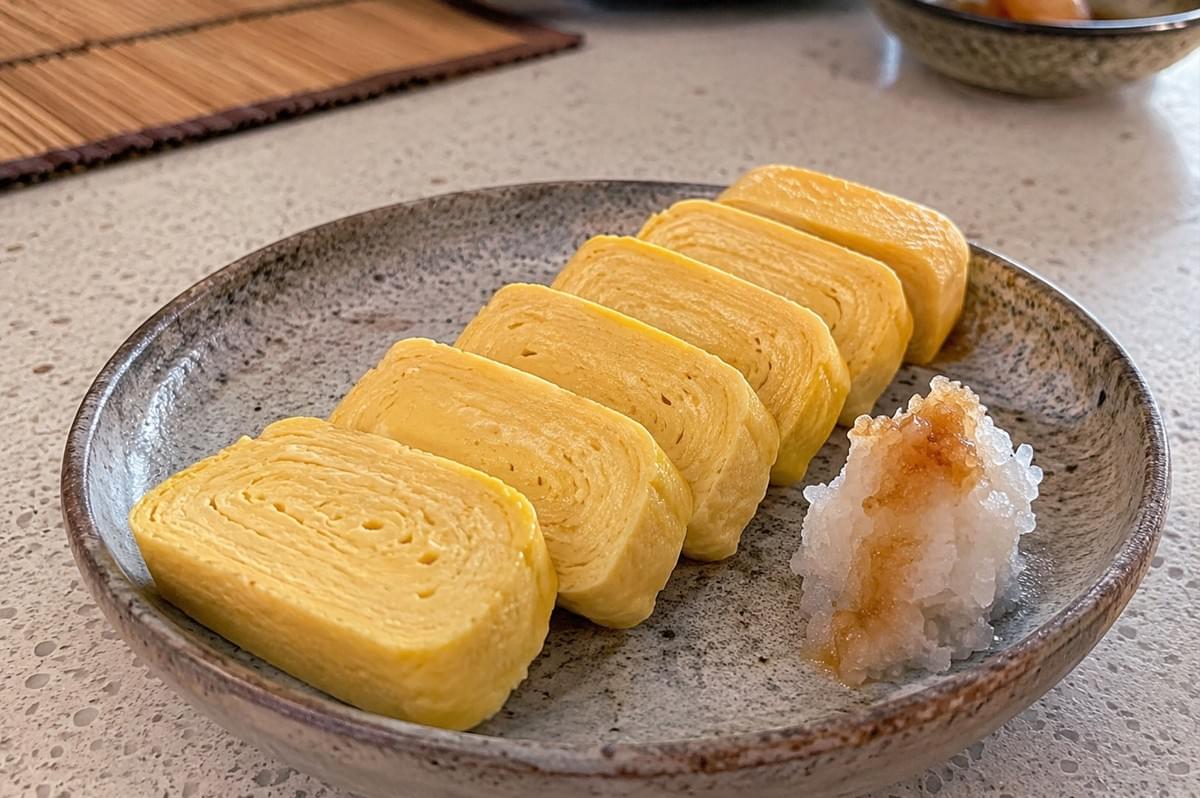
This Tamagoyaki With Dashi and Brown Sugar is built on patience. Soft, custardy, and quietly sweet, it reflects Chef Masa’s belief that even the most familiar dishes deserve full respect.
The Origin
The story of this dish begins with Chef Masa revisiting a childhood flavor many Japanese cooks understand instinctively. Tamagoyaki can be savory, sweet, firm, delicate, simple, or deeply personal. Every kitchen seems to have its own version.
Chef Masa had been contemplating how to create a tamagoyaki that felt nostalgic without becoming heavy. White sugar gave sweetness, but not depth. Mirin added gloss, but not enough warmth. Brown sugar became the quiet answer.
Each iteration was a quiet revelation. Too much brown sugar darkened the egg and overwhelmed the dashi. Too much dashi made the omelette fragile. Through careful adjustment, the texture softened into something custardy, almost trembling, yet still structured enough to slice.
What emerged was a tamagoyaki that feels familiar at first, then slowly reveals its depth.
Chef Masa often says, “Simple dishes ask the most honest questions.”
Flavor Philosophy and Techniques
At the heart of this recipe is gentle sweetness balanced by umami.
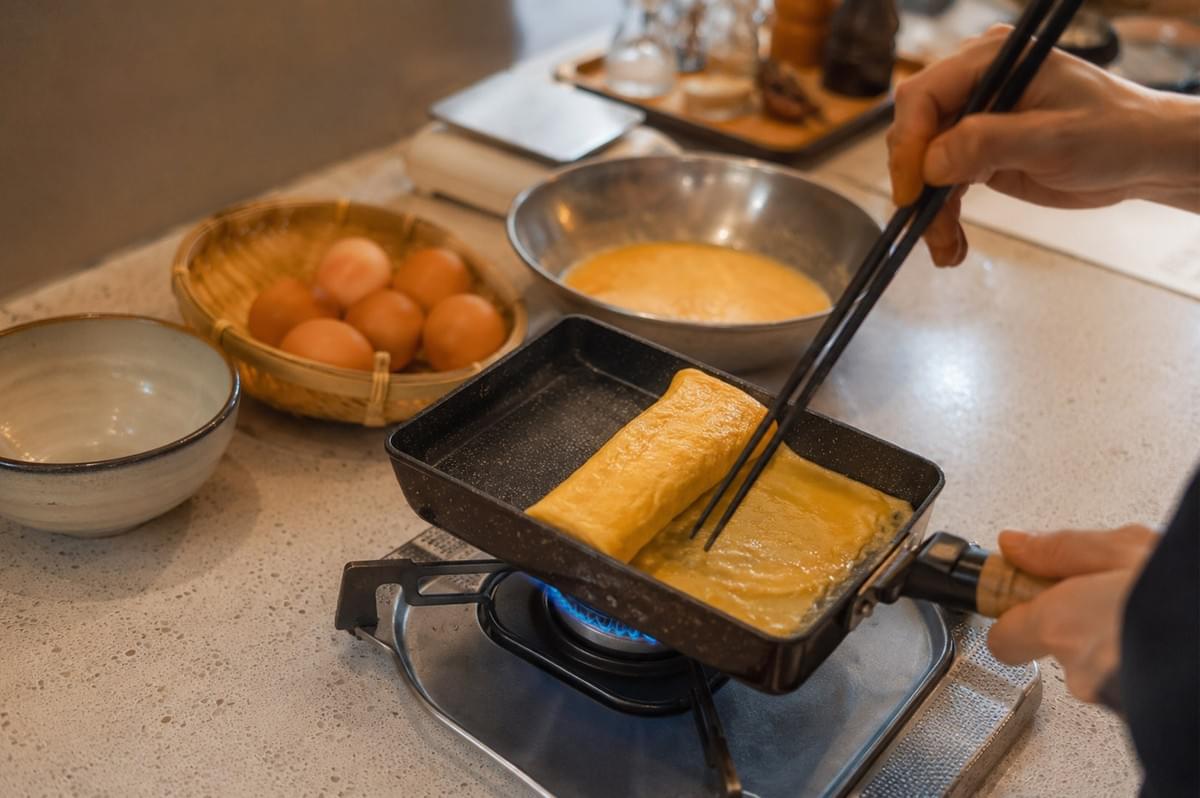
Chef Masa employs the traditional layered tamagoyaki technique, cooking thin sheets of egg one after another and rolling them into a soft, structured omelette. The dashi brings savory depth, while brown sugar adds warmth and roundness rather than direct sweetness.
The key is heat control. The pan must stay warm enough to set each layer, but never so hot that the egg browns aggressively. This creates the desired texture, soft, custardy, and delicate, with layers that hold together without becoming firm.
The brown sugar plays a subtle role. It deepens the flavor while giving the omelette a faint caramel note. The dashi supports it from beneath, keeping the sweetness grounded.
Plating, color, and aroma are not afterthoughts. They are part of the storytelling.
The Recipe
Ingredients
Tamagoyaki Mixture
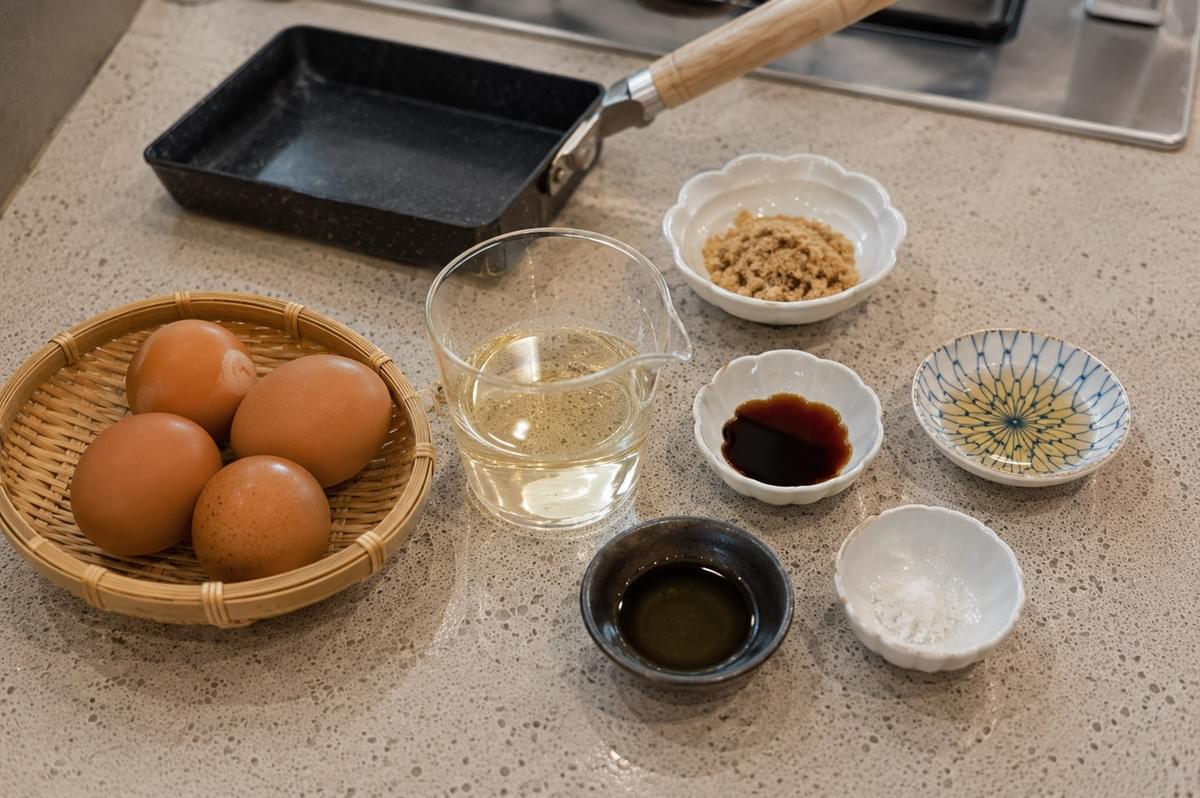
- 4 large eggs
- 3 tbsp dashi, cooled
- 1 tbsp brown sugar
- 1 tsp light soy sauce
- ½ tsp mirin
- Pinch of sea salt
For Cooking
- Neutral oil, for brushing the pan
- Grated daikon, optional
- Light soy sauce, optional for serving
Instructions
- In a bowl, whisk eggs gently until combined. Avoid over-whisking, as too much air creates a rougher texture.
- In a separate small bowl, dissolve brown sugar in cooled dashi. This ensures the sweetness distributes evenly through the egg.
- Add the dashi mixture, soy sauce, mirin, and salt to the eggs. Stir gently.
- Strain the mixture through a fine sieve for a smoother, more custardy finish.
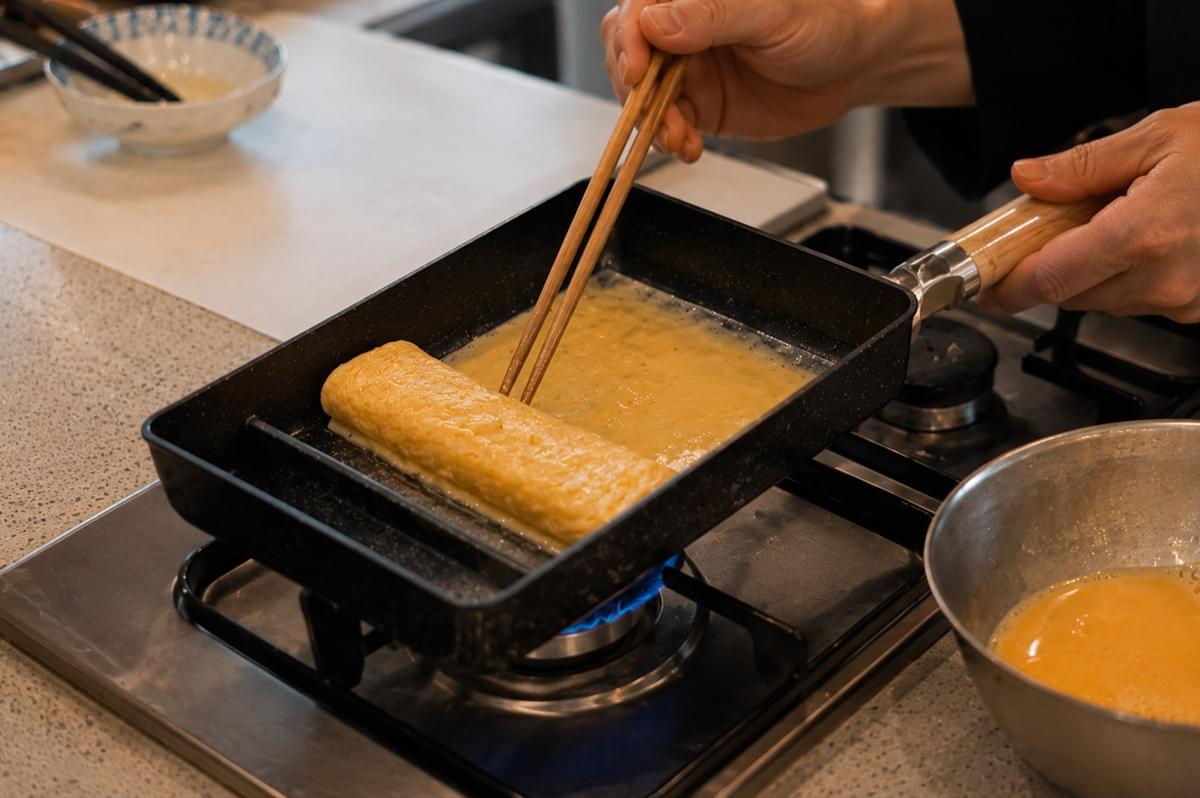
- Heat a tamagoyaki pan or small nonstick pan over low heat. Brush lightly with oil.
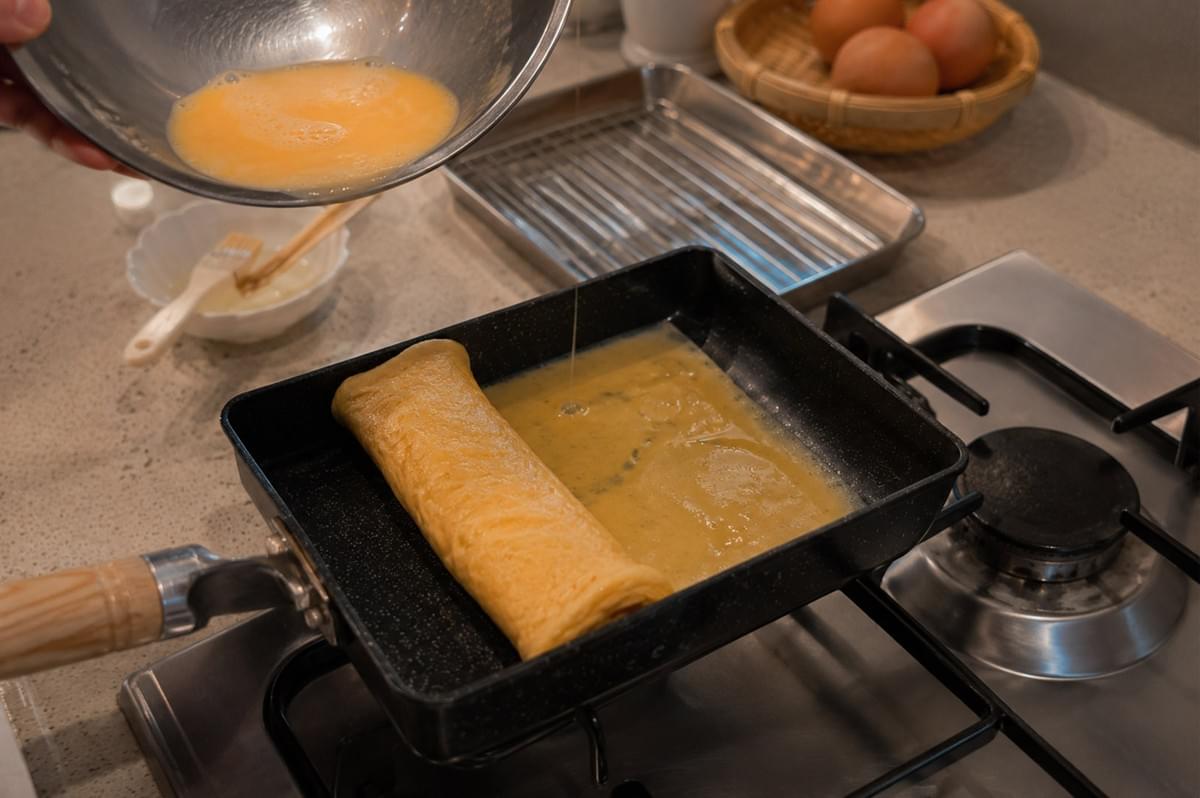
- Pour in a thin layer of egg mixture. Let it set until the surface is still slightly moist.
- Roll the egg gently toward one side of the pan.
- Brush the pan again with oil. Add another thin layer, lifting the rolled egg so the mixture flows underneath.
- Continue layering and rolling until all the egg mixture is used.
- Rest the tamagoyaki for 2 minutes before slicing. This allows the layers to settle cleanly.
Kenji’s Note:
The egg should not rush. If the pan hisses loudly when the mixture touches it, the heat is too high.
Tasting Notes
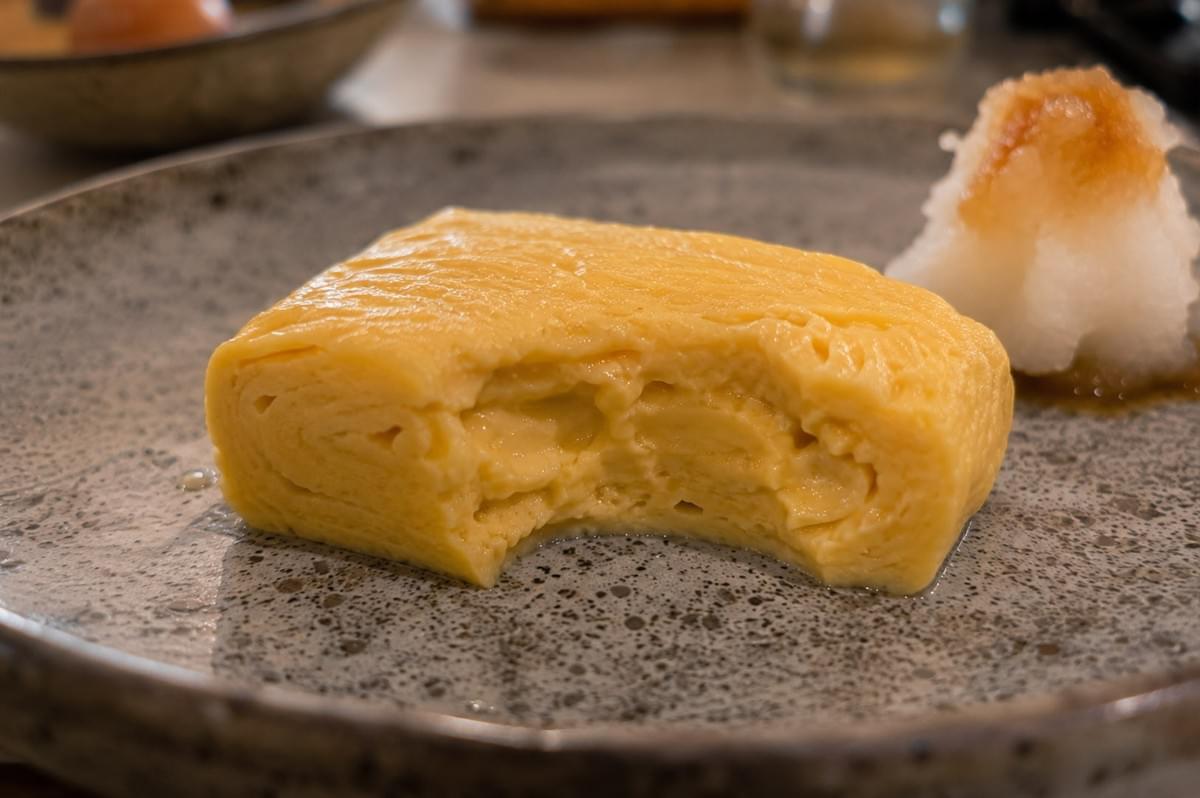
The first bite of this dish is a revelation. The aroma arrives softly, with the warmth of egg and a faint sweetness from brown sugar. Then the dashi appears, not loudly, but with quiet depth.
The texture is the heart of the dish. It is tender without collapsing, custardy without being wet, structured without becoming firm. Each layer melts gently into the next.
As the flavors unfold, the brown sugar leaves a rounded sweetness that lingers just behind the umami of the dashi. What makes Tamagoyaki With Dashi and Brown Sugar extraordinary is not just its flavors but its multi-sensory experience. It is a dish that rewards attention.
Bringing This Dish Home
While the Tamagoyaki With Dashi and Brown Sugar is refined enough for a chef’s table, it is entirely approachable at home.
Use low heat throughout for a softer texture
- Strain the egg mixture for a smoother finish
- Substitute white sugar if brown sugar is unavailable, but use slightly less
- Use a small round pan if you do not have a tamagoyaki pan
- Serve warm, room temperature, or tucked into rice bowls
- Cooking this dish at home allows you to experience Chef Masa’s philosophy firsthand. Technique matters, but restraint matters more.
Behind the Scenes: Chef Masa’s Insights
Chef Masa often says, “Eggs remember every mistake.”
In our kitchen, tamagoyaki is never treated as simple just because it is familiar. The dashi is cooled before mixing. The sugar is fully dissolved. The pan is watched constantly. Each layer is folded with patience.
The dish is also a lesson in restraint. It requires few ingredients, but complete attention. The elegance lies in precision, timing, and respect for the quiet transformation of egg, dashi, and heat.
Continue the Journey
