

In a Japanese kitchen, tools are not simply objects. They are an extension of the chef’s hands, helping transform ingredients into moments of harmony. Throughout my years cooking, I have learned that the best tools do not replace skill. They support it. They allow a chef to show respect to every ingredient, from a delicate piece of fish to a simple bowl of rice.
When guests experience an omakase meal, they often notice the final presentation, the flavours, and the atmosphere. Behind every dish, however, there is a quiet collection of tools that makes precision possible. These are the tools I cannot work without.
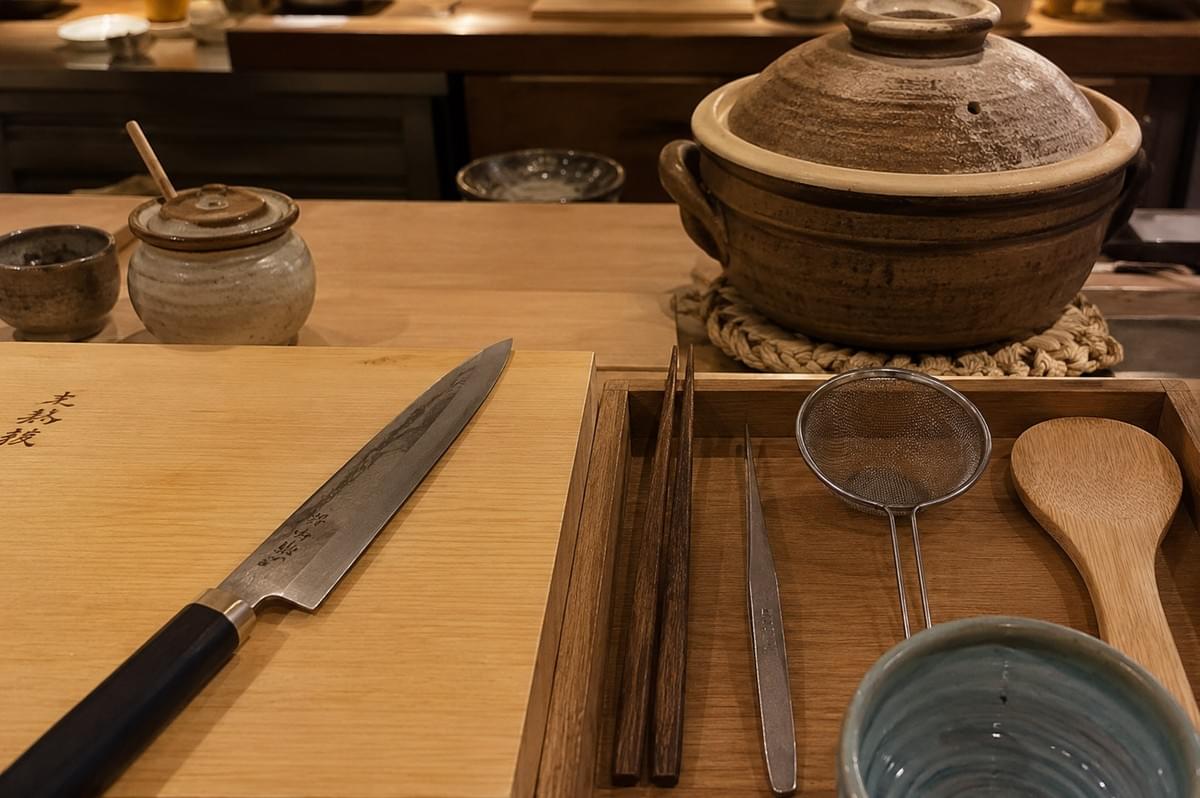
The first and most important tool in my kitchen is my Japanese chef’s knife. A knife carries the personality of the chef who uses it. It needs to feel natural in the hand, balanced in weight, and sharp enough to make clean cuts without damaging the ingredient. In Japanese cooking, the way an ingredient is cut can influence texture, appearance, and even how flavours are released.
For home cooks in Singapore who enjoy Japanese cuisine, investing in a quality knife can completely change the cooking experience. A sharp knife encourages patience and care. It allows you to prepare ingredients with confidence rather than rushing through each step.
Another essential tool is the wooden cutting board. I prefer a surface that protects the knife while allowing ingredients to be prepared gently. Every slice, chop, and movement should feel controlled. The cutting board becomes a quiet workspace where preparation begins.
I also rely heavily on small precision tools. Tweezers, fine strainers, and delicate spoons may seem simple, but they are important when creating dishes that require attention to detail. In omakase, small adjustments often create the difference between a good dish and an unforgettable one.
One tool that represents Japanese culinary tradition is the donabe, a traditional clay pot used for cooking rice, soups, and slow-cooked dishes. The donabe creates warmth and depth because it allows ingredients to cook gradually. For those interested in exploring Japanese food culture, resources like the Japan National Tourism Organization’s.
Beyond individual tools, I believe the most valuable equipment in any kitchen is knowledge of how to use each tool properly. A beautiful knife does not create a great dish by itself. The chef must understand the ingredient, the technique, and the purpose behind every movement.
This philosophy applies to home kitchens in Singapore as well. You do not need a professional restaurant setup to create meaningful Japanese dishes. A few carefully chosen tools can help you develop better habits, improve your techniques, and appreciate the ingredients you work with.
The tools I use every day have become part of my cooking journey. They carry memories of preparation, service, and countless meals shared with guests. They remind me that great cooking is built through consistency, respect, and attention to small details.
For me, the best tools are not the newest or most expensive ones. They are the ones that help me communicate my cooking philosophy clearly. They allow simplicity, precision, and craftsmanship to come together in every dish.
To explore how these values appear through carefully selected ingredients and seasonal Japanese techniques, discover my approach through Shirasu Uni Cold Somen, a dish that reflects the beauty of balance and simplicity.
