

Sensory Opening Scene
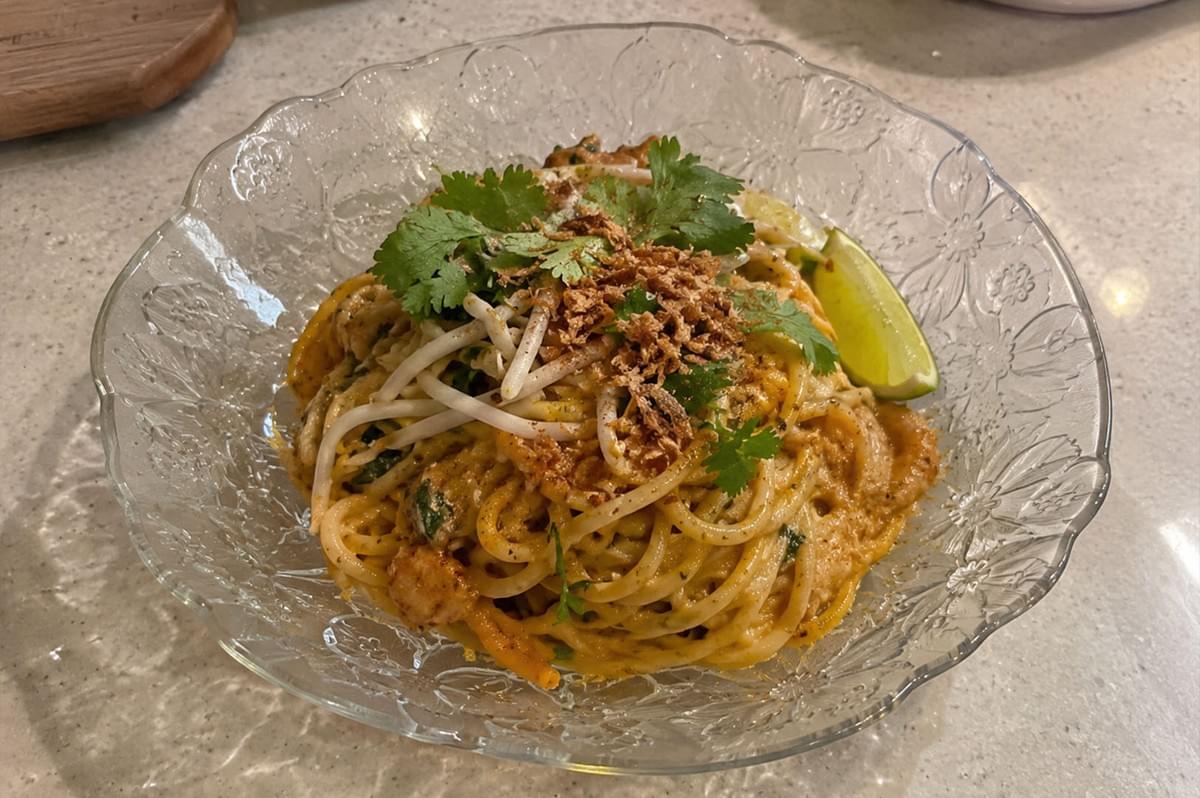
The aroma arrives before the first bite. A gentle fragrance of lemongrass, dried chillies, coconut, and laksa spices fills the kitchen as silky pasta is tossed through a creamy sauce. The familiar richness of carbonara meets the unmistakable character of Singapore laksa, creating a dish that feels both nostalgic and unexpected.
A traditional carbonara is built on simplicity. Eggs, cheese, cured meat, and pasta come together through technique rather than complexity. Laksa, on the other hand, celebrates layers of spices, seafood sweetness, and aromatic intensity. Bringing these two dishes together creates a conversation between two culinary cultures.
This Laksa Carbonara is not about replacing the original dishes. It is about understanding their foundations and finding harmony between them. The result is a creamy pasta dish with the warmth of laksa spices, the comfort of Italian cooking, and a flavour profile that speaks directly to Singaporean taste memories.
Origin Story
As chefs, we are constantly curious about how flavours travel and evolve. Some of the most exciting dishes come from moments of experimentation, when familiar ingredients are viewed from a different perspective.
The inspiration behind this dish came from a simple question: What would happen if the aromatic depth of Singapore laksa met the comforting texture of carbonara?
Both dishes share an important quality. They are built around richness and balance. Carbonara relies on the harmony between fat, salt, and texture, while laksa depends on the balance of spice, sweetness, creaminess, and fragrance.
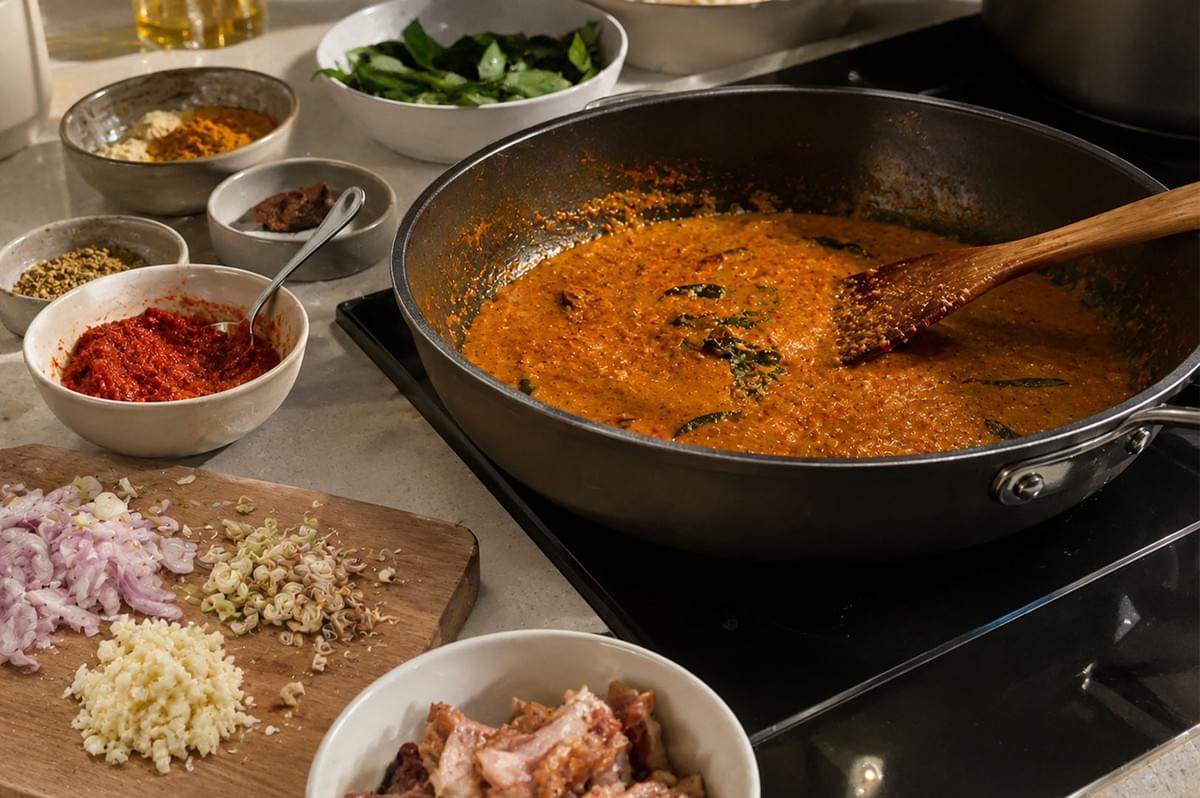
For this recipe, I wanted to capture the spirit of both dishes without making either one disappear. Instead of creating a heavy pasta covered in curry-like sauce, the goal was a refined version where laksa spices gently perfume the carbonara base while maintaining the smooth, luxurious texture expected from the Italian classic.
Flavor Philosophy and Techniques
The key to a successful fusion dish is respect. Fusion cooking is not simply combining two popular foods. It requires understanding what makes each cuisine special.
For the laksa element, the foundation comes from aromatic ingredients such as shallots, garlic, dried chillies, lemongrass, and shrimp paste. These ingredients create depth when slowly cooked together.
For the carbonara element, technique is everything. The sauce should come from careful temperature control rather than excessive cream. The combination of egg yolks, cheese, and pasta water creates a naturally creamy texture while allowing the laksa flavours to shine.
The most important technique is patience. The spice paste needs time to release its oils, and the pasta needs to be finished directly in the sauce so every strand absorbs the flavour.
Ingredients
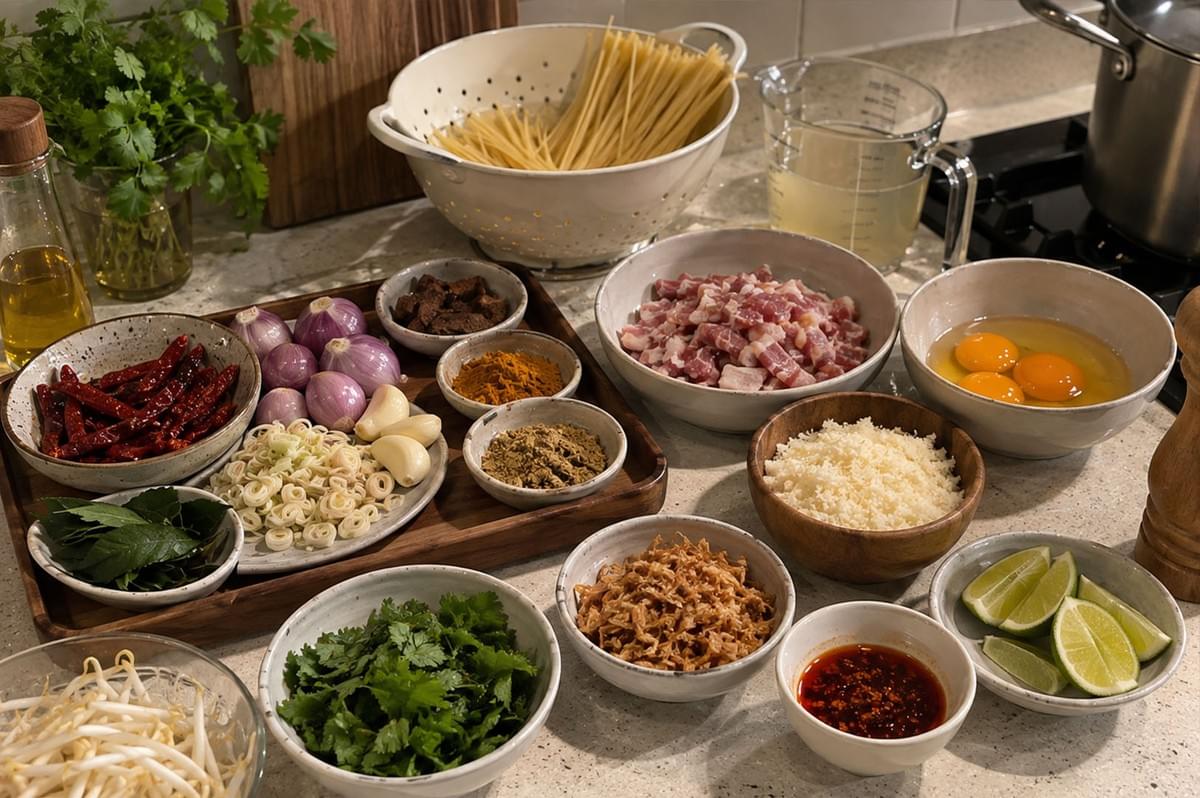
Laksa Spice Base
Carbonara Base
- 250g spaghetti or linguine
- 3 egg yolks
- 1 whole egg
- 50g grated Parmesan cheese
- 80g pancetta or smoked chicken slices
- 150ml pasta cooking water
- Salt, to taste
- Freshly ground black pepper
Garnish
- Fresh coriander leaves
- Bean sprouts, lightly blanched
- Crispy shallots
- Lime wedges
- Chilli oil, optional
Step-by-Step Instructions
1. Prepare the laksa spice paste
Blend the dried chillies, shallots, garlic, lemongrass, belacan, coriander, and turmeric into a smooth paste. Take your time with this step because the spice base determines the character of the dish.
2. Cook the pasta
Bring a pot of salted water to a boil and cook the pasta until slightly under al dente. Reserve the pasta water before draining.
3. Build the laksa aroma
Heat oil in a large pan and slowly cook the spice paste with curry leaves over medium heat. Allow the mixture to cook until fragrant and the oil begins to separate.
4. Add the protein
Add pancetta or smoked chicken slices and cook until lightly caramelised. The savoury notes will help bridge the flavours between laksa and carbonara.
5. Create the carbonara mixture
Mix egg yolks, whole egg, and Parmesan cheese in a bowl. Add black pepper and combine well.
6. Combine pasta and sauce
Add the cooked pasta into the pan with the laksa mixture. Remove from heat and slowly add the egg mixture while tossing continuously.
7. Adjust the texture
Add pasta water gradually until the sauce becomes glossy and smooth. The goal is a creamy coating, not a heavy sauce.
8. Finish and serve
Garnish with coriander, crispy shallots, bean sprouts, and a squeeze of lime for freshness.
Chef’s Tips or Kenji’s Notes
Do not rush the spice paste. The difference between a flat-tasting dish and a memorable one often comes from how patiently the aromatics are cooked.
Control your heat. Carbonara depends on a delicate egg mixture. Too much heat will scramble the sauce instead of creating a silky texture.
Balance richness with freshness. The lime, herbs, and bean sprouts are not just decoration. They help keep the dish bright and enjoyable.
For a seafood version, prawns or scallops work beautifully with the laksa profile.
Tasting Notes
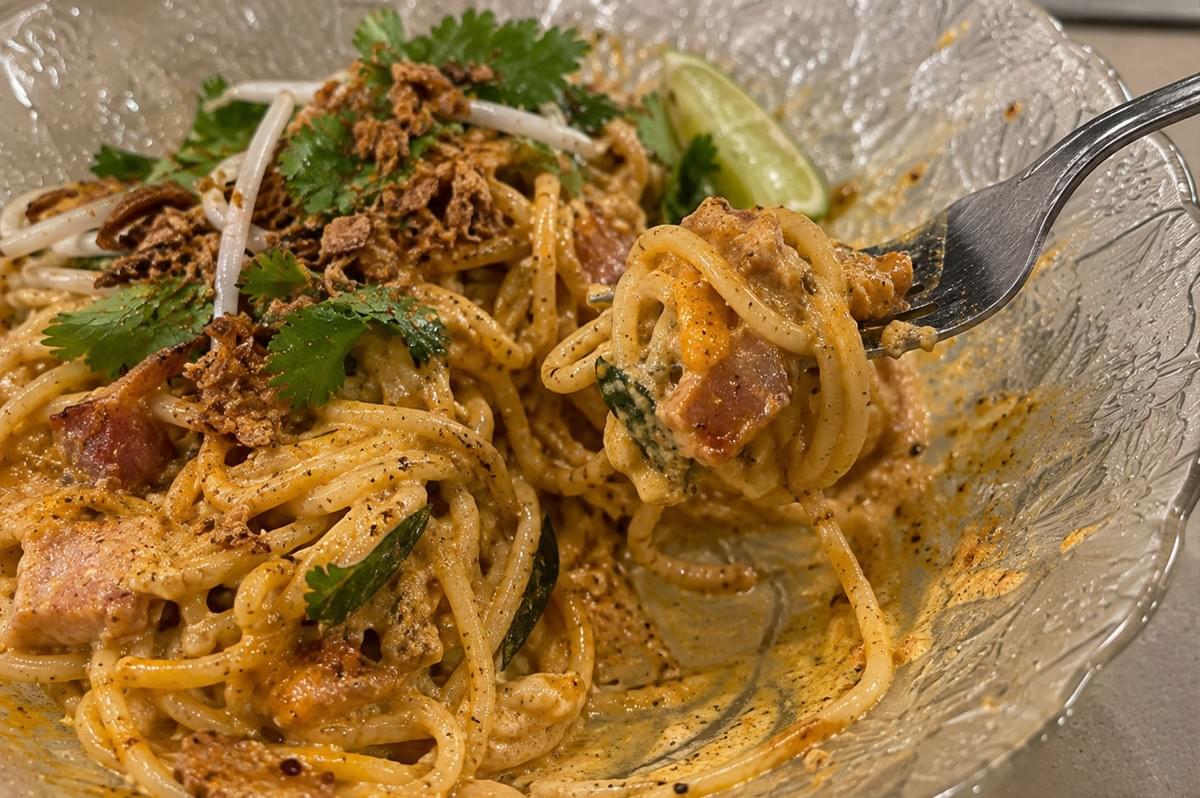
The first impression is creamy and aromatic, followed by layers of spice from the laksa base. The Parmesan adds savoury depth, while the egg creates a smooth texture that carries the flavours evenly across the pasta.
The dried chilli provides warmth rather than overwhelming heat, and the coconut-like richness from the laksa spices creates a comforting finish. Fresh herbs and lime bring balance, making each bite feel complete.
Bringing This Dish Home
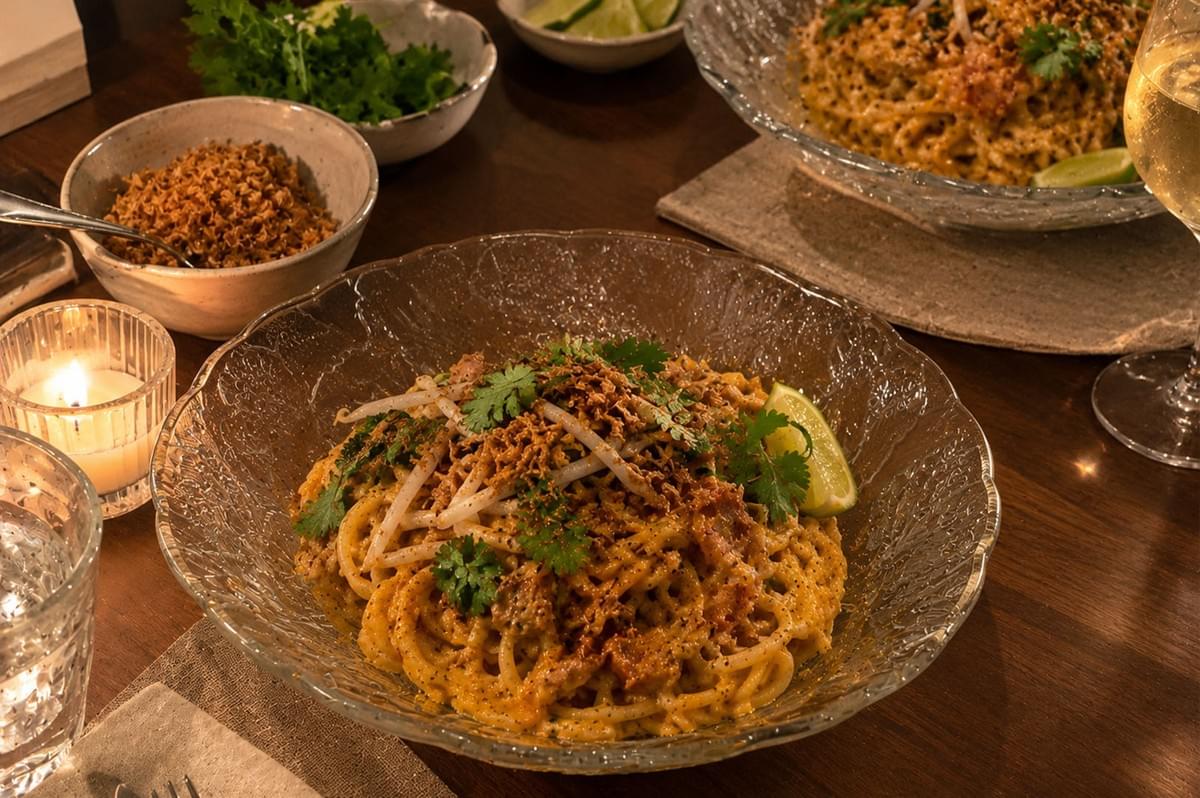
Laksa Carbonara is a reminder that home cooking can be a space for creativity. Singapore’s food culture has always been shaped by different influences, from Chinese and Malay traditions to Indian spices and Western techniques.
This recipe is perfect for home cooks who enjoy experimenting. Start with the original idea, then make it your own. Adjust the spice level, switch the protein, or add seasonal ingredients from your local market.
The most important part is keeping the balance between familiar comfort and new discovery.
Behind the Scenes Chef Masa Insight
At Chef Masa, we believe innovation begins with understanding tradition. Before changing a dish, we study why people love it.
Laksa and carbonara may come from different parts of the world, but both represent the same idea: food that brings people together. The best experiments are not created to surprise people for the sake of being different. They are created when two stories can naturally meet on one plate.
This Laksa Carbonara represents that philosophy. It is playful, thoughtful, and proudly inspired by Singapore’s love for bold flavours.
