

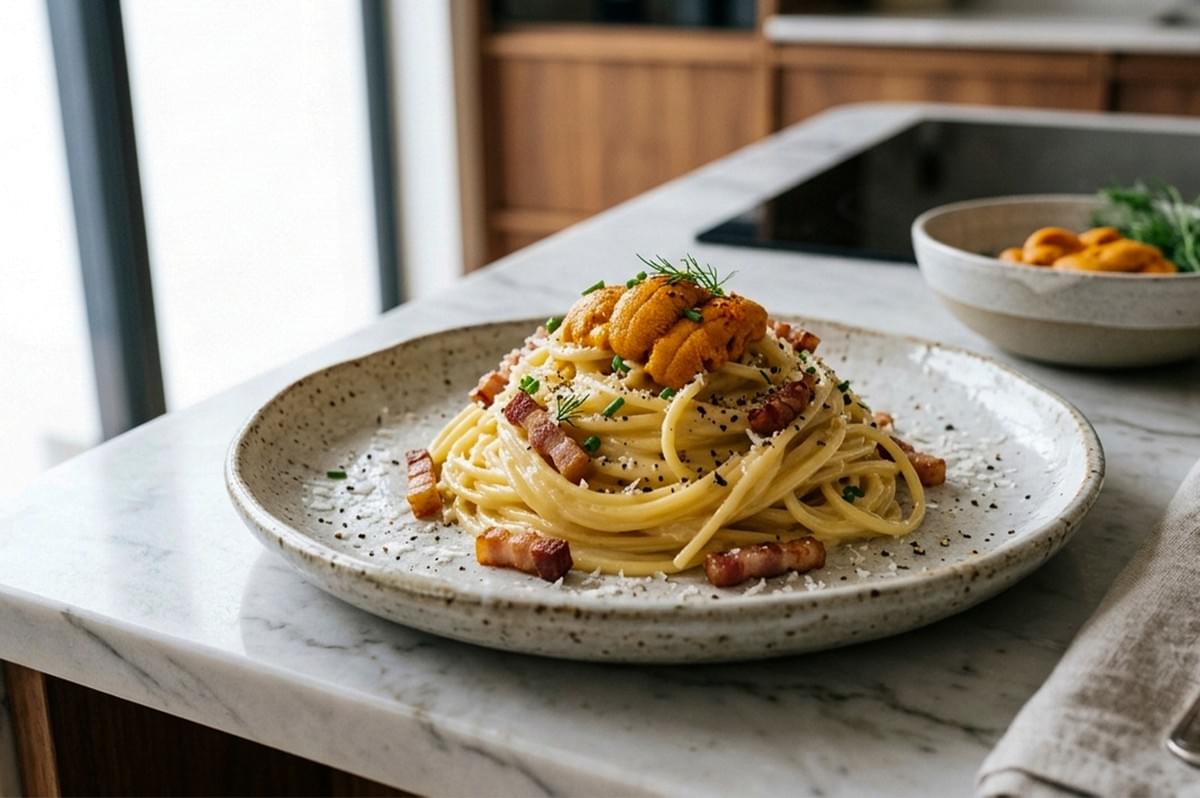
Opening Scene
Walking into Chef Masa’s kitchen is like stepping into a moment of quiet rebellion. The familiar scent of pancetta rendering in a pan rises gently into the air. Egg yolks rest in a bowl nearby, glossy and patient. And then there is the sea. Fresh uni, briny and luminous, waiting on crushed ice.
We glance at one another because we know what this looks like. It should not work. Pasta and uni. Roman tradition and Japanese delicacy. Yet Chef Masa stands calm at the counter, whisk in hand, as though the outcome has already been decided.
The Uni Carbonara is not created to shock. It is created to explore harmony where none is expected.
The Origin
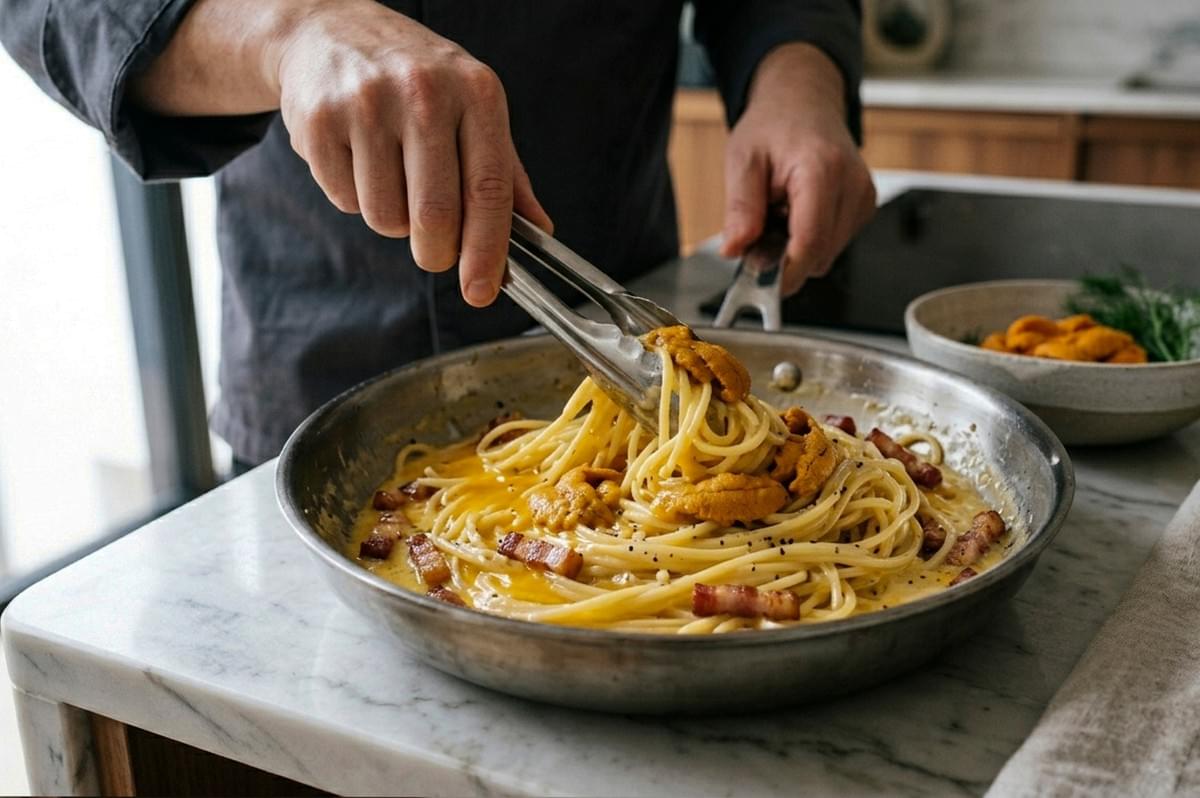
The story of this dish begins with curiosity rather than ambition. Chef Masa had been contemplating how uni behaves when warmed gently. Too much heat and it collapses. Too little intention and it tastes disconnected.
Carbonara offered a structure. Egg, fat, salt, starch. A canvas built on emulsification and timing. But instead of cream, instead of excess, Chef Masa saw an opportunity to let uni carry both richness and salinity.
Each iteration was a quiet revelation. Too much pancetta and the sea disappeared. Too much uni and the dish lost structure. Slowly, balance emerged. The pasta became the bridge.
Chef Masa often says, “Innovation is not about breaking rules. It is about understanding them deeply enough to bend them with respect.”
Flavor Philosophy and Techniques
At the heart of this recipe is contrast and harmony.
Chef Masa employs classic carbonara technique. Eggs are whisked with finely grated cheese, relying on residual heat rather than flame to create silkiness. No cream. Never cream.
Uni is folded into the yolk mixture just before tossing with pasta. The heat of the noodles warms it gently, preserving its sweetness and brine. Pancetta is rendered until crisp, providing necessary structure.
This juxtaposition of textures, creamy sauce and delicate uni, crisp pancetta and tender pasta, is intentional. Plating, color, and aroma are not afterthoughts. They are part of the storytelling.
The Recipe
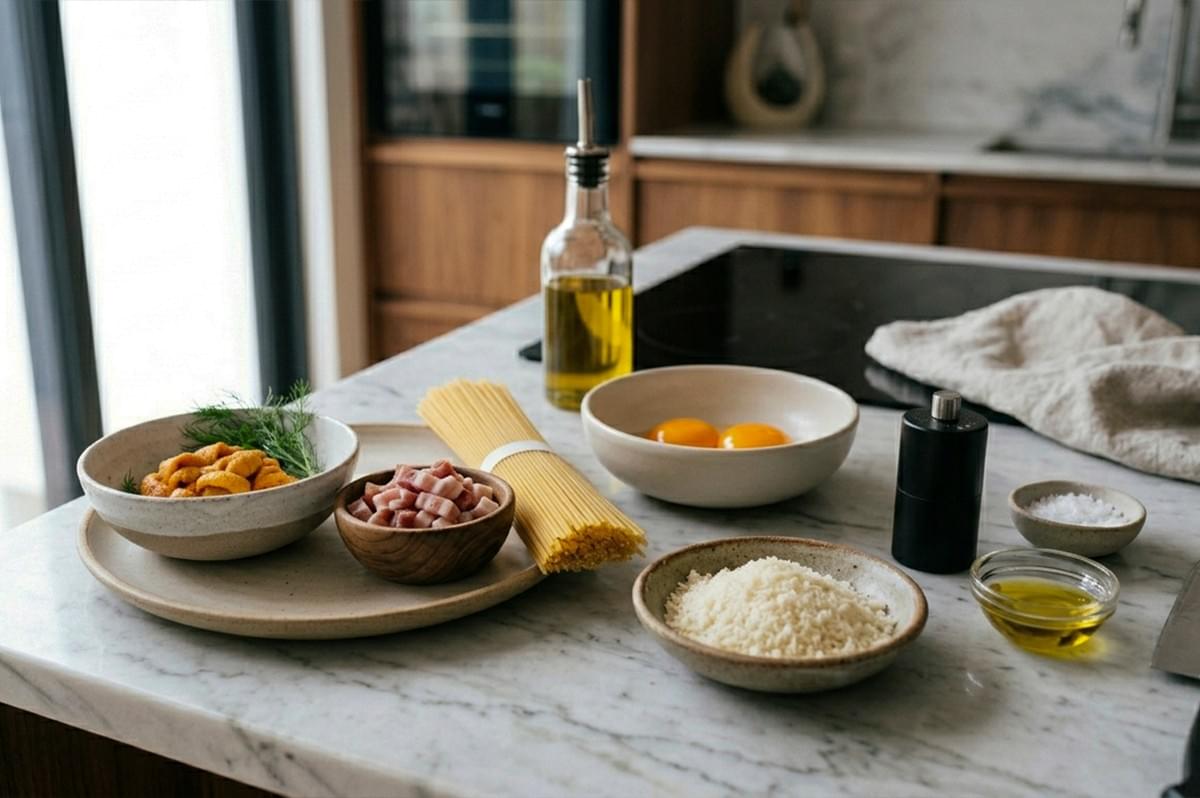
Ingredients
Pasta Base
• 200 g spaghetti
• 2 large egg yolks
• 30 g finely grated Parmigiano Reggiano
• 40 g pancetta, diced
• Freshly cracked black pepper
• Sea salt
Uni Integration
• 60 g fresh uni
• 1 tsp olive oil
Instructions
- Bring salted water to a boil and cook spaghetti until al dente. Reserve ½ cup pasta water.
- Render pancetta in a pan over medium heat until crisp. Remove from heat and set aside.
- In a bowl, whisk egg yolks, grated cheese, black pepper, and olive oil until smooth.
- Gently fold half of the uni into the egg mixture, breaking it slightly but leaving some texture.
- Add hot pasta directly to the pancetta pan. Toss briefly to coat in rendered fat.
- Remove from heat. Pour egg and uni mixture over pasta, tossing quickly. Add reserved pasta water gradually to create a silky emulsion.
- Plate immediately and top with remaining fresh uni.
Kenji’s Note:
The sauce should cling, not pool. If it scrambles, the heat was too aggressive. Carbonara demands confidence and restraint.
Tasting Notes
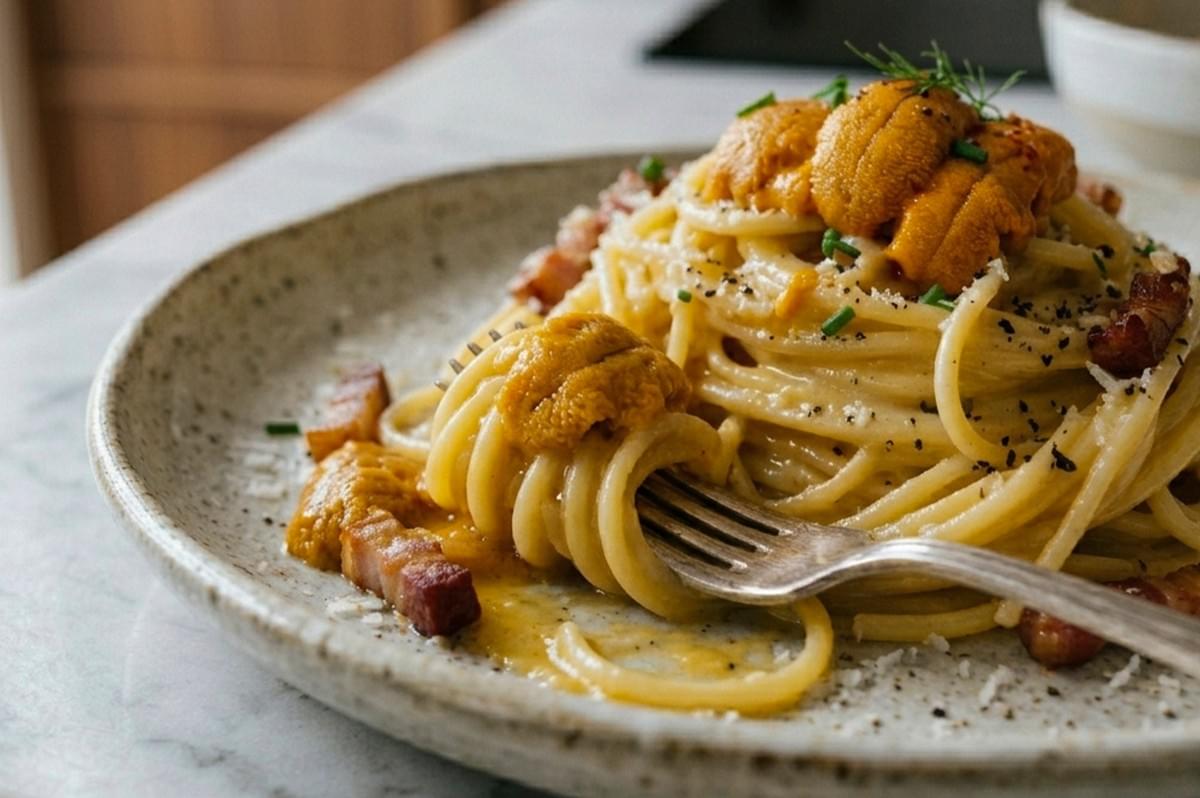
The first forkful of this dish is a revelation. Aroma arrives in layers. The warmth of egg and cheese rises first, followed by the unmistakable scent of the sea. The sauce coats the palate with velvety richness. Then the uni unfolds. Sweet. Saline. Almost custard-like in texture.
The pancetta anchors the dish, preventing it from drifting too far into delicacy. As the flavors mingle, the boundaries dissolve. What makes Uni Carbonara extraordinary is not just its boldness, but its multi-sensory experience. It feels daring, yet composed.
Bringing This Dish Home
While Uni Carbonara is refined enough for a chef’s table, it is entirely approachable with attention.
• Use the freshest uni possible
• Work quickly once pasta is drained
• Temper the egg mixture with a spoonful of pasta water if needed
• Substitute guanciale for pancetta for deeper flavor
• Serve immediately for optimal texture
Cooking this dish at home allows you to experience Chef Masa’s philosophy firsthand. Precision transforms risk into elegance.
Behind the Scenes: Chef Masa’s Insights
Chef Masa often says, “Respect tradition. Then listen to what the ingredient wants.”
In our kitchen, this dish is treated carefully. The uni is handled with reverence. The pasta is watched closely. The egg mixture is folded without hesitation. The dish is also a lesson in restraint. One extra element would disturb its balance.
The elegance lies in precision, timing, and respect for both cultures at the table.
Continue the Journey
If the unexpected harmony of this dish speaks to you, we invite you to explore another seafood expression shaped by restraint and nuance: Shirasu & Uni Cold Somen
Different temperature. The same reverence for the sea.
