

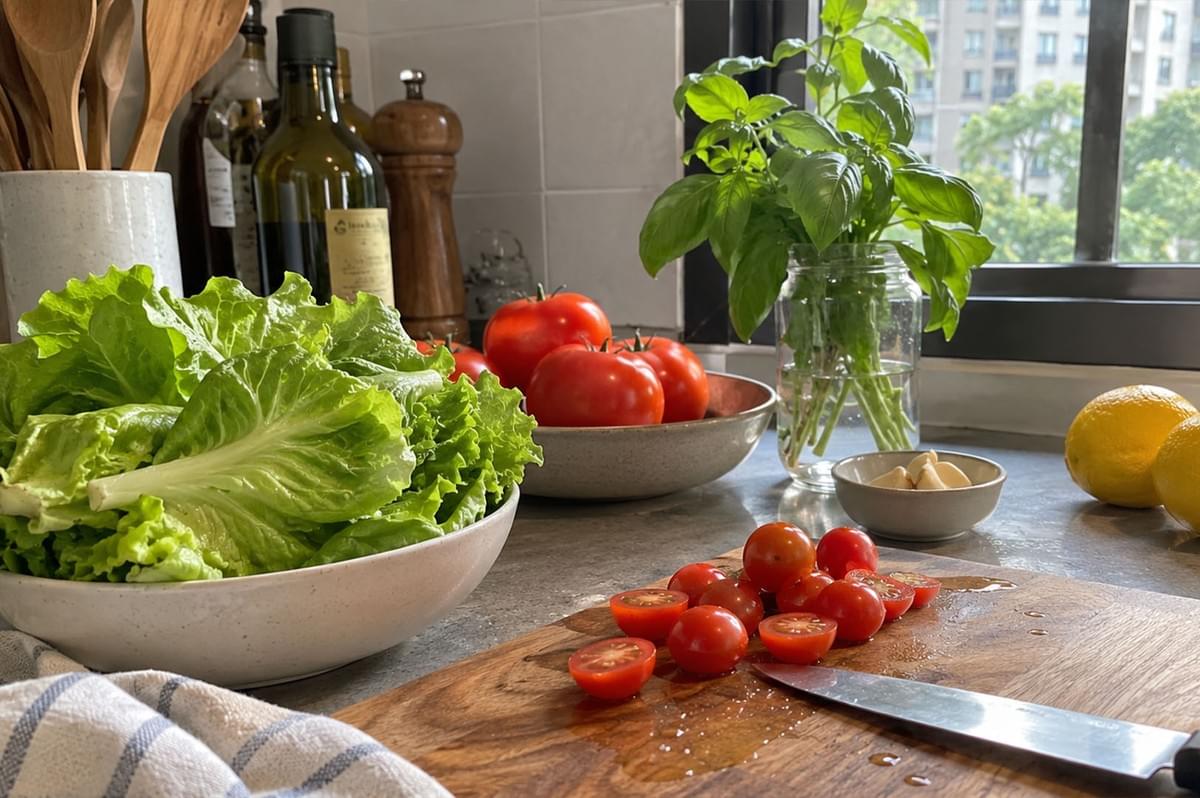
One of the most important lessons I have learned as a chef is that good cooking begins long before the pan gets hot. It begins with choosing ingredients at the right moment.
When produce is fresh and naturally at its best, the chef has less work to do. A ripe tomato already has sweetness and acidity. Fresh greens have their own crispness and gentle bitterness. Herbs release their fragrance the moment they are cut. When ingredients arrive with this much character, cooking becomes less about changing them and more about protecting what is already there.
Let the Season Make the Decision
In professional kitchens, it is tempting to begin with an idea for a dish and then search for ingredients to make that idea possible. I often prefer to reverse that process.
I look at what is available first.
What looks especially good today? What is fragrant, vibrant, crisp or naturally sweet? Those questions can lead to a better dish than starting with a fixed recipe.
This approach works beautifully for home cooks too. In Singapore, our seasons may not feel as dramatic as they do in Japan, but the produce available to us still changes throughout the year. Tropical fruits reach different peaks, vegetables vary in quality, and seafood changes according to weather, supply and natural cycles.
Visiting a wet market or fresh produce section with an open mind can completely change the way you cook.
Fresh Ingredients Need Restraint
There is a common belief that more ingredients create more flavour. I have found that the opposite can often be true.
When a vegetable is particularly fresh, I might use only a little salt, good oil and perhaps some acidity. The goal is not to cover the ingredient. The goal is to make its natural character clearer.
A beautiful mushroom may need gentle grilling. Fresh corn becomes sweeter when lightly charred. A perfectly ripe mango might need nothing more than calamansi and a touch of chilli.
Technique still matters, of course. Temperature, timing and seasoning determine whether an ingredient reaches the plate at its best. But technique should support the produce rather than compete with it.
Build Your Cooking Around What You Find
For home cooks, seasonal cooking does not require complicated planning. Start by buying one or two ingredients that look particularly good, then build your meal around them.
If leafy vegetables are especially fresh, make them the centre of a simple stir-fry. If tomatoes are beautifully ripe, turn them into a fresh salad rather than cooking them heavily. If tropical fruit is abundant, use it in breakfast, salads, sauces or light desserts.
This approach also encourages less waste and more creativity. Instead of buying ingredients for one rigid recipe, you learn to adapt according to what is available.
Over time, this becomes instinct.
Listen Before You Cook
Seasonal cooking reminds us that ingredients are never exactly the same from one week to the next. That uncertainty is part of what makes cooking interesting.
Before reaching for another seasoning or another technique, taste what is in front of you.
Sometimes the best decision a cook can make is simply to let a great ingredient taste like itself.
That philosophy is something I explore further in The Ingredient Is Already Speaking, where I share why observation and restraint often lead to more expressive cooking.
When we allow the seasons and ingredients to guide us, cooking becomes simpler, more responsive and more connected to the world around us.
Cook what is good now. Treat it carefully. Let the ingredient do the rest.
