

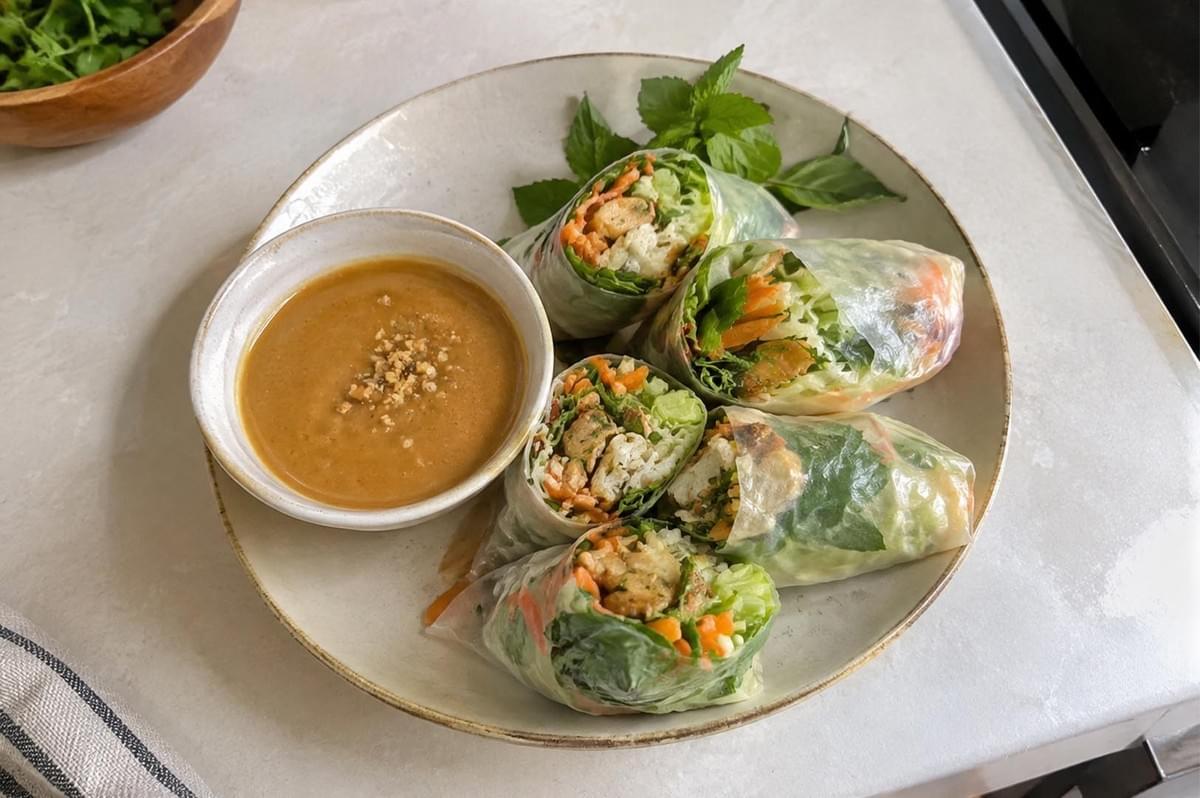
Sensory Opening Scene
The first bite begins with a delicate crunch. A soft rice paper wrapper gives way to fresh vegetables, fragrant herbs, and a warm satay-inspired filling that carries the comforting aroma of grilled spices. Each roll feels light yet satisfying, combining the freshness of Southeast Asian flavours with a thoughtful approach for diners who need allergy-friendly options.
For many people with food allergies, enjoying favourite dishes can feel complicated. At Chef Masa Recipes, we believe that great food should welcome everyone to the table. This recipe reimagines the beloved satay rice paper roll by focusing on clean ingredients, careful preparation, and layered flavours that do not rely on common allergens.
Created by Kenji Nakamura, these Allergy-Friendly Satay Rice Paper Rolls celebrate the idea that dietary restrictions do not mean sacrificing creativity. They are fresh, colourful, and designed for anyone who loves satay flavours but needs a safer way to enjoy them.
Origin Story
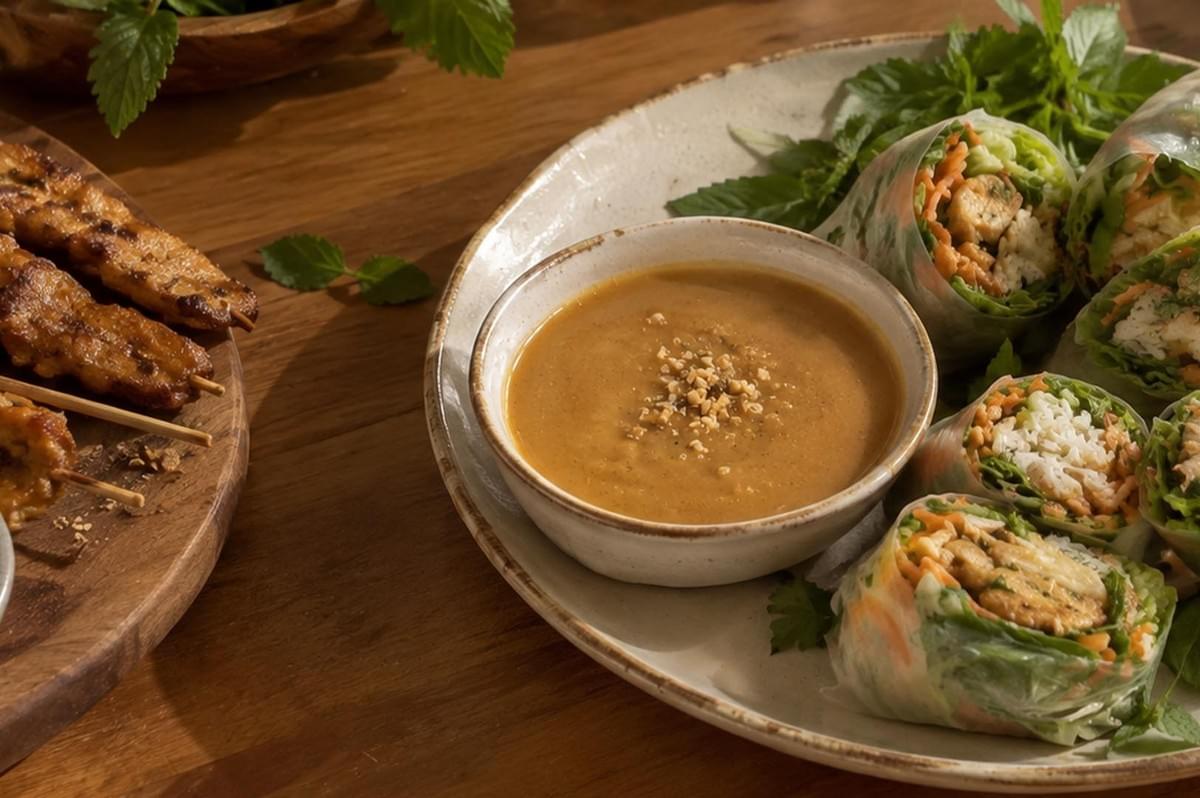
A warm-toned close-up shot focuses on a small bowl of creamy peanut-free satay dip sprinkled with chopped seeds, nestled next to a arrangement of fresh rice paper rolls on a rustic platter. On a wooden board to the left, grilled chicken satay skewers with charred edges rest in soft ambient lighting.
Satay has always been a dish built around connection. Across Southeast Asia, grilled skewers served with aromatic sauces have brought families and communities together for generations. The combination of smoky spices, savoury marinades, and rich dipping sauces represents comfort, celebration, and shared meals.
When developing this recipe, I wanted to capture the soul of satay while making it more accessible. Traditional satay sauces often contain peanuts, which can be difficult for people with allergies. Instead of removing the character of the dish, I focused on rebuilding the flavour profile using toasted seeds, herbs, spices, and naturally rich ingredients.
The result is a rice paper roll that keeps the spirit of satay while offering a more inclusive dining experience. It is a reminder that thoughtful cooking is not about limitation. It is about discovering new possibilities.
Flavor Philosophy and Techniques
The foundation of these rice paper rolls is balance. Satay is known for its bold personality, so the challenge is creating depth without relying on traditional allergens.
The filling uses marinated chicken or plant-based protein, fresh vegetables, and herbs to create contrast in every bite. The marinade combines aromatic spices such as turmeric, lemongrass, garlic, and ginger to create warmth and complexity.
The allergy-friendly satay sauce replaces peanuts with sunflower seed butter or toasted sunflower seeds. This creates a creamy texture while maintaining the nutty richness associated with classic satay.
The key technique is layering. Fresh ingredients bring brightness, while the spiced filling adds comfort. Together, they create a roll that feels both refreshing and familiar.
Ingredients
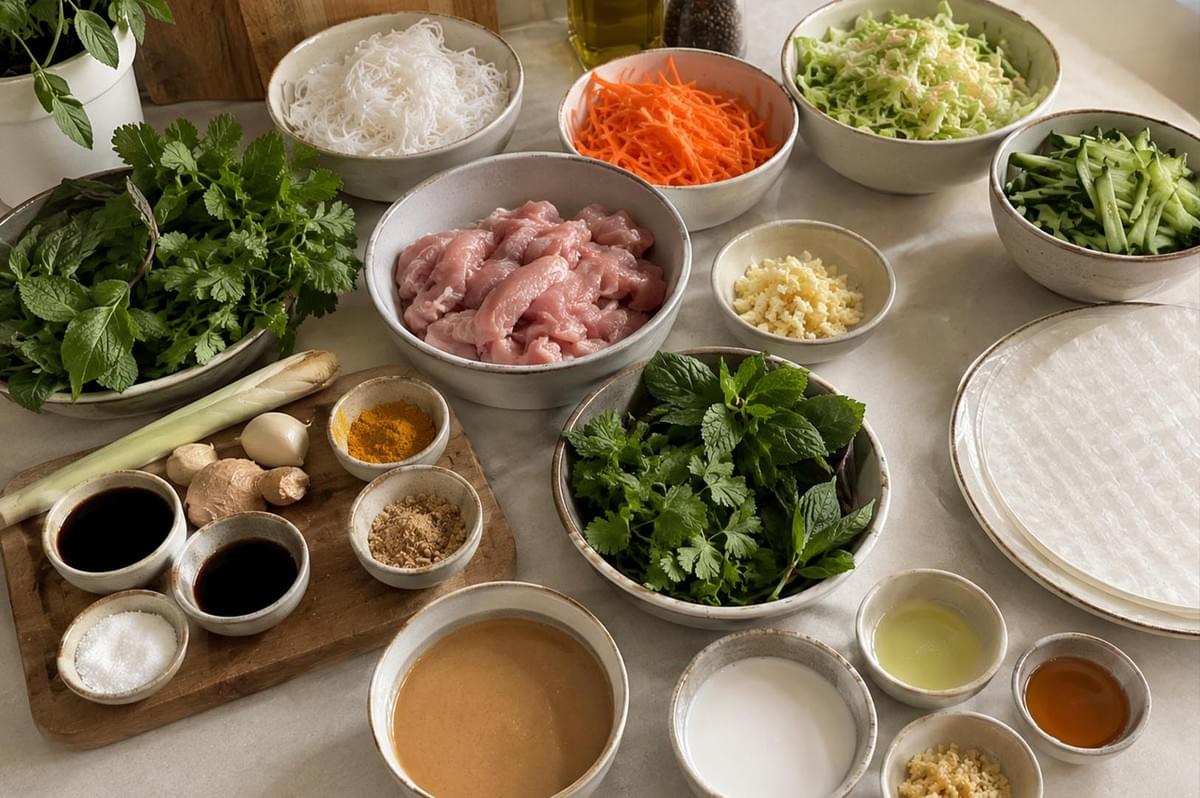
An overhead ingredient prep spread on a light stone countertop features bowls of sliced raw pork strips, cooked rice noodles, shredded carrots, shredded cabbage, sliced cucumbers, fresh herbs, and rice paper sheets. Small condiment dishes containing soy sauce, ground spices, garlic, liquid seasoning, and satay sauce surround the fresh ingredients.
For the Satay-Inspired Filling
- 300g chicken thigh strips or allergy-friendly plant-based protein
- 1 stalk lemongrass, finely minced
- 2 cloves garlic, crushed
- 1 teaspoon grated ginger
- 1 teaspoon ground turmeric
- 1 teaspoon ground coriander
- 1 tablespoon gluten-free soy sauce or coconut aminos
- 1 tablespoon olive oil
- 1 teaspoon brown sugar
- Salt to taste
For the Rice Paper Rolls
- 12 rice paper wrappers
- 1 cup shredded lettuce
- 1 carrot, julienned
- 1 cucumber, thinly sliced
- Fresh mint leaves
- Fresh coriander leaves
- Fresh Thai basil leaves
- 1 cup cooked vermicelli noodles, optional
For the Allergy-Friendly Satay Sauce
- 4 tablespoons sunflower seed butter
- 2 tablespoons coconut milk
- 1 tablespoon gluten-free soy sauce or coconut aminos
- 1 tablespoon lime juice
- 1 teaspoon maple syrup
- 1 small garlic clove, finely grated
- Warm water as needed for consistency
Step-by-Step Instructions
1. Prepare the satay marinade.
Combine lemongrass, garlic, ginger, turmeric, coriander, soy sauce, olive oil, brown sugar, and salt in a bowl. Mix well until the flavours are evenly combined.
2. Marinate the filling.
Add chicken strips or plant-based protein to the marinade. Allow it to rest for at least 30 minutes so the spices can absorb deeply.
3. Cook the filling.
Heat a pan over medium-high heat and cook the marinated filling until golden and aromatic. Set aside to cool slightly before assembling.
4. Make the allergy-friendly satay sauce.
Combine sunflower seed butter, coconut milk, soy sauce, lime juice, maple syrup, and garlic. Add warm water slowly until the sauce reaches a smooth dipping consistency.
5. Prepare the rice paper wrappers.
Dip each rice paper wrapper briefly into warm water until softened. Place it on a clean surface and allow it to become flexible.
6. Build the rolls.
Add lettuce, carrot, cucumber, herbs, noodles if using, and the satay filling. Avoid overfilling to keep the rolls neat and easy to wrap.
7. Roll carefully.
Fold the sides inward and roll tightly from the bottom, creating a compact rice paper roll.
8. Serve fresh.
Arrange the rolls with the allergy-friendly satay sauce on the side. Enjoy immediately for the best texture.
Chef’s Tips or Kenji’s Notes
Always check ingredient labels carefully. Allergy-friendly cooking depends on understanding every ingredient. Sauces, seasoning blends, and packaged foods can sometimes contain hidden allergens.
For extra flavour, lightly grill the cooked filling before assembling. This creates a deeper satay aroma and adds a beautiful smoky note.
If preparing for guests with allergies, keep your preparation area clean and separate from ingredients that may cause reactions.
Fresh herbs are essential. They create the balance that makes these rolls feel bright and satisfying rather than heavy.
Tasting Notes
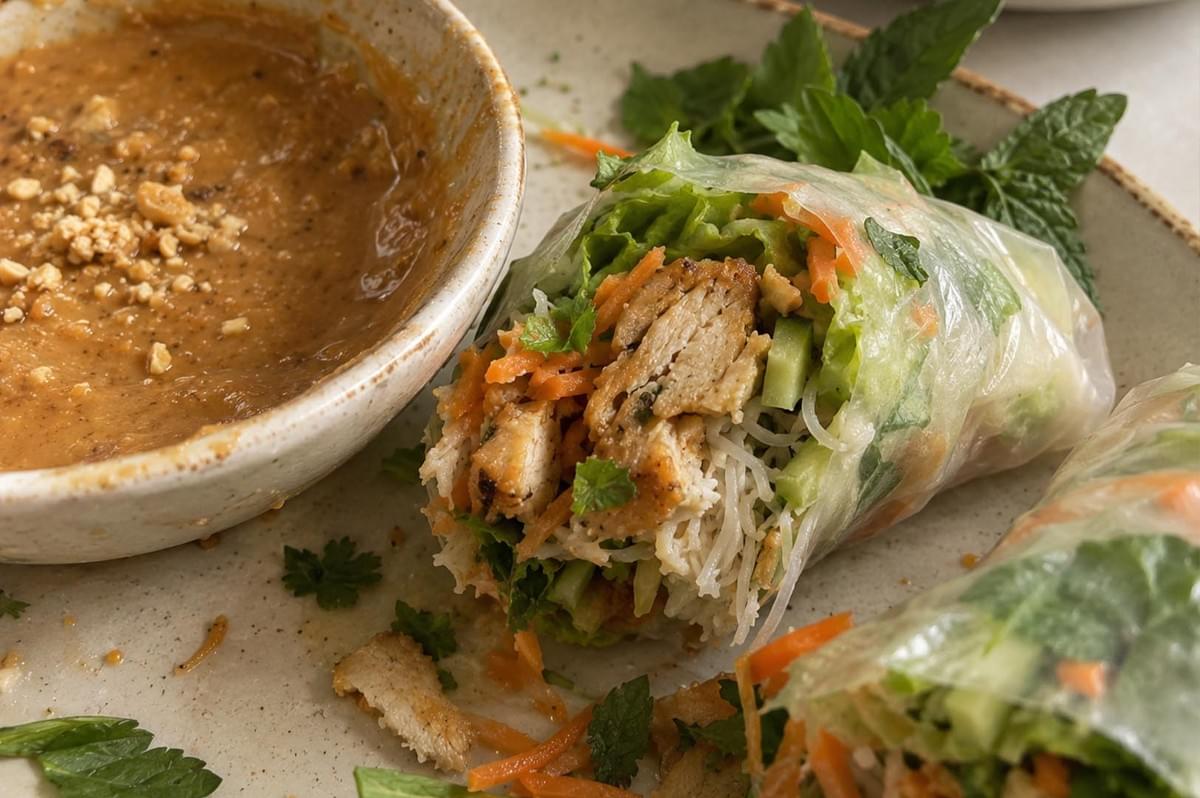
A close-up shot showcases a cut rice paper roll filled with seasoned chicken, vermicelli, shredded carrots, cucumber, and herbs resting on a ceramic platter next to a bowl of peanut-free satay sauce topped with crushed seeds.
The first impression is fresh and vibrant. The soft rice paper wrapper creates a gentle texture, while the vegetables provide a crisp contrast.
The satay filling delivers warmth through turmeric, lemongrass, and aromatic spices. The sunflower seed sauce adds creaminess with a savoury sweetness and a subtle toasted flavour.
Each roll offers a combination of freshness, spice, and comfort, proving that allergy-friendly dishes can still feel exciting and complete.
Bringing This Dish Home
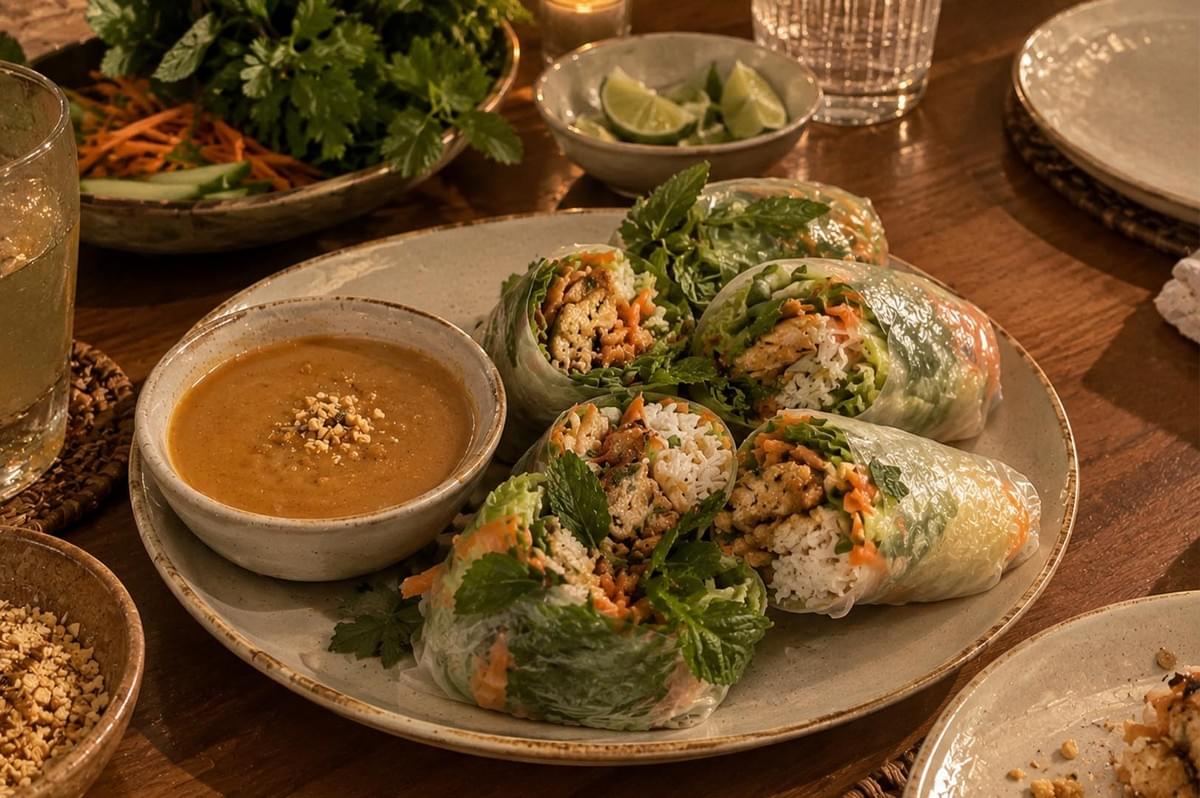
A table setup bathed in warm evening light highlights a circular serving platter filled with fresh rice paper rolls and a central bowl of creamy satay sauce sprinkled with chopped seeds. Small side dishes containing crushed nuts, lime wedges, and fresh herb garnishes frame the main platter on a wooden dining table.
These Allergy-Friendly Satay Rice Paper Rolls are perfect for family lunches, weekend gatherings, and lighter dinners. They can be prepared ahead of time, making them a practical choice for busy home cooks.
The recipe is also flexible. You can replace the protein with tofu, mushrooms, or vegetables depending on your dietary needs. The important part is maintaining the balance between bold seasoning, fresh ingredients, and careful preparation.
For people living with food allergies, favourite dishes often require adaptation. This recipe shows that adaptation can lead to something new and memorable.
Behind the Scenes Chef Masa Insight
At Chef Masa Recipes, we often explore how traditional flavours can evolve for modern kitchens. This recipe began with one simple question: How can we preserve the emotion of satay while making it more welcoming?
The answer was not to remove flavour, but to rethink the ingredients. By understanding the purpose of each component, we can recreate familiar experiences in new ways.
Kenji Nakamura believes that the future of cooking is built on empathy. A great dish should consider the person eating it, their needs, their memories, and their enjoyment.
Food becomes more meaningful when everyone has a place at the table.
For another creative recipe that celebrates thoughtful cooking and unique flavour combinations, explore our Midnight Miso Risotto with Crispy Mochi Rice.
