

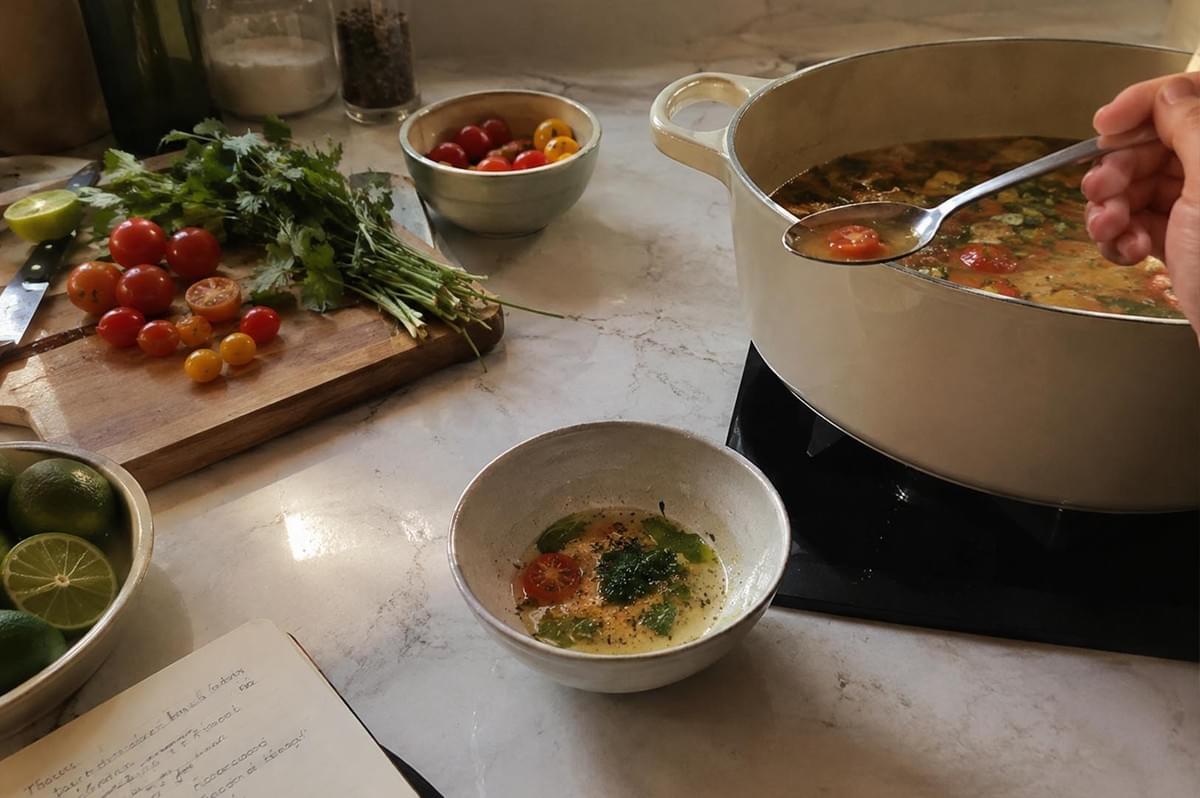
Cooking is often described as following instructions, but in my kitchen, I believe great cooking begins with awareness. A recipe can tell you how much salt to add, how long to cook an ingredient, or which technique to use. However, a recipe cannot always tell you what the dish truly needs in that moment.
That is why I always taste before I trust the recipe.
When I cook, tasting is not just the final step before serving. It is a conversation between the chef and the food. It helps me understand the balance of flavours, the quality of ingredients, and the emotions a dish creates. Whether I am preparing a dish in a professional kitchen or cooking at home, tasting allows me to make decisions with confidence.
For many Singaporean home cooks, recipes are a helpful guide. They provide structure and inspiration, especially when trying a new cuisine or technique. But ingredients can change depending on the season, where they are sourced, and how they are prepared. A tomato from one market may be sweeter than another. A batch of chilli may be more intense. A piece of seafood may carry a different level of freshness.
The recipe gives you the direction, but your senses guide the journey.
Throughout my career, I have learned that some of the most important cooking lessons happen before the dish reaches the plate. A quick taste of a sauce can reveal whether it needs more acidity. A spoonful of soup can show if the flavours have developed enough. A small adjustment made at the right time can completely transform the final result.
This philosophy is connected to a principle shared by many chefs around the world: understanding ingredients before trying to control them. Organisations like the Culinary Institute of America highlight the importance of developing fundamental cooking skills, including sensory awareness and flavour evaluation.
In Singapore, where our food culture is built on layers of influences, tasting becomes even more important. Our flavours are bold, from the richness of laksa and the fragrance of nasi lemak to the complexity of sambal and Japanese-inspired dishes. Creating harmony requires more than simply measuring ingredients. It requires knowing when flavours are balanced.
Salt, sweetness, acidity, bitterness, and umami all need a place in the dish.
I encourage home cooks to taste throughout the cooking process. Do not wait until the end. Taste your broth while it simmers. Taste your sauce before plating. Taste the seasoning after adding each major ingredient. This practice builds your intuition and helps you become more connected to your food.
One of the biggest changes I see in young chefs is that they sometimes rely too heavily on written instructions. Recipes are valuable, but they should never replace curiosity. The best chefs are not just following steps. They are observing, adjusting, and responding.
Behind every memorable dish is a series of small decisions. A little more acidity. A gentler cooking temperature. A final touch of seasoning. These choices come from paying attention.
Cooking is not about achieving perfection through a recipe. It is about creating understanding through experience.
When I teach cooking, I always remind people that confidence comes from practice. The more you taste, the more you learn. The more you learn, the more freedom you have to create.
A recipe can introduce you to a dish, but your senses are what make it your own. That is the heart of cooking: respecting tradition while trusting your own judgement.
For those looking to explore more about how technique and passion come together in the kitchen, discover my approach to building memorable flavours through How Chefs Build Flavor in Layers.
