

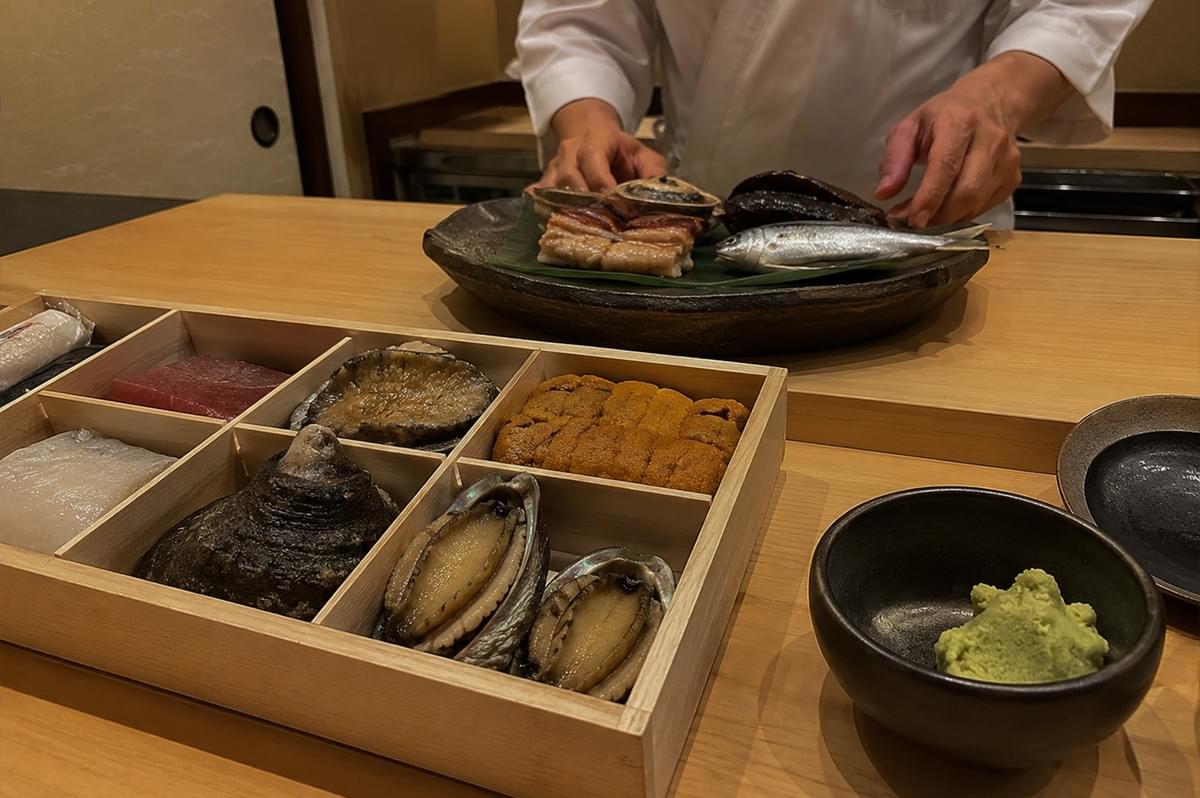
There is a moment that happens every morning before the restaurant becomes busy.
The deliveries have arrived. The fish has been unpacked. The kitchen is quiet enough that I can hear water running over rice and the gentle scrape of a knife against a cutting board. Before any recipe begins, before any menu is finalized, I spend time simply looking.
Many people imagine cooking starts with action. In my experience, it begins with observation.
When a beautiful piece of fish arrives at the restaurant, my first question is rarely what technique I will use. Instead, I ask myself what the ingredient wants to become. Some ingredients seem to announce themselves immediately. Others require patience. They reveal their character slowly.
Over the years, I have learned that some of the biggest mistakes in cooking happen when we impose too much of ourselves onto an ingredient.
As chefs, we are often taught to transform. To innovate. To create. Those things matter, but they should never come at the expense of understanding what is already there. A perfectly seasonal ingredient carries a story long before it reaches the kitchen. The fisherman, the farmer, the weather, the season, and the environment have already contributed their chapters.
Our responsibility is to continue that story rather than overwrite it.
This philosophy shapes everything we do at Sushi Masa by Ki-setsu. Whether we are preparing a traditional Edomae course or developing a new recipe for our team, the process begins with listening. Listening is not often associated with cooking, yet I believe it may be one of the most important skills a chef can develop.
The older I become, the less interested I am in complexity for its own sake.
Some of the dishes I am most proud of contain very few ingredients. They succeed not because they are elaborate, but because every element has a purpose. Nothing is added simply to impress. Nothing remains if it does not belong.
Guests sometimes ask where creativity comes from. They expect the answer to involve experimentation or inspiration. The truth is much simpler.
Creativity begins with attention.
The more closely we observe ingredients, seasons, and traditions, the more possibilities reveal themselves. Innovation is often hidden inside understanding rather than disruption.
Every service teaches me this lesson again.
No matter how many years I spend behind the counter, there is always another detail waiting to be discovered.
