

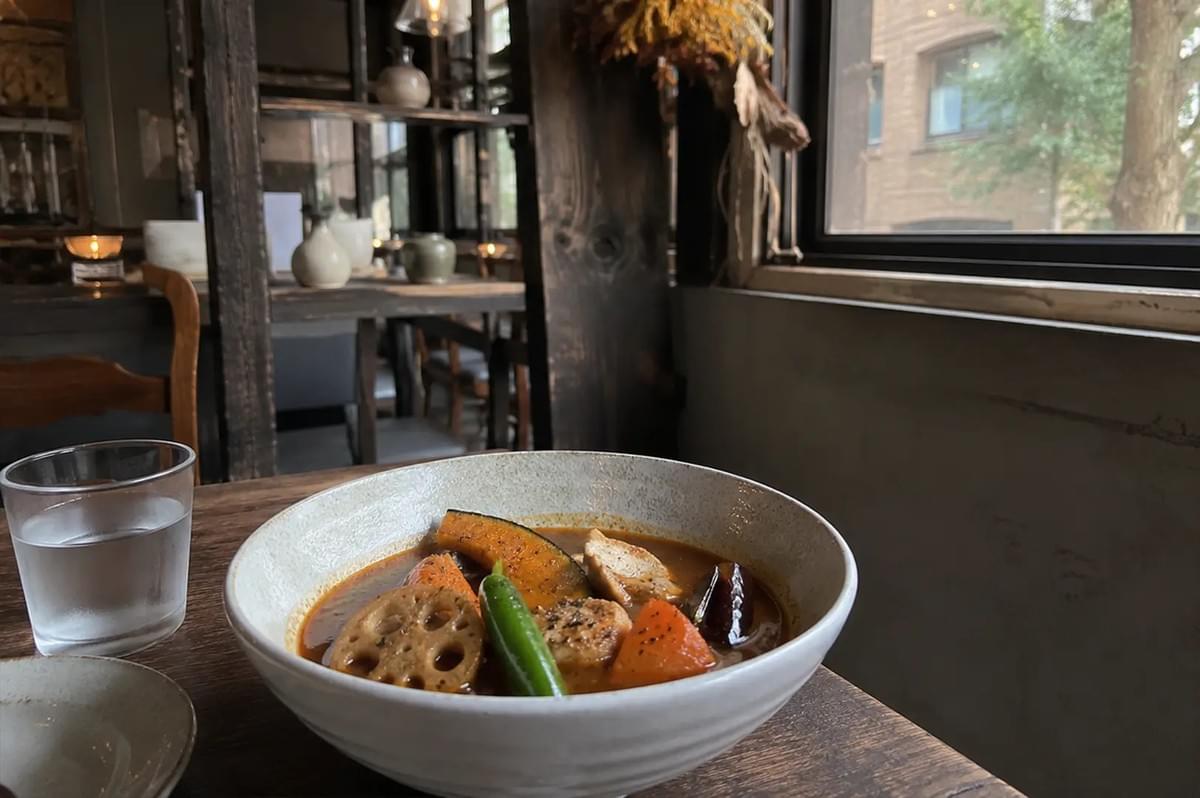
The steam arrives before anything else. It lifts from the bowl of soup curry in slow ribbons, carrying ginger, cumin, and a deeper warmth that settles into the air without hurry. On an afternoon like this, we often forget to speak. We simply watch the white curl rise and listen to what it has to say.
This is a table set for one, yet it feels anything but lonely. There is a particular calm to eating soup curry alone — the kind of quiet that loosens the shoulders after a long, noisy day. The world outside can keep its rush. Here, for a little while, we are somewhere softer.
Chef Masa rarely worries about thickness. What he chases is depth. In his hands, the soup curry broth stays so clear you can almost see the bottom of the bowl, and yet it holds layer upon layer of aroma. The first sip is light and warming, like the first cool breeze of early autumn — something to drink fully, not merely taste.
That clarity is hard won. He simmers for hours, tending the heat with the patience of someone waiting for a melody to unfold. Spice, stock, and the sweetness of vegetables fold into one another slowly, no single voice rising above the rest. What we taste, in the end, is time itself.
The vegetables in his soup curry are never an afterthought. A wedge of pumpkin, charred at the edges, gives up a quiet sweetness. Carrot softens in the heat and releases an earthy warmth, while lotus root, eggplant, and pepper each keep their own texture. Bite by bite, they trade crispness for tenderness — and they reshape the broth as they go.
This is the part we find most surprising. As we eat, the soup curry keeps changing. The pumpkin dissolves a little more, rounding out the body of the broth; juices seep from the vegetables and weave new threads through the spice. It is a slow revelation, like a season turning — each spoonful slightly different from the last.
Spice, too, observes a certain etiquette. It never ambushes. Instead it blooms, beginning as a faint heat on the tip of the tongue. Then the aromatics open up — cumin, coriander, a whisper of clove — each speaking in its own low register. By the time the warmth reaches your chest, you realize it has been holding you all along.
That warmth carries something of a Hokkaido winter in it. The window may be edged with cold, but the bowl of soup curry glows with brightness and ease. Chef Masa once said he wanted a flavor that puts people at rest — the kind of taste that lets the day fall away. Sitting there, we feel exactly that.
There is no need to hurry when you eat alone. No pressure to make conversation, no small courtesies of sharing — only a quiet exchange between yourself and the bowl. Steam brushes the cheeks, aroma fills the nose, and we pay close attention to every shift in temperature. A moment like this becomes, almost without our noticing, a kind of repair.
On cooler days, the soup curry feels especially gentle. It makes no grand gestures, yet it smooths the small creases worry leaves behind. We lift the bowl, drink the last of the clear broth, and feel the warmth travel all the way to our fingertips. The world keeps its noise outside, but for now we have slipped somewhere calmer.
Perhaps this is where craftsmanship truly moves us. It lies not in elaborate technique but in intention — in letting a simple bowl of soup carry comfort and company. Chef Masa explains little. He only simmers, seasons, and waits, day after day, folding feeling into the broth.
Long after the meal, that warmth lingers. It stays on the tongue and somewhere quieter, like a tune you heard once and cannot quite set down. We say nothing loud about it. We only know that, before long, we will think again of this steam, this spice, this stillness — and find ourselves quietly wanting to return to that table for one.
Curious about how Chef Masa crafts every bowl from scratch? Read about the creative process behind his ever-changing menu.
