

Sensory Opening Scene
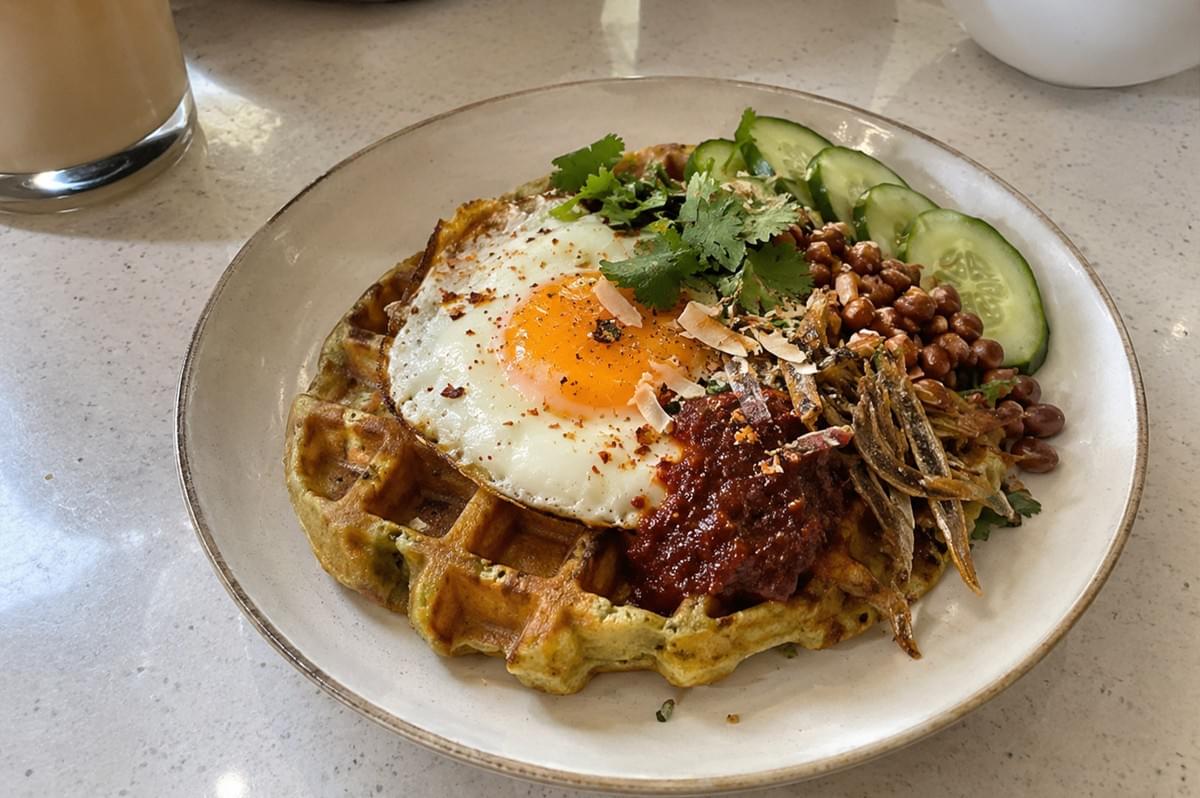
The first bite begins with a familiar aroma. Warm coconut rice fills the kitchen with a gentle sweetness, followed by the comforting fragrance of pandan and toasted coconut. As the waffle iron opens, the surface reveals a beautifully golden crust, crisp around the edges while remaining soft and fragrant inside.
On the plate, this is not just a waffle. It is a celebration of a Singapore breakfast favourite transformed into a modern brunch experience. A spoonful of sambal brings a deep chilli warmth, while a perfectly cooked egg adds richness. Every element, from the roasted peanuts to the crunchy ikan bilis, reminds you of the nasi lemak we grew up loving, but presented in a completely new way.
For me, creative cooking is about respecting memories while creating new ones. This Nasi Lemak Breakfast Waffle brings together the comfort of a traditional dish with the playful spirit of weekend brunch.
Origin Story
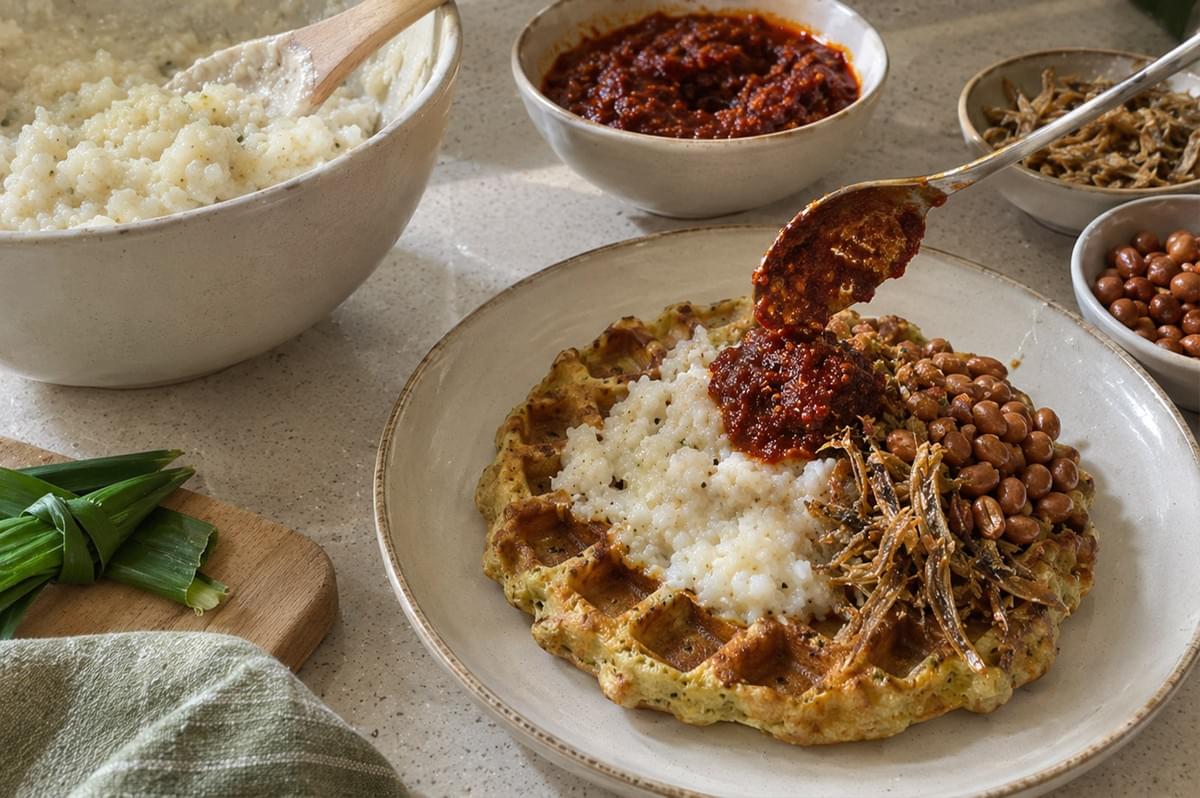
Nasi lemak has always been a dish close to the heart of Singapore’s food culture. Traditionally enjoyed as breakfast, this humble plate of coconut rice, sambal, egg, ikan bilis, peanuts, and cucumber represents balance, simplicity, and bold flavours.
When creating this recipe, I wanted to explore how familiar flavours could be introduced in a different format. The idea was inspired by the growing brunch culture in Singapore, where chefs and home cooks experiment with local ingredients to create dishes that feel both nostalgic and exciting.
The waffle became the perfect canvas. Its crispy texture mirrors the contrast found in nasi lemak, where creamy coconut rice meets crunchy toppings and spicy sambal. Instead of replacing the original dish, this recipe celebrates its identity by presenting it in a fresh way.
Flavor Philosophy and Techniques
The foundation of this dish is building layers of flavour through texture and aroma.
The waffle batter uses cooked coconut rice to bring the unmistakable fragrance of nasi lemak into every bite. The key is balancing moisture and crispness. Too much rice creates a heavy waffle, while too little removes the signature character.
The coconut milk, pandan, and rice work together to create a naturally sweet base. The waffle iron then transforms the rice grains, creating crispy golden pockets that hold the toppings beautifully.
The sambal is equally important. It provides heat, sweetness, and depth, cutting through the richness of the coconut. A gentle touch of sambal allows every ingredient to shine instead of overpowering the dish.
Ingredients
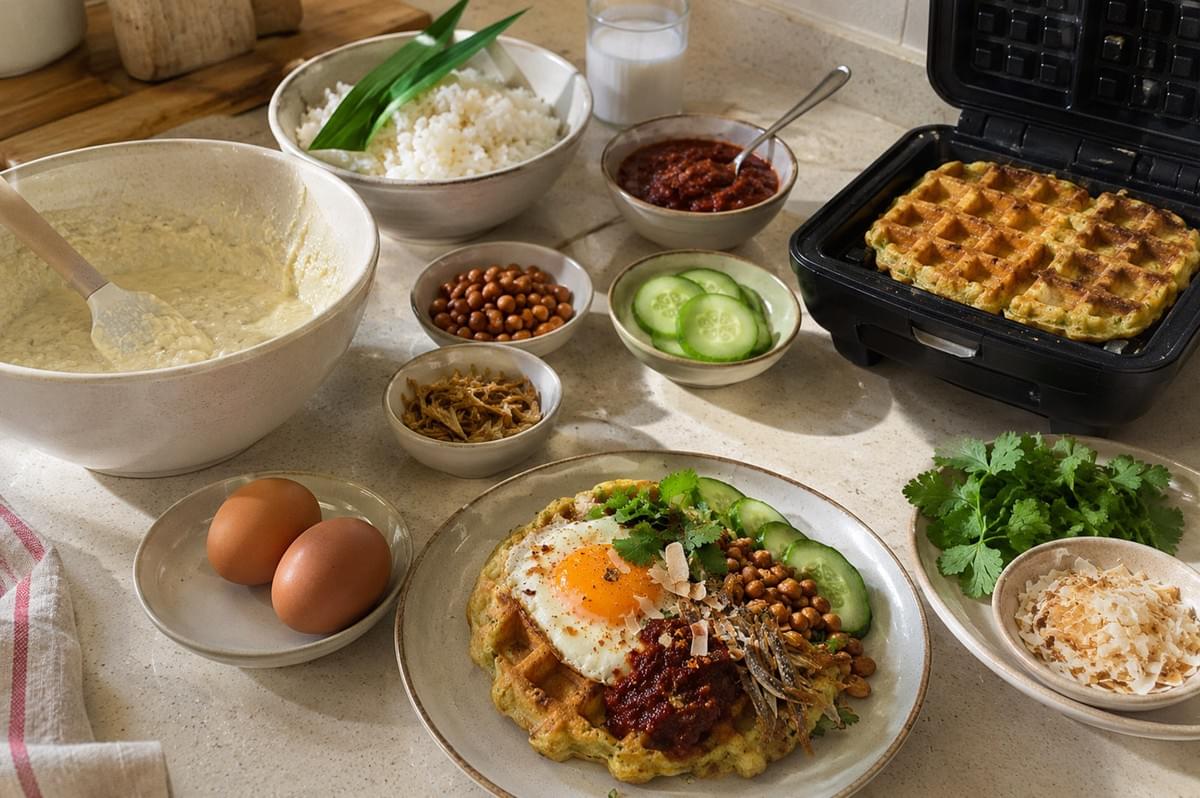
For the Nasi Lemak Waffle Batter
- 200g cooked jasmine rice
- 120ml coconut milk
- 2 pandan leaves, tied into a knot
- 120g plain flour
- 1 teaspoon baking powder
- 2 eggs
- 30g melted butter
- 1 teaspoon sugar
- ½ teaspoon salt
- 60ml water, if needed for consistency
For the Toppings
- 2 fried eggs, sunny side up
- 3 tablespoons sambal chilli
- 40g crispy ikan bilis
- 40g roasted peanuts
- 1 small cucumber, thinly sliced
- Fresh coriander or spring onions for garnish
- Extra coconut flakes, lightly toasted
Step-by-Step Instructions
1. Prepare the coconut rice mixture
Warm the cooked jasmine rice with coconut milk and pandan leaves over low heat for a few minutes. Allow the rice to absorb the coconut aroma before removing the pandan leaves. Let the mixture cool slightly.
2. Create the waffle batter
In a mixing bowl, combine flour, baking powder, sugar, and salt. Add eggs, melted butter, and the coconut rice mixture. Mix gently until combined. The batter should be thick but spreadable.
3. Preheat the waffle iron
Heat the waffle iron until fully hot. Lightly grease the plates to prevent sticking and encourage a golden crust.
4. Cook the nasi lemak waffles
Spoon the batter into the waffle iron and cook until the waffle becomes crisp and golden. Avoid opening the waffle iron too early as this may affect the texture.
5. Prepare the toppings
Fry the eggs until the whites are set and the edges are slightly crispy. Prepare the sambal, ikan bilis, peanuts, and cucumber slices.
6. Assemble the dish
Place the waffle on a plate and top with sambal, fried egg, ikan bilis, peanuts, and cucumber. Finish with fresh herbs and toasted coconut.
7. Serve immediately
Enjoy while the waffle is warm and crisp, allowing the coconut aroma and spicy sambal flavours to come through.
Chef’s Tips or Kenji’s Notes
1. Use freshly cooked rice when possible.
Fresh rice holds moisture better and creates a softer interior while still becoming crispy in the waffle iron.
2. Do not overload the waffle with toppings.
The goal is balance. A little sambal, crunch, and freshness will highlight the waffle instead of hiding it.
3. Adjust the sambal according to your preference.
For a brunch crowd, serve sambal on the side so everyone can control the level of heat.
4. Make the batter ahead.
The batter can rest in the refrigerator for a few hours, making it convenient for weekend brunch preparation.
Tasting Notes
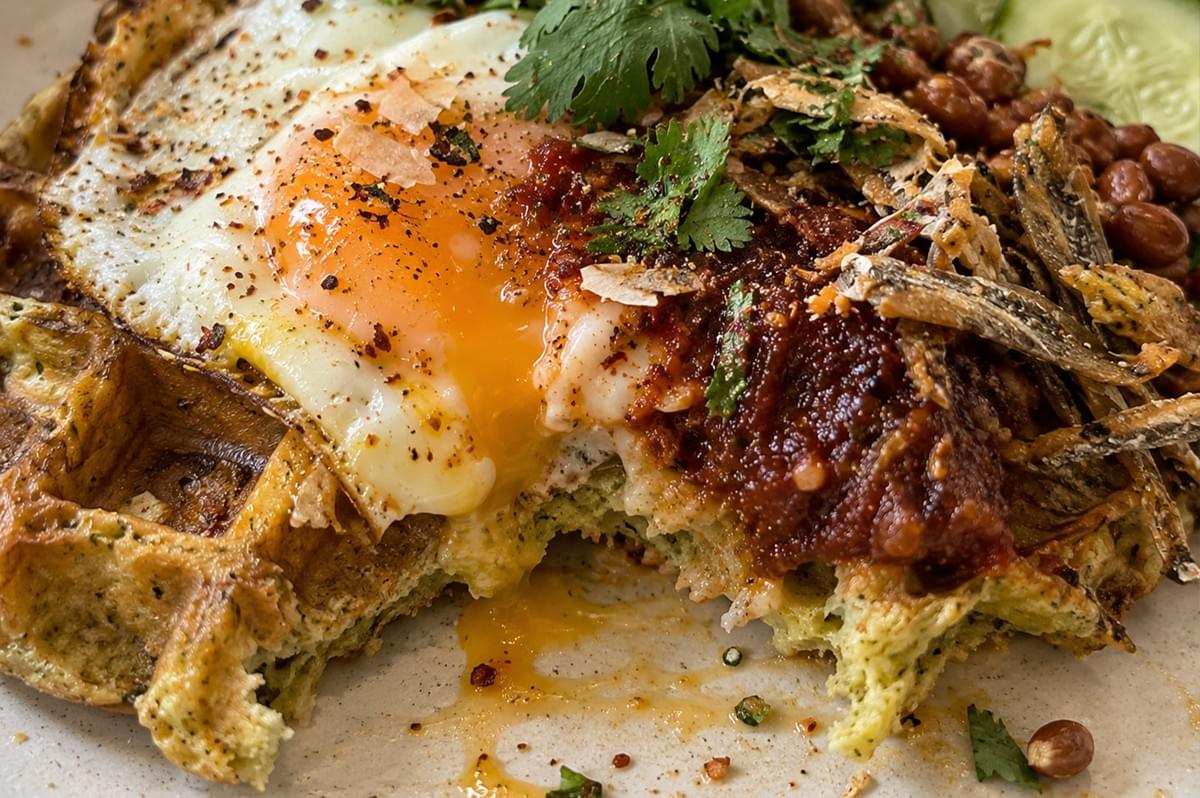
A close-up view focuses on a bite cut out of a nasi lemak waffle, revealing its soft, green-hued interior. The yellow egg yolk from a sunny-side-up egg oozes down into the cut edge, mixing with red sambal sauce, toasted coconut flakes, crisp anchovies, and fresh cilantro sprigs on the waffle surface.
The first impression is crispy, fragrant, and comforting. The waffle delivers the familiar aroma of coconut rice, while the toasted edges add a satisfying crunch.
The sambal introduces layers of chilli, sweetness, and spice, creating contrast against the creamy coconut flavour. The fried egg adds richness, while the ikan bilis and peanuts provide the essential crunch associated with nasi lemak.
The cucumber brings freshness, making each bite feel balanced rather than heavy. It is a dish that feels playful but still deeply connected to Singapore’s culinary roots.
Bringing This Dish Home
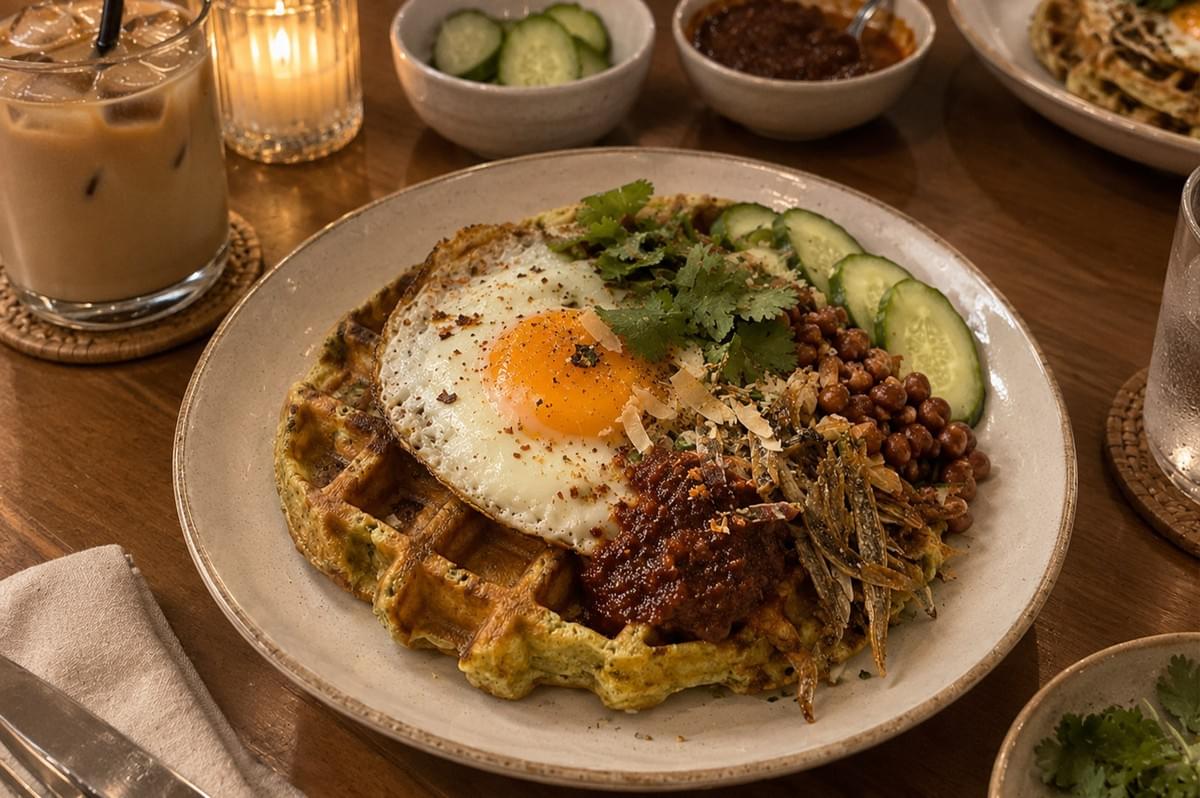
Set on a warm wooden restaurant table illuminated by candle light, a fully topped nasi lemak waffle plate sits alongside an iced coffee drink in a tall glass. The plate features the savory waffle topped with a sunny-side-up egg, red sambal, peanuts, crisp anchovies, fresh cucumber slices, and cilantro, with small side dishes of additional cucumbers and sambal placed behind it.
Weekend brunch is the perfect time to experiment with familiar flavours. This recipe allows home cooks to explore local ingredients in a creative format without losing the essence of the original dish.
For families, it can become a fun breakfast activity where everyone builds their own waffle with different toppings. For brunch gatherings, prepare the waffles ahead and let guests customize their plates with sambal, eggs, and toppings.
The best recipes are those that invite conversation, and this Nasi Lemak Breakfast Waffle is designed to bring people together around a familiar flavour presented in a surprising way.
Behind the Scenes: Kenji Nakamura Insight
When developing this dish, my focus was not simply to make a nasi lemak-inspired waffle. The goal was to understand what makes nasi lemak memorable and carry those elements into a new experience.
The coconut, spice, crunch, and freshness all have a role. Removing one element changes the identity of the dish. The waffle format works because it preserves the harmony of those flavours while introducing a new texture.
As chefs, we are always exploring the relationship between tradition and innovation. Modern cooking is not about forgetting where a dish comes from. It is about finding new ways to share its story.
I believe the most exciting dishes are created when familiar flavours meet curiosity. A classic Singapore breakfast can become a brunch centrepiece when we look at ingredients from a different perspective.
For those who enjoy exploring Japanese-inspired creativity and unexpected rice transformations, discover more of my approach through Midnight Miso Risotto with Crispy Mochi Rice, a recipe that explores texture, comfort, and modern interpretations of familiar ingredients.
