


When diners ask us about the best Japanese curry Singapore has to offer, they usually expect a straightforward recommendation—a name, a location, a specific dish to order. Yet, among those of us who spend our lives behind the pass, this question rarely leads to a simple consensus. The answer is never a single coordinate on a map because true quality is not a static destination.
As chefs, we understand that taste is subjective, shaped as much by the eater’s history as the cook’s hand. While the dining public often searches for a definitive ranking, we see curry differently. We see it as a dialogue between ingredients and time. To understand what "best" really means from a culinary perspective, we must look beyond the accolades and peer into the quiet, disciplined reality of the kitchen itself.
How Diners See “Best”
From the dining room, the definition of excellence is often measured by visibility. We watch as long queues form outside trending establishments, driven by viral social media posts and the collective enthusiasm of the moment. In this landscape, "best" is frequently synonymous with "most popular." Diners scan reviews, counting stars and reading comments to validate their choices before the first bite is even taken.
There is a natural human desire to be part of the cultural conversation, to taste the dish that everyone is talking about. However, this hype culture can sometimes obscure the deeper values of cooking. A long line indicates popularity, but it does not always guarantee soul. As chefs, we often feel that the loudest restaurants are not necessarily the ones practicing the finest craft. True culinary merit is not always photogenic, nor does it always demand attention. It often exists in the quiet satisfaction of a meal that doesn’t need a filter to be enjoyed.
How Chefs Think About Curry

When we stand over a stockpot, our definition of quality shifts entirely to technique and patience. For us, a great curry is an exercise in balance. It is the precise alchemy of caramelizing onions until they reach a deep, mahogany sweetness—a process that cannot be rushed, requiring hours of slow, attentive stirring. It is the construction of a roux that binds the sauce not just in texture, but in flavor, marrying the heat of spices with the savory depth of a well-built stock.
This focus on balance and patience reflects the broader culinary approach we document across Chef Masa Recipes, from slow-built stocks to carefully refined home-style dishes.
We look for the glossy sheen of a sauce that has been reduced to the perfect viscosity, neither too watery nor cloyingly thick. We judge a curry by the complexity of its finish—does the initial sweetness give way to a gentle, lingering heat? Is there an umami backbone that makes the next spoonful inevitable? Excellence is found in the sourcing of the pork for the tonkatsu, the aging of the meat, and the freshness of the panko crumbs. It is found in consistency. The best Japanese curry Singapore chefs strive for is the one that tastes exactly as profound on a slow Tuesday afternoon as it does on a busy Saturday night.
Curry as Memory and Comfort
However, technique is only half the story. We know that Japanese curry is, at its heart, yoshoku—Western-influenced Japanese comfort food. It is the food of childhood, of school lunches, and of family dinners. Because of this, a diner’s perception of "best" is heavily tinted by nostalgia.
For many, the ideal curry mimics the taste of their mother’s cooking. Some yearn for the sweetness of apples and honey that they remember from their youth, while others seek a darker, more bitter profile reminiscent of old-school coffee shops in Tokyo. As chefs, we respect that we are often competing with ghosts. We are cooking against a memory. Emotional associations are powerful seasonings; a dish that evokes a feeling of safety and home will always rank higher in a diner’s heart than one that is technically flawless but emotionally cold. The "best" curry is often the one that makes you feel the most cared for.
Singapore’s Unique Context

Cooking in this city adds another layer of complexity. Singapore possesses a sophisticated, multicultural palate that is accustomed to robust flavors. The local love for spice, born from a diet rich in chili and rempah, influences how Japanese curry is perceived here.
What works in Osaka might need a subtle adjustment to resonate in Jurong. We navigate diverse expectations, balancing the traditional Japanese preference for mild, stew-like comfort with the local desire for a bit more kick and aromatic intensity. In this environment, the best Japanese curry Singapore has to offer is often one that respects tradition while acknowledging its location. It is a curry that bridges cultures, offering the warmth of Japanese hospitality with a flavor profile that speaks to the Singaporean soul. This adaptability is not a compromise of authenticity; it is the mark of a living, breathing cuisine.
Soup Curry by Ki-setsu: Expanding Singapore’s Understanding of Japanese Curry
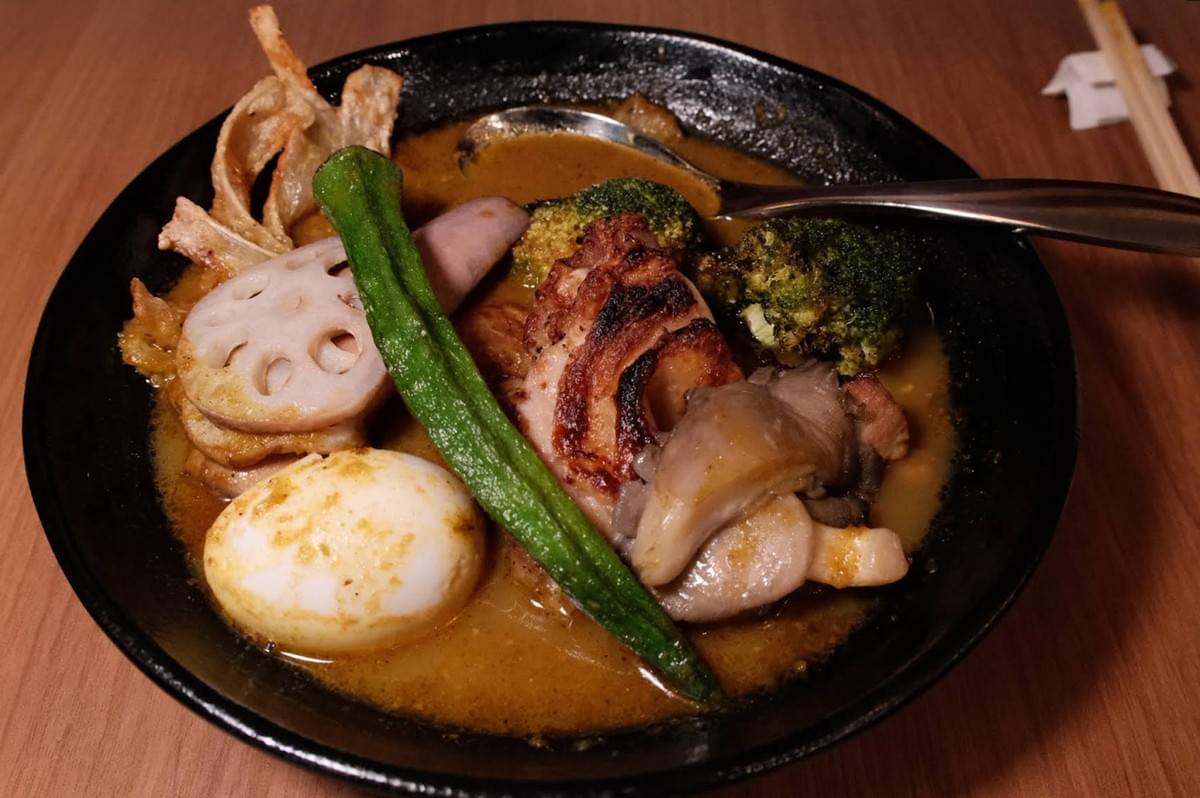
This evolving relationship between tradition and adaptation can already be seen through Soup Curry by Ki-setsu, which offers Singapore diners an early look at traditional Hokkaido-style soup curry during its soft-launch period. After experiencing the concept firsthand, what stands out is how different this approach feels from the thick, roux-based Japanese curry rice that many Singaporeans are familiar with. Instead of a heavy sauce coating rice and toppings, Hokkaido soup curry builds its identity around an aromatic, broth-like curry soup served alongside rice, vegetables, and protein.
Located at Fortune Centre, Soup Curry by Ki-setsu reflects how Japanese cuisine can remain rooted in tradition while finding relevance in a new environment. The experience centres around a chicken-bone broth simmered for more than six hours, with curry spices and aromatics layered into the soup to create depth without relying on heaviness. The vegetables are prepared separately using the Japanese su-age technique, where they are fried without batter to preserve their individual textures, colours, and natural flavours before being paired with the broth.
For Singapore diners accustomed to bold flavours and comforting curry dishes, this early tasting highlights a different side of Japanese curry. The separately served rice, spice-led broth, and flash-fried vegetables create a meal that feels familiar yet distinct. It does not replace favourites like katsu curry rice, but expands the definition of Japanese curry itself: showing that authenticity can take different forms depending on the region, ingredients, and dining culture.
The Quiet Excellence
Finally, we must acknowledge the unseen effort. The true masters of this craft are often found in small, unassuming kitchens where the chef is present every single day. There is a humility in making curry rice. It is not a dish that allows for ego; it is brown, messy, and humble.
The excellence lies in the unglamorous dedication to doing the small things right, repeatedly, over years. It is in the cleanliness of the oil used for frying, the resting of the rice, and the genuine warmth of the service. These are the details that don't make it onto Instagram, but they are the bedrock of quality.
Conclusion
So, is there a single "best" curry? We believe the answer is no. The search for the best Japanese curry Singapore provides is ultimately a personal journey. It changes depending on your mood, your company, and your memories.
We encourage you to trust your own palate over the rankings. Close your eyes, taste deeply, and look for the balance, the care, and the comfort in the bowl before you. When you find the one that speaks to you, cherish it—not because the internet told you it was the best, but because it is the best for you.
